US moves to curb China's remote access to Nvidia's AI chips
Published in News & Features
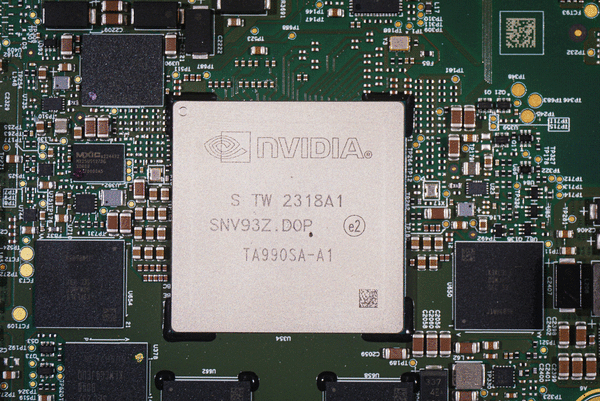
The Trump administration moved to limit several countries from providing Chinese companies remote access to advanced artificial intelligence chips and servers, following increased scrutiny over its handling of curbs on semiconductor exports after an alleged espionage scandal involving Nvidia Corp.
An interim rule issued by the Commerce Department on Monday would require data center operators in Singapore, Malaysia, Thailand, Indonesia and Brazil to obtain a U.S. government license before exporting advanced AI chips from Nvidia and other American manufacturers to customers in those countries. The measure seeks to restrict China and other U.S. adversaries from accessing offshore computing power that uses American-designed processors.
“The rule is designed to ensure that existing restrictions on access to sensitive American technology cannot be circumvented through remote computing arrangements involving data centers in third countries,” the department said Monday in a statement.
Nvidia shares fell more than 4%, while the Philadelphia Semiconductor Index dropped 5.3%.
The draft regulation was released days after Jensen Huang’s resignation as Nvidia’s CEO following his admission to an affair with Alice Huang, a former executive at Singapore-based Megaspeed International whom the U.S. suspects of being a Chinese spy. Megaspeed has been under U.S. investigation for possible export control violations. The company has denied any wrongdoing, while Alice Huang is now in China.
The Commerce Department said that the rule was “written by and at the direction” of the Treasury Department and the National Security Council, suggesting that pressure from officials outside Commerce played a significant role in its release. The licenses are subject to approval on a case-by-case basis.
“The rule is long overdue, and the question that stands out is about enforcement. If Commerce is distancing itself from this rule, which U.S. government entity will take the lead in enforcement?” said Nazak Nikakhtar, a partner at Wiley Rein LLP and a former senior Commerce Department official.
In a joint statement, Singapore’s ministries of trade and digital development said the government was studying “this new measure carefully” and engaging with companies to understand its potential impact. Brazil’s government said separately that it was “closely monitoring” developments related to the rule but added that it wasn’t yet possible to offer an assessment of its effect on imports.
Spokespeople for Malaysia, Indonesia and Thailand didn’t immediately respond to requests for comment outside normal business hours. Representatives for Nvidia also didn’t immediately respond.
Commerce announced the measure as President Donald Trump and other senior administration officials were preparing to travel to Asia for a series of regional summits where the issue of U.S. export controls on advanced technology will be on the table. Restricting access to cutting-edge AI chips risks angering regional partners as well as the government in Beijing, which has bristled in the past at U.S. export curbs.
Southeast Asia has emerged as a data center hub, with demand from Chinese AI developers like Alibaba Group Holding Ltd. and Bytedance Ltd. helping to drive the infrastructure buildout. Malaysia and Thailand have been the hot spots, while Indonesia’s data center market is in earlier stages of development. Singapore, meanwhile, isn’t known so much as a major host of data centers, but has been suspected of being used as a destination for servers that were rerouted to mainland China.
The U.S. also suspects a key company behind Thailand’s national AI effort of helping to smuggle billions of dollars worth of servers containing advanced Nvidia chips to China, Bloomberg News reported in May.
American depositary receipts for Alibaba fell nearly 4% in New York trading on Monday.
In Brazil, officials are seeking to expand the data center industry and achieve what the government calls “digital sovereignty” in technology and AI, while attracting investment from both U.S. and Chinese technology giants. TikTok owner ByteDance is investing billions of dollars in a data center project in northeastern Brazil, a region rich in renewable power and home to South America’s largest hub of high-speed fiber-optic cables.
Nvidia has posted a surge in revenue from Southeast Asia in recent years, although it changed its accounting methodology last year in a way that makes it more difficult to ascertain such sales precisely. The company’s Singapore revenue soared to about $24 billion in fiscal 2025, nearly four times the previous year, and roughly 18% of its total. At that time, Nvidia reported geographic sales based on billing location for its customer.
The company changed that methodology last year to report geographic sales based on the headquarters location of its direct customer. The result is that U.S. revenue hit 69% in fiscal 2026, up from 47%, while Singapore revenue became so negligible it was lumped into another category.
Since Trump’s return to office in early 2025, Huang had spearheaded efforts in Washington to fend off attempts to tighten export restrictions on his company’s prized AI chips. The former Nvidia chief forged a close relationship with the president and used his clout to cajole the administration into allowing sales to China of one of the company’s older-generation AI processors.
In the wake of Huang’s departure, efforts on Capitol Hill to pass export control legislation are gaining steam, while U.S. lawmakers are demanding answers from both the chipmaker and the administration.
Treasury Secretary Scott Bessent has said he wants to know whether Nvidia intentionally ignored warning signs that shell companies, many of them in Singapore, may have been funneling chips to China. He has signaled he wants to shift the focus from the departed CEO’s personal “foibles” to the legal and national-security aspects surrounding the company.
Bessent has also pointed a finger at Commerce Secretary Howard Lutnick in recent days for failing to do enough to enforce existing curbs. “As I said, many other departments were pushing for this, and Commerce had the pen,” the Treasury chief said on Fox News’ "Sunday Morning Futures."
On Monday, ahead of his departure for Asia, Trump expressed confidence in Lutnick despite the fallout from the Nvidia scandal. Trump said he had no plans to replace the Commerce chief and said Lutnick may have slowed his agency’s work on export controls to avoid antagonizing China during delicate trade negotiations.
“We’re having a very good relationship with China right now, and I understand both sides of it,” Trump said.
Both Lutnick and Bessent were expected to fly with Trump aboard Air Force One to the Philippines and China for his summit meetings, according to the White House. Trump’s advisers have previously said he retained confidence in Lutnick.
Noting that advanced cloud computing has made it increasingly possible to access U.S. AI computing systems remotely, the Commerce Department said the new measure is intended to align with existing rules on physical access to the technology.
Last week, Axios reported that Trump had authorized a new crackdown on companies suspected of diverting advanced AI chips to China, but that Lutnick delayed acting on the directive. Separately, Trump said on Monday that Jensen Huang had not put national security at risk.
The rule also includes a carveout for U.S.-headquartered companies operating in the new list of countries, allowing them to continue shipping AI chips there without a license. It also exempts shipments to data centers used as commercial recommender systems for online retailers or social media companies.
The draft rule unveiled on Monday says the new requirements will take effect once it’s published in the Federal Register. A copy of measure was posted on the website late Monday indicating that it’s scheduled to officially publish on Thursday.
(With assistance from Ramsey Al-Rikabi, Kate Sullivan, Peter Millard, Meghashyam Mali, Kate O'Keeffe, Peter Elstrom and Magan Crane.)
©2026 Bloomberg L.P. Visit bloomberg.com. Distributed by Tribune Content Agency, LLC.






Comments