Will Texas Democrats expand Medicaid? Advocates are hopeful after election
Published in News & Features
FORT WORTH, Texas — For years, Texas has had the worst uninsured rate in the nation.
Nearly 4 million Texans lacked health insurance in 2024, leaving them with no easy way to pay for medical care.
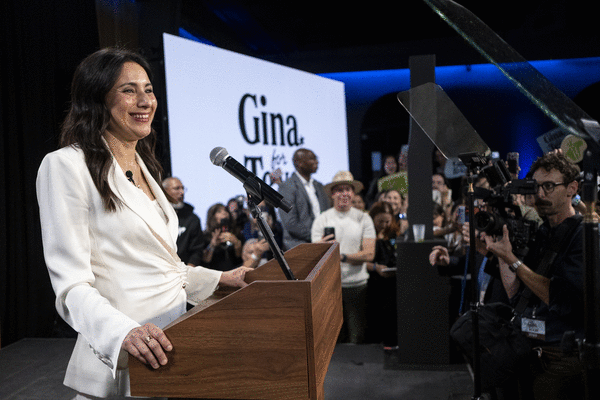
Now that Democrats have swept the Nov. 3 elections, health advocates are hopeful that will change.
Voters picked Democrats for both the governor’s and lieutenant governor’s seats, and also elected a Democratic majority to the Texas House, meaning that, for the first time since the Affordable Care Act was signed into law in 2010, Medicaid expansion could be a real possibility.
Under the Affordable Care Act, better known as Obamacare, states were given the option to expand who was eligible for Medicaid, the joint state and federal health insurance program for the poor. Obamacare allowed for states to offer Medicaid coverage to almost all adults with incomes up to 138% of the Federal Poverty Level, or $21,597 for an individual in 2025, according to the health policy group KFF.
In addition, the law also ensured that the federal government would cover 90% of the cost for Medicaid expansion, with states responsible for the remaining 10%.
Currently, Medicaid in Texas is restricted to poor children, pregnant and new mothers, the elderly, and those with disabilities.
Texas is one of 10 remaining holdout states that has not expanded Medicaid.
“Before (the elections), I would have not expected much activity in the 10 remaining states that have not expanded Medicaid,” KFF Executive Vice President for Health Policy Larry Levitt said on a media call. “But I think that dynamic has changed.”
Before the Nov. 3 election, Lynn Cowles, the health and food justice policy director for Every Texan, expected to spend the legislative session opposing Gov. Greg Abbott’s plan to remove some state-mandated benefits for certain health insurance plans.
“I was anticipating to spend probably hundreds of hours (on that) in the next legislative session,” she said.
But now, Medicaid expansion is one of her top priorities.
“Now, with new state leadership, (Medicaid expansion) is a tangible reality rather than an ongoing conversation,” she said.
Diana Forester, the director of health policy at Texans Care for Children, said she expects health to be a top issue in the upcoming legislative session.
“We definitely expect healthcare to be a priority in a way that maybe it wouldn’t have otherwise,” Forester said.
Medicaid expansion would likely make hundreds of thousands of Texans eligible for health insurance. It would also change the operations of county hospitals, like JPS Health Network, which are required to offer low-cost medical care to some adults without health insurance.
But if Medicaid expansion were to happen in Texas, it would be complicated by the One Big Beautiful Bill Act, which was signed last year. The law put in place work requirements for Medicaid enrollment, meaning that any Medicaid recipient would have to prove that they are working, in school, or completing community service for 80 hours a month, with some exceptions.
The controversial requirement has been met with resistance by Medicaid enrollees in five states, who are suing the Trump administration, and by medical groups, who argue that when Arkansas previously tried to implement work requirements, it led to thousands losing health insurance.
John Hawkins, CEO of the Texas Hospital Association, said in a statement that getting more Texans health insurance would reduce healthcare costs for everyone. But he cautioned that the Medicaid cuts in the One Big Beautiful Bill Act, also known as HR 1, would need to be amended. He also added that the federal government should reinstate subsidies for purchasing health insurance on the Affordable Care Act Marketplace.
“For Medicaid expansion to be a suitable path to coverage gains in Texas, something must be done about the provisions Congress passed in HR 1 that could now make administering and financing the program unworkable for new expansion states,” Hawkins said in a statement. “For now, we’d like to see federal action to quickly bring back the exchange subsidies that make coverage more affordable for people, and to repeal HR 1’s punitive Medicaid cuts.”
Despite the complications introduced by the One Big Beautiful Bill Act, advocates like Cowles still think this upcoming legislative session is the right time to expand Medicaid.
“We are pushing for Medicaid expansion now,” she said.
But health advocates are not just hopeful about Medicaid expansion. They also have other items on the legislative wishlist, like making it easier for kids to enroll in Medicaid and eliminating the Medicaid registration backlog. As of September, there were 238,000 Medicaid applications waiting to be reviewed by an eligibility worker.
Making it easier and quicker for kids and pregnant moms to enroll in Medicaid would dramatically improve healthcare access for Texas children, Forester said.
“Our Medicaid program ends up being the primary insurer for about half of the kids in the state and half of our pregnant moms,” she said. “It is the biggest policy lever as far as improving services in healthcare to Texas kids and moms.”
©2026 Fort Worth Star-Telegram. Visit star-telegram.com. Distributed by Tribune Content Agency, LLC.





Comments