How a bank collapse in Paraguay toppled a president and put savings at risk
Published in News & Features
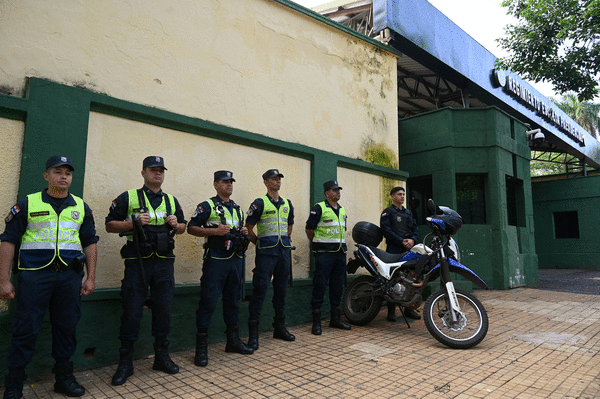
For millions of Paraguayans, Ueno Bank represented the future of banking.
Customers could open accounts, transfer money and pay bills from their cellphones without stepping inside a traditional branch. The digital lender expanded at remarkable speed, accumulating nearly 3 million customer accounts in a country of roughly 6 million people and attracting hundreds of millions of dollars from government institutions, including the national pension and healthcare system.
But as Ueno grew, bank regulators were uncovering serious problems behind its rapid expansion.
Supervisors had questioned large loans to companies connected to the bank’s owners and transactions that appeared designed to conceal the extent of those relationships. By August, according to Paraguayan news reports describing a confidential supervisory report, Central Bank examiners had concluded that Ueno financed a transaction intended to resolve one of its regulatory violations.
Yet the bank continued operating, accepting deposits and holding substantial amounts of public money. As recently as October, Paraguay’s top banking regulator assured lawmakers that Ueno had corrected its lending violations and that a disputed loan transaction complied with the law, although an investigation into that transaction remained open.
Less than a month later, regulators took control of the bank.
The intervention left customers unable to access their accounts freely, triggered street protests and forced authorities to begin reimbursing depositors through Paraguay’s deposit-guarantee system. By Nov. 7, about 1.2 million depositors had reportedly received payments up to the guaranteed limit, while customers with larger balances faced continued uncertainty.
The fallout quickly reached the presidential palace.
President Santiago Peña, who had invested in a company belonging to the business group behind Ueno, was forced from office and became the subject of a criminal investigation. He had also appointed the former chairman of the finance company that became Ueno Bank to lead the Central Bank, the institution responsible for overseeing the country’s financial system.
What began as a banking crisis had become a national reckoning over political influence, financial oversight and the safety of public money in a country whose leaders had spent years promoting its economic stability.
A bank with powerful connections
Ueno’s rise made it one of Paraguay’s most prominent financial institutions, particularly among customers drawn to the convenience of digital banking.
Its influence extended well beyond individual depositors. By September 2026, government institutions had approximately $809 million deposited or invested at Ueno, according to Treasury figures cited by prosecutors. The Social Security Institute, which administers pension and healthcare programs, has said it held about $355 million at the bank.
Those funds were exposed to Ueno’s failure, although the amount that might ultimately be lost remains undetermined.
Peña, a former finance minister who became president in August 2023, held a minority investment in Ueno Holding, a company belonging to the same business group as the bank. He relinquished those shares in March 2025, but prosecutors have also cited two loans totaling about $500,000 that he received from Ueno in 2024 to finance a residence outside Asunción.
The loans do not, by themselves, establish wrongdoing, and their terms have not been independently verified. Peña has denied wrongdoing, maintaining that his investment in the holding company did not give him a role in the bank’s operations.
Another relationship raised questions about the independence of the country’s banking supervision.
Shortly after taking office, Peña appointed Carlos Carvallo Spalding, who had chaired Financiera Ueno until weeks earlier, to lead Paraguay’s Central Bank. Financiera Ueno subsequently became Ueno Bank, placing one of its former executives at the head of the institution responsible for regulating it.
“There is a conflict of interest on two fronts,” said Daniel Gutiérrez, director of domestic and international financial services at Miami-based Foodman CPAs & Advisors, referring to Peña’s financial ties and Carvallo’s appointment.
Gutiérrez, whose assessment was based on published accounts, said the overlapping relationships raised serious questions about the independence of financial supervision.
The Central Bank previously maintained that Carvallo had recused himself from matters involving Ueno. Prosecutors, however, have questioned whether he properly abstained from decisions concerning the institution.
Warnings before the collapse
At the center of Ueno’s regulatory problems were approximately $146 million in loans to companies that supervisors considered connected to the bank’s owners.
Paraguayan banking regulations limit how much financial institutions can lend to businesses associated with their shareholders. The restrictions are intended to prevent bank owners from using depositors’ money to finance their own ventures and concentrating too much financial risk among related companies.
According to supervisory findings described by prosecutors and Paraguayan news reports, Ueno exceeded those limits before selling tens of millions of dollars in loans to another company.
But examiners suspected that Ueno itself had financed the transaction.
If so, the arrangement would have effectively moved the problematic loans off the bank’s books without eliminating the underlying financial exposure.
The Central Bank’s correspondence shows that supervisors formally notified Ueno of lending problems in June. Additional regulatory actions followed in July and August, but the institution remained open.
In an Oct. 7 letter to Paraguay’s Senate, signed by Carvallo, the Central Bank said Ueno had corrected its lending violation and that the disputed loan sale was legally valid.
The letter acknowledged an ongoing investigation into whether the bank had indirectly financed the transaction and identified the August supervisory report. It did not, however, disclose the conclusions that examiners had reportedly reached.
Prosecutors subsequently accused Carvallo of failing to respond adequately to the warnings and misleading lawmakers about Ueno’s financial condition. Those allegations have not been proven in court.
The disclosures also raised another question: Why had public institutions continued placing substantial amounts of money at Ueno while regulators were investigating its practices?
From banking failure to presidential crisis
On Nov. 2, Paraguay’s Central Bank voted for regulators to take control of the bank after determining that its financial position had deteriorated below requirements.
The decision was announced early the following day, leaving customers locked out of their accounts.
For people who had come to depend on the bank’s digital platform to receive payments, pay bills and manage their savings, the disruption created uncertainty.
The consequences extended to pensioners. According to Paraguayan news reports citing the Social Security Institute, 32,000 retirees received their pensions through Ueno, forcing the agency to arrange payments through other banks.
In Asunción, protesters demanded access to their frozen savings and called for Peña’s removal.
Authorities activated the country’s deposit-guarantee system and began reimbursing eligible customers. By Nov. 7, 1.2 million depositors had received about $160 million, according to figures attributed to the Central Bank.
Those payments covered balances up to the guaranteed limit, leaving larger deposits unresolved.
The uncertainty surrounding public money made the crisis particularly sensitive. The $355 million held by the Social Security Institute supported an agency responsible for pensions and healthcare, although there has been no established loss of the full amount or evidence that pension payments were permanently interrupted.
But for Peña, the political consequences were devastating.
His administration had promoted Paraguay as an increasingly attractive destination for foreign investment, emphasizing fiscal stability and economic modernization. In 2024, the country received its first investment-grade credit rating from Moody’s, a milestone that strengthened that message.
The Ueno scandal threatened that reputation, raising questions about the government’s stewardship of public funds and the independence of its financial regulators.
As opposition lawmakers demanded accountability, Peña’s support within his own Colorado Party began to fracture.
On Nov. 5, he offered his resignation in a video, apologizing to Paraguayans while maintaining that he had never intended to betray their trust.
“I want to apologize to the people if at any point I have failed,” Peña said. “It was never my intention to let down the trust that you placed in me.”
Congress, however, did not accept his resignation.
According to Americas Society/Council of the Americas, lawmakers from Peña’s party walked out of a congressional session, preventing a quorum to consider his departure. Former President Horacio Cartes, an influential figure within the Colorado Party, publicly encouraged impeachment.
The lower house voted 78–0 to impeach Peña on Nov. 5. The following day, the Senate voted 44–0 to remove him from office for poor performance of his duties.
Prosecutors subsequently charged Peña with breach of trust and other offenses, accusing him of instigating the placement of public funds at Ueno. Carvallo faced charges that included breach of trust and falsifying public documents.
Peña was initially placed under house arrest following his removal. On Nov. 7, a judge ordered him held in pretrial detention at a military facility, according to news reports.
His lawyer argued that detention was unwarranted and described the charges as vague. None of the criminal allegations has been proven in court.
Vice President Pedro Alliana assumed the presidency, inheriting a banking crisis and a government facing a profound loss of public confidence.
The cost of a banking crisis
For Paraguay, the immediate challenge is restoring access to savings and payments for customers who entrusted their money to Ueno.
Digital banking had offered a practical alternative to traditional branches, allowing people to manage their finances through their phones. But the crisis exposed how quickly that convenience could become a vulnerability when customers suddenly lost access to their accounts.
The uncertainty also extends to government institutions whose deposits and investments support pensions, healthcare and other essential services.
Although approximately $809 million in public funds was exposed to Ueno’s failure, the amount ultimately at risk of permanent loss remains undetermined.
Beyond the immediate financial damage, the scandal has threatened Paraguay’s reputation for stability, raising concerns among investors and putting pressure on the new government to demonstrate that regulators can operate independently of political influence.
For Alliana, the challenge goes beyond reimbursing depositors. His administration must confront questions about why regulatory warnings did not produce stronger intervention, how public money became concentrated at Ueno and whether political relationships influenced decisions that should have been guided by financial supervision.
Prosecutors allege that Peña encouraged the placement of public money at the bank. But the evidence made public does not establish that he ordered regulators to conceal Ueno’s problems or personally directed government institutions to deposit funds there.
The bank’s failure has already shown how a financial crisis can become a crisis of government, with consequences extending far beyond the executives and politicians at its center.
For ordinary Paraguayans, however, the most urgent question is considerably simpler: When they entrust their savings to a bank, who is responsible for making sure their money is safe?
©2026 Miami Herald. Visit at miamiherald.com. Distributed by Tribune Content Agency, LLC.




Comments