DOJ lawsuit to probe Alaska Senate vote thrown out by judge
Published in News & Features
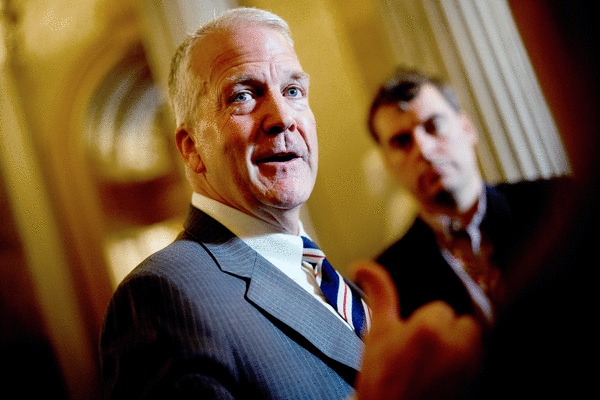
A federal judge dismissed a Trump administration lawsuit that sought to preemptively stop Alaska election officials from certifying the results of the state’s U.S. Senate contest if the Republican candidate loses by a small margin.
U.S. District Judge Sharon L. Gleason sided with Alaska two days before midterm elections in which Republicans are fighting to retain control of the Senate and the U.S. House, marking a significant rejection of the administration’s efforts to intervene in the vote. The U.S. Department of Justice immediately appealed.
Senator Dan Sullivan said earlier Sunday that he’d accept the outcome of the race whether he wins reelection or not, even as he and other Republicans question the contest’s legitimacy because a candidate with a similar name is on the ballot.
“No, I’m going to accept the election results,” Sullivan said on CNN’s "State of the Union" when asked whether he’d accept them only if he won. Still, he urged Alaskans to vote and not to “let this election be stolen.”
A Justice Department investigation into whether laws were broken in the race intensified after the New York Times reported last week that allies of Democratic challenger Mary Peltola secretly recruited retired teacher Daniel J. Sullivan Jr. to enter the race. President Donald Trump called for Peltola to be taken off the Nov. 3 ballot following the news report.
The administration — at Trump’s request — was seeking a court order to bar Alaska from certifying the results if the senator loses by a narrow enough margin that the votes for Daniel J. Sullivan would have made the difference. The DOJ, which alleged that the election’s integrity has been “tainted by a frivolous candidacy,” also asked for an investigation into any ballots cast for Daniel J. Sullivan to determine if they were cast in error.
Gleason in her ruling said “many voters have already cast their ballots in the November 2026 general election” and that those votes “have been commingled and cannot now be segregated or the identity of the person who cast each ballot ascertained.”
She added that the U.S. offered “no workable plan as to how it proposes to segregate ballots cast for Daniel J. Sullivan on Election Day and then conduct a court-ordered unspecified ‘investigation’ of those ballots in a manner that would preserve voter secrecy.” The judge also cited Alaska law as requiring that ballots be preserved for 22 months after the election in any case.
In opposing the administration’s lawsuit, the Alaska attorney general’s office argued there’s no legal basis for it and that any investigation into the motivations of individual voters would undermine U.S. election integrity.
With the Republican majority in the Senate hanging in the balance, the Alaska race — rated a toss-up by Cook Political Report — may decide control of the chamber.
Shortly after the judge rejected the government’s case, Trump alleged without evidence in a social post that Daniel J. Sullivan “committed a Criminal Act.”
Alaska Governor Mike Dunleavy said last week he directed state authorities to open their own investigation to see “whether criminal charges or civil action are warranted.”
“The evidence will determine what happens next,” Dunleavy said in a post on X.
The Trump administration filed its suit in federal court in mid-October. Trump intensified his attacks on Peltola following the New York Times report. The Senate Republican campaign arm also asked the Federal Election Commission to investigate Peltola’s campaign.
Peltola’s campaign has denied any involvement with Daniel J. Sullivan’s campaign.
Michael Heyman, the U.S. attorney in Anchorage, said Friday that the Justice Department is acting “intensely and swiftly,” but declined to say what kind of federal crimes might be under investigation.
Representative James Comer, chair of the Republican-led House Oversight Committee, said last week that he’ll seek interviews with operatives affiliated with Peltola’s campaign as part of a separate investigation by his panel. He alleged that Democrats “schemed to rig” the Alaska vote.
On Sunday, Comer was asked whether the Senate might not seat Peltola if she’s elected. “That’s a big possibility,” he said on Fox News’ "Sunday Morning Futures," without elaborating.
Separately, the U.S. Justice Department is exploring potential criminal violations in Alaska, according to a department official who requested anonymity to discuss nonpublic matters. The department has sent out subpoenas to people as part of that effort, according to a person familiar with the matters.
The U.S. Supreme Court has adopted precedents against federal court interference in how states manage voting in the lead-up to an election, although there’s been significant legal wrangling over how exactly that applies.
Federal judges have also been wary of becoming the arbiters of election results and overriding processes for post-election challenges, which typically run through state administrative bodies and courts.
The Justice Department has taken a more aggressive stance on election issues in the run-up to the midterms than in previous elections. It sued several dozen states that refused to turn over confidential voter information and warned state and local election officials that they could face criminal prosecutions if they failed to take robust actions to root out noncitizens illegally registered to vote.
_____
(With assistance from Zoe Tillman and Romy Varghese.)
_____
©2026 Bloomberg L.P. Visit bloomberg.com. Distributed by Tribune Content Agency, LLC.





Comments