Deaths mount as West Nile virus hotspots emerge in LA, Orange counties
Published in News & Features
LOS ANGELES — More people are contracting mosquito-borne West Nile virus and dying in Los Angeles and Orange counties than anywhere else in California, pushing state levels to a five-year high.
The two counties combined account for at least 63% of the 378 human infections reported this year by the California Department of Public Health, making the region a hotbed for the disease transmitted by the female Southern House mosquito. The actual count is likely higher than the state’s database, which lags behind the local numbers reported by individual counties.
In Orange County, there were 68 cases with six deaths as of Oct. 15 — the most West Nile Virus deaths in the county in more than a decade — compared with just three cases for the same period last year and no deaths. Los Angeles County has seen 249 infections and 12 deaths, a stark contrast from last year’s 22 cases and two deaths. The first local death in Los Angeles County was reported in August.
About a quarter of infected people in Los Angeles County live in the eastern portion of the county, another 25% live in the South Bay and 17% live in the San Fernando Valley. Nearly all the Orange County cases were in the northern part of the region, primarily in Anaheim, Garden Grove and Fullerton.
San Bernardino County confirmed it had six cases and no deaths, and Riverside County had four infections this year and no deaths. Other than praise for the effectiveness of its vector control and public education campaigns about West Nile virus, Inland Empire officials don’t have an explanation for why it has escaped the same kind of toll hitting L.A. and Orange counties.
A hotspot
Health officials for the state as well as Los Angeles, Orange, San Bernardino and Riverside counties say there are multiple reasons for the high number of cases in some places and low number in others, citing factors such as temperature, moisture, humidity, standing water sources and human outdoor activity.
Mosquitoes thrive in humid conditions, and recent rains combined with hotter temperatures are fueling the disease locally, said Brian Brannon, a spokesman for the Orange County Mosquito and Vector Control District.
“Rain creates more breeding areas, and the warmer it is, the more active (mosquitoes) are,” Brannon said. “As temperatures keep rising year after year, we’ll see more and more of them.”
Brannon also said infected mosquitoes appeared to be concentrated in older cities with aging, cracking infrastructure, where water can pool.
In Orange County, vector control workers are combating mosquitoes by spraying mineral oil onto water pools, creating a film that suffocates mosquito larvae.
“Wherever there is standing water, that’s where the mosquitoes will be, and we have to be smarter than them,” Brannon said.
Tracking mosquitoes and birds
Up to 80% of people infected with the West Nile virus are asymptomatic, but those who do develop symptoms typically experience fever, headaches, body aches, joint pains, vomiting, diarrhea or a rash. Only about one in 150 people develop severe symptoms that affect their central nervous system, such as encephalitis, and even fewer die from the disease. People who are immunocompromised or over 60 face a higher risk.
Richard Mason was 88, but the Torrance man was active and mentally alert, according to his two sons. He drove, walked his Australian shepherd, Scout, every day, kept up on political news and traveled to Europe often. “He was really sharp, really independent,” said Mason’s son Chris, 63.
Jonathan Mason, 62, said his father declined very quickly after developing symptoms from West Nile virus. Two days after he attended a wedding, Mason went to an emergency room when he became feverish and was too weak to get out of bed. A week later, on Sept. 28, he was dead.
“This was just so shocking,” Jonathan Mason said. “We always thought we had more time.”
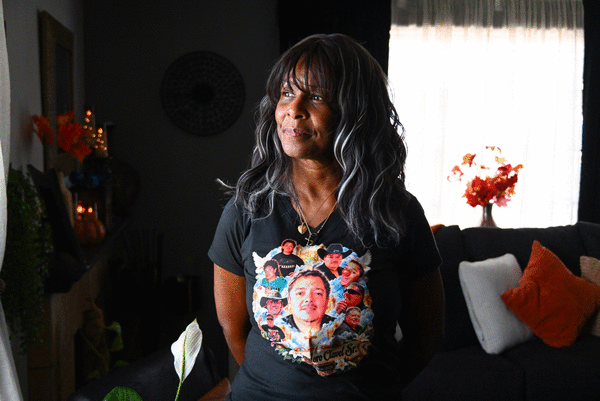
Tracey Clavel, whose husband, Daniel, died of West Nile virus in September, said she isn’t sure where or when her husband contracted the disease. “We never even knew that he was bit,” she said. “He didn’t complain.”
In mid-August, the 61-year-old Anaheim resident experienced flu-like symptoms. He went to urgent care after developing a rash, but from there, things got worse, Tracey Clavel said. He ran a fever, vomited and had headaches. Soon, he became confused, even “delusional,” his wife said. On Aug. 23, she found him collapsed on the floor of their home, and called an ambulance.
“That was the last time that I basically got to talk to him,” she said. “They had to intubate him, and he never regained consciousness from that point.” He was in intensive care for weeks until he died Sept. 16.
Hermosa Beach resident Greg McNally survived his bout with West Nile virus, but the recovery has been “harrowing,” according to his wife, Jennifer.
At the hospital, McNally, 62, spent six days in a medically induced coma, and he took an additional two weeks to wake up from it. He then was transferred to the Rancho Los Amigos acute rehab facility in Downey, where he worked on regaining his memory and relearning basic skills, like how to walk and get dressed.
In total, McNally spent 43 days in the hospital and 21 days in rehab, Jennifer McNally said. His memory is coming back, though he struggles with short-term memory and can’t remember the bulk of his illness, until his stint at Rancho Los Amigos.
Now, at home, he’s mostly dealing with “the physical results of laying in a bed” for 64 days, his wife said. Her husband was a lifelong athlete — he surfed, walked, worked out — but his muscles have atrophied from his time in the hospital. Jennifer McNally said he’s on his way to a “98% recovery.”
“He’s pretty much going up and down the stairs on his own, grooming himself,” his wife said. “He made spaghetti last night. He’s really on his way.”
Birds act as hosts
One of the best indicators of the presence of West Nile virus are dead birds.
Birds act as reservoir hosts for the virus, and vector control throughout California tracks dead birds afflicted with the virus to determine where mosquitoes are picking it up. Los Angeles County had the highest number of dead birds in the state as of Oct. 20, with 162, followed by Orange County with 119.
Orange County also had the most mosquito pools in the state at 831, followed by 711 in Los Angeles. Though mosquitoes can infect humans with the West Nile virus, humans cannot pass the infection back to mosquitoes.
Jonathan Mason expects his father contracted the virus near his home in Torrance, maybe while walking his dog. He faults the Los Angeles County Department of Public Health, which reported the county’s first West Nile virus case in July, for not starting its awareness campaign sooner.
“We want to make sure that, going forward, there’s more attention paid to it,” he said. “It’s something that, in my mind, could have been preventable.”
The Greater Los Angeles County Vector Control District’s Steve Vetrone warns residents that the numbers of mosquitos positive for West Nile virus and dead birds have surpassed previous years and were trending above the five-year average. Health officials throughout Southern California urge people to apply insect repellent, wear long sleeves and pants, get rid of any standing water near their homes, and report dead birds to the California Department of Public Health.
“Like you put on your seatbelt, spray some bug spray when you go out for a walk,” said Dr. Anissa Davis, medical director of communicable disease control at the Orange County Health Care Agency.
Davis said mosquito activity usually rises in late summer and fall, meaning it should be declining in the coming weeks.
Tracey Clavel said her husband’s death has been a shock. “He was selfless, he was my handyman, he was the love of my life,” she said. The Clavels had been married 38 years and had five kids and 17 grandchildren together.
“We had so many plans,” she said. They had scheduled trips to New York and Vietnam. And she wonders what the holidays will look like this year. The week before Christmas, she and her husband always used to dress up as Santa Claus and Mrs. Claus for the grandkids. “I don’t know what we’re going to end up doing this year now.”
_____
Staff Writer Madeline Armstrong contributed to this article.
_____
©2026 MediaNews Group, Inc. Visit ocregister.com. Distributed by Tribune Content Agency, LLC.






Comments