Bats with rabies on the rise in KC, local health depts. say. What to do if you're exposed
Published in News & Features
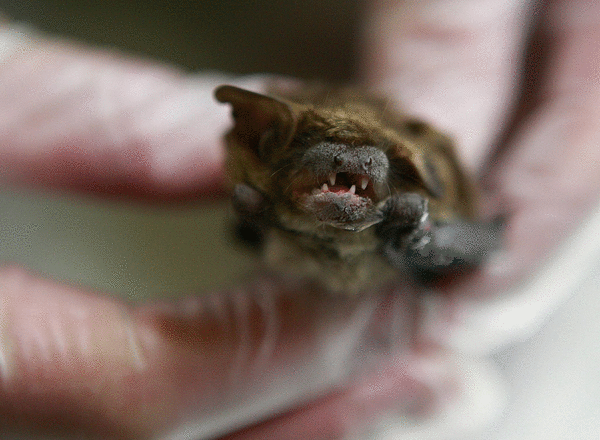
Is Kansas City bat country? Recent guidance from local health departments says you should be prepared as exposure to bats has increased.
The Kansas City, Missouri Health Department and the Kansas Department of Health and Environment are urging residents to take extra precautions as the region reports that more residents have encountered the winged mammal.
The statements come after the Centers for Disease Control and Prevention issued a Health Alert Network (HAN) Health Advisory in response to recent increases in encounters with animals that are carrying rabies.
From July through August 2026, the CDC said it received 17% more rabies-related inquiries than during the same period in 2025, including reports of mass exposure events which involved more than one person. During this time frame, the CDC said it also received reports from at least eight state health departments of increased rabies post-exposure prophylaxis (PEP) use, PEP administration errors, or both.
Seven bats have tested positive for rabies in Kansas City this year, according to the KCMO health department. It’s the highest number of rabies-positive bats Kansas City’s reported in more than 10 years. Data from KDHE reports that they’ve had three bats test positive for rabies since Sept. 16.
“People should avoid handling bats and should take any possible exposure seriously,” said Dr. Marvia Jones, director of health with the City of Kansas City. “Because bat bites can be difficult to see, it is important to seek medical advice following a possible exposure.”
What should I do if I see a bat?
If you see a bat in your home, alive or dead, do not touch it. It’s recommended that you call your local animal control services, who will remove the bat and test it for rabies.
KCMO’s health department also recommended these additional steps:
—Do not release the bat. If it is safe to do so without touching or approaching the bat, confine it to the room by closing the door and contact your local health department
—If you are bitten, scratched, or have direct contact with a bat, seek medical care immediately and contact your local health department
—If you wake up and find a bat in your bedroom, contact Animal Control
—If a bat is found in a room with an unattended child or someone who cannot communicate whether they had contact with the bat, contact the health department
—Keep pets away from bats and make sure dogs, cats and other eligible pets are up-to-date on their rabies vaccinations.
What should I do if a bat bites me?
Rabies is a viral disease that is nearly 100% fatal but is preventable when PEP is given appropriately before symptoms start, according to the CDC. If a bat is infected with rabies, it can spread the disease to humans and other animals through bites, scratches or oral secretions.
If you are scratched, bitten or come into contact with a bat or another animal who appears to be sick, the KDHE says you should do the following:
—Wash any wounds immediately with water and soap (or water alone) for 15 minutes
—Talk with a clinician or public health professional about your risk and if you might need rabies-related care
—Tell your doctor about the type of animal you encountered and if you have noted any signs that the animal was not acting normally
—If the animal that bit you was not your pet, ask the owner for proof that the animal is up-to-date on their rabies vaccination
—If you can do so safely, capture or confine the animal and contact your local animal control service or your health department for assistance
—In some circumstances and in consultation with a veterinarian, observing an available animal might be a reasonable alternative to rabies testing.
_____
©2026 The Kansas City Star. Visit kansascity.com. Distributed by Tribune Content Agency, LLC.






Comments