Oil climbs as supply tightness undercuts Hormuz deal optimism
Published in News & Features
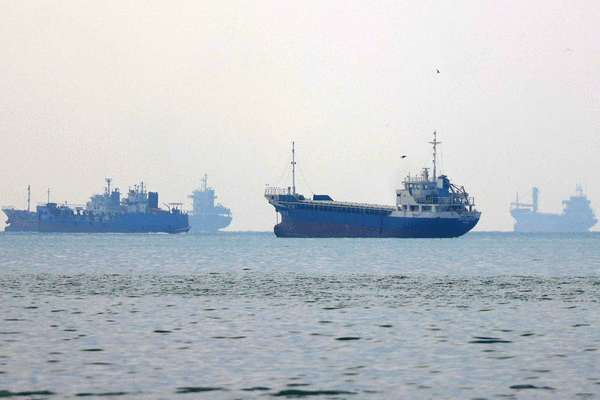
Oil rose as signs of tightness across several key market gauges outweighed indications of diplomatic progress toward reopening the critical Strait of Hormuz.
Brent futures settled near $107 a barrel, after climbing as much as 5% during the session. Prices initially rallied on hawkish rhetoric from Iran before easing, with U.S. and Iranian negotiators exploring a phased deal that would see Tehran reopen the energy chokepoint and Washington lift its economic blockade of the Islamic Republic’s ports.
While the headlines stoked optimism surrounding diplomatic solution to the conflict that’s upended global energy markets, doubts remain. The warring sides have appeared close to a breakthrough before, only for U.S.-Iran talks to collapse. Many traders are therefore reluctant to shift positions until they see a meaningful increase in barrels reaching the market.
“We’ve seen this movie so many times before,” said Pavel Molchanov, an analyst at Raymond James, referring to previous signs of a breakthrough that ultimately didn’t come to pass. “We will believe it when we see it. We need to see something tangible.”
At the same time, gauges of real-world supply were flashing extreme tightness. Oil traders on Thursday paid record premiums to secure immediate supply at the biggest U.S. storage hub. Meanwhile, West Texas Intermediate discount to Brent has widened to the biggest since May, as overseas buyers reckon with a scarce supply outlook.
Crude had rallied earlier on comments from a top Iranian military official that Tehran may broaden the war to the Indian Ocean if attacks by the U.S. or Israel resume. Saudi Arabia, meanwhile, came under attack from Houthis again.
Crude has climbed more than 70% this year as the U.S.-Iran war, as well as the fallout from the Russia-Ukraine conflict, have cut supplies and damaged infrastructure. Iran’s economy has contracted deeply since the U.S. and Israel launched the war in February, hit by sanctions, the U.S. naval blockade and soaring inflation. In the U.S., energy price spikes have also triggered inflation fears and are contributing to a global bond selloff, with the 30-year Treasury yield hitting the highest since 2004 on Thursday.
Still, Persian Gulf producers have continued to eke crude barrels out of Hormuz on tankers with their transponders turned off, helping to cushion the fallout.
Traders are also closely monitoring Saudi Arabia’s exports. The kingdom came under attack from Tehran-backed Houthis again and said it intercepted missiles fired toward the Red Sea port of Yanbu, a key export center. France’s President Emmanuel Macron said he would send troops to defend Yanbu, as energy prices surge in Europe.
Still, some flows continue to exit. Saudi Arabia’s crude shipments in September jumped to the highest level since the start of the Iran war, as the nation ramps up exports via Hormuz following an attack on its East-West pipeline. Saudi Aramco’s Chief Executive Officer struck a positive tone regarding how soon the conduit can bounce back.
Fuel Outlook
Meanwhile, fuel markets have been hit harder, heaping pressure onto consumers and boosting price pressure worries for central bankers.
U.S. retail prices for diesel, essential for transport, construction and agriculture, have surged to record levels. That’s prompted some lawmakers to push for export curbs as midterm elections loom. Earlier this week, Trump said he’d encouraged his advisers to support such a ban.
Energy Secretary Chris Wright was said to have told oil industry leaders to brace for possible curbs on diesel exports. But no final decision has been made, Bloomberg reported, with key Trump aides divided over the idea and oil executives warning against it.
U.S. diesel futures have eased in recent days, while prices in Europe surged on the prospect of a cut in key American supplies.
____
(With assistance from Kanoko Matsuyama and Bingyan Wang.)
©2026 Bloomberg L.P. Visit bloomberg.com. Distributed by Tribune Content Agency, LLC.




Comments