Boston Mayor Wu says taxpayers may pay developers' costs to kickstart housing production
Published in News & Features
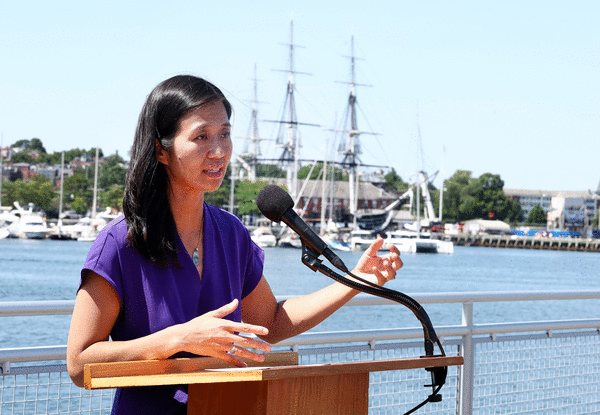
Mayor Michelle Wu said Boston’s housing crisis is so bad that in addition to enticing developers with $100 million in tax breaks, the city is now considering funding part of their construction costs to kickstart stalled projects.
Wu said the city is in negotiations with developers about reworking mitigation agreements, which could result in “community infrastructure improvements” built into those projects being paid for by taxpayers, rather than the private developers.
“Maybe the public sector could take on a little bit more of those more flexibly,” Wu said Wednesday at a Greater Boston Chamber of Commerce event she headlined.
Wu didn’t elaborate on how much of those private development costs the city would be willing to pay.
Gregory Maynard, executive director of the Boston Policy Institute, said “developers often agree to make improvements to streets or other public infrastructure, and the mayor is saying that the city would pay for those improvements instead.”
Having residential taxpayers take on commercial development costs could be controversial among neighborhood groups for various projects, Maynard said, particularly given that the city is also looking to cut taxes for developers by millions of dollars.
During her Chamber speech, Wu touched on the $100 million tax relief package she announced two days prior.
The mayor is proposing that the city start by directing abatements totaling $31.5 million to four stalled market-rate housing projects that she says can get off the ground next year.
The city said the four projects will generate 1,400 housing units, 185 of which will be affordable, and increase tax revenue following the 5- or 10-year abatement period, where developers would pay taxes on less than the assessed property value.
The city is in discussions with about a dozen other developers, with plans to create up to 4,000 units, but Wu said, “Tax abatement has to be paired with robust private investment to spur construction.”
To that end, she said the city will look to tap “large union pension funds that are ready to invest in Boston projects that will create high-quality jobs.”
“We look forward to working with these labor partners to combine our efforts — because a good job and an affordable home are two sides of the same coin when it comes to making Boston a home for everyone,” Wu said.
She said the city is taking other steps that will “make it easier to build,” by launching a new “streamlined permitting process” with clearer deadlines, on Oct. 1. It will match developers with a single, assigned city staffer “from project initiation through building permit.”
Wu said the city is working to designate income-qualified census tracts as opportunity zones to encourage development.
She also plans to use the city’s $110 million housing accelerator fund, which was created last year to kickstart stalled housing production and draws from surplus funds from the city budget — by providing financing to “move hundreds of additional units” into construction.
“We have a list that would be some 10-15,000 units that are right there in the sweet spot of needing incentives or other supports to get them across the line,” Wu said. “We’re going to keep doing everything we can to accelerate housing production.”
Maynard said, however, that the mayor’s words don’t match up with reality.
“The fact is that Mayor Wu hasn’t pursued broad-based zoning reforms, and until she does, it just isn’t accurate for her to say she is using all the tools at her disposal to build more housing,” Maynard told the Herald. “This is not a policy designed to reverse anything. It is a policy aimed at maintaining the status quo.”
He pointed to the mayor’s resistance to allowing accessory dwelling units citywide under the same rules adopted by the state Legislature, which he claims “would create many more units than are currently being built, without the need for complicated tax breaks.”
Maynard has said the Wu administration is seemingly trying to mitigate the cost of high inclusionary zoning requirements with the abatements, instead of admitting Wu made a mistake by increasing affordability requirements two years ago.
He added, “All these breaks and flexibility are only available at the discretion of the mayor, concentrating even more power over real estate development in Wu’s hands.”
Chamber of Commerce CEO James Rooney asked Wu at the event whether she would be willing to be more flexible with the policy that she increased in October 2024 — when the number of affordable units required for new construction was hiked from 13% to 20%.
“We hear from a lot (of developers) that that’s one of the obstacles to getting across the finish line,” Rooney said.
City Councilor Ed Flynn on Wednesday introduced a hearing order calling for the city to roll back affordability requirements that he says have made it too costly to build. San Francisco rolled back to 5% in July, he said.
“Data has already shown us that a 20% affordable housing rate in this economy has produced the worst housing numbers since the Great Recession,” Flynn said. “In this housing crisis, City Hall needs to put politics aside and summon the courage to do what’s in the best interest of Boston’s long-term economic vitality.”
Wu said the city did a formal study on the matter this year and concluded that simply rolling back affordability requirements wouldn’t make a difference, given the federal uncertainty that has led to rising interest rates and tariffs.
She said the city is providing flexibility with “buyouts” where developers can contribute to a fund to create affordable housing elsewhere in the city in lieu of meeting the 20% requirement on site.
“The situation is usually so dire,” Wu said, “that no single thing, even IDP alone, would be able to get a project over the line anyway.”
________
©2026 MediaNews Group, Inc. Visit at bostonherald.com. Distributed by Tribune Content Agency, LLC.






Comments