US Energy chief downplays chance of Hormuz advance with Iran
Published in News & Features
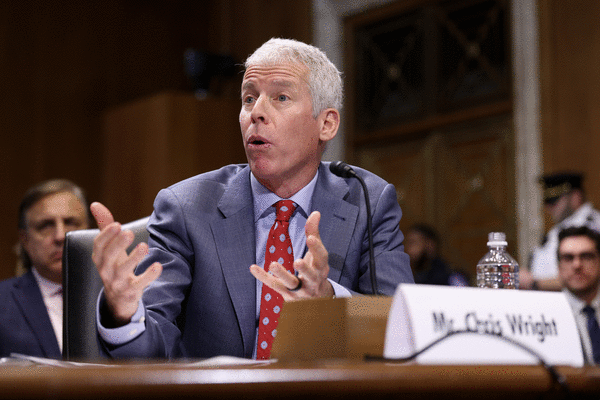
U.S. Energy Secretary Chris Wright cautioned oil traders against expecting a breakthrough on the Strait of Hormuz as Iran plans to pitch other Gulf countries on a deal for passage through the energy choke point.
“Counting on a consensual agreement with Iran today is certainly not a good bet,” Wright said in an interview on Sunday. He said markets will need to continue relying on transit that he said over the past seven days has supplied an average of 10 million barrels per day of crude and oil products through the Strait of Hormuz.
The Trump administration estimates an additional 4 to 5 million barrels per day has been carried away through pipelines. While attacks late last week led to the closing of Saudi Arabia’s East-West pipeline, the U.S. expects it to be back online soon, according to an administration official who asked not to be named to speak candidly about the matter.
That means “we’re back to two-thirds or north of two-thirds of the previous flows,” Wright said. “So the world oil markets are tighter than we’d like today, but they’re not overly tight.”
Iran plans to unveil an agreement on a temporary shipping lane through the strait on Monday in Oman after an unusual round of regional diplomacy over the waterway that included rare direct talks between Iran and Abu Dhabi.
Wright spoke in Vienna, where he plans to deliver a stern warning to Iran at the International Atomic Energy Agency. The United Nations nuclear watchdog’s annual general conference begins Monday, and the Trump administration’s top energy official said Tehran’s nuclear program will end “one way or another.”
“We prefer to negotiate,” Wright told Bloomberg News. “Or, they can continue to have a covert, buried, lied-about, hidden nuclear weapons program and face the U.S. military, which will assure they do not develop nuclear weapons.”
Last week, the U.S. led an IAEA motion that referred Iran back to the U.N. Security Council. The Islamic Republic hasn’t allowed international inspectors to verify the state and location of its stockpile of near-bomb grade uranium since June 2025, when Israel and the U.S. attacked its sprawling nuclear program.
“To have no inspectors on the ground, no visibility, that’s another level of noncompliance and absolutely it’s concerning,” Wright said.
IAEA Director General Rafael Mariano Grossi last week echoed comments by U.S. President Donald Trump that new activity had been detected at Iran’s Pickaxe Mountain, a heavily fortified site suspected of housing nuclear-related activities.
“There are some indications that there is movement around this construction site,” Grossi said in a Sept. 10 interview. “We don’t have any concrete information as to activities that may be taking place there.”
The U.S. and Israel want Iran to dismantle its centrifuge program and cease enriching uranium. Centrifuges are the fast-spinning machines separating uranium isotopes and are a critical technology in the making of nuclear fuel for power or weapons.
“We can supply fuel from outside the country,” Wright said. “They could join the community of nations again and bring peace and prosperity to their people.”
The U.S. is close to bolstering its own uranium supply chain, according to Wright. The Department of Energy is closing in on “long-term uranium production and partnership” deals, he said without providing details.
The U.S. nuclear industry remains heavily dependent on imports of uranium products to fuel the reactors that generate about a fifth of the nation’s electricity.
_____
©2026 Bloomberg L.P. Visit bloomberg.com. Distributed by Tribune Content Agency, LLC.





Comments