New Baltimore overdose strategy centers on harm reduction
Published in News & Features
BALTIMORE — Baltimore is expanding its use of controversial harm reduction strategies as the city tries to reduce overdose deaths, especially those tied to opioids.
Mayor Brandon Scott on Monday detailed the city’s latest anti-overdose effort, called Hope Lives Here: Baltimore, which focuses on reducing stigma around substance use disorder and treating it as a disease.
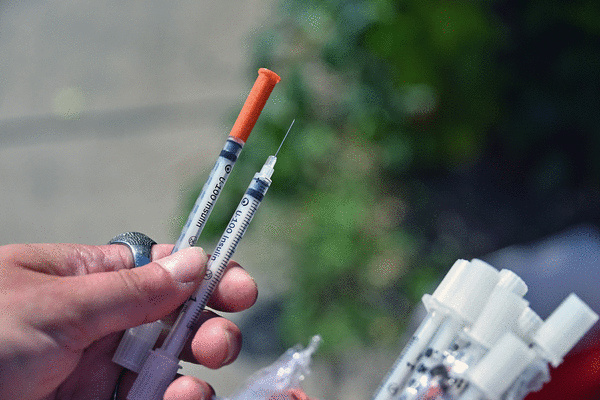
The effort includes vending machines that provide free hygiene kits, drug-check strips, safe-injection kits and safer-sex kits, according to the Baltimore Health Department.
“To be clear, substance abuse disorder is not a personal failing. It is a disease,” Scott said at a news conference in West Baltimore’s Penn North neighborhood.
Supporters of harm reduction say the approach saves lives by reducing the dangers associated with drug use. Critics argue it encourages drug use and discourages people from seeking treatment.
Mike Gimbel, the former Baltimore County drug czar, is among the critics. He called harm reduction a “scam” and said he believes the approach enables addiction.
“The only way to deal with addicts is to change their behavior. You don’t change the behavior by giving them the tools to kill themselves,” said Gimbel, who said he is in recovery from heroin addiction and has been sober for more than five decades.
Travis Rieder, an associate research professor at the Johns Hopkins Berman Institute of Bioethics, said the evidence that harm reduction saves lives is a “really powerful” argument in its favor.
“You deserve healthcare — and harm reduction is healthcare — because you are a human being,” Rieder said.
Scott said the city is letting “data guide our approach.” State data show overdose deaths in Baltimore have fallen substantially after years of increases.
According to the Maryland Department of Health, overdose deaths in the city increased in eight of the nine years between 2015 and 2023. But overdose deaths fell year over year by more than 25% in 2024 and more than 22% in 2025.
Baltimore still leads the state in overdose deaths. During the 12-month period that ended in July, 523 people died of overdoses in the city, over 380 more than in Baltimore or Montgomery counties, the next-highest jurisdictions.
Of Baltimore’s overdose deaths during that period, 86% involved opioids. Nearly 93% of those opioid-related deaths involved fentanyl.
Last year, three mass overdose incidents in Penn North between July and October sickened and hospitalized 62 people.
Fentanyl, a powerful synthetic opioid, was among the substances National Institute of Standards and Technology scientists found were responsible for the July 10, 2025, mass overdose incident, which hospitalized at least 27 people.
None of those people died.
Keeping people alive, Scott said, is the only way to help people with substance use disorders reach the next step.
“You can’t reach recovery if you are not here with us,” Scott said.
_____
©2026 Baltimore Sun. Visit baltimoresun.com. Distributed by Tribune Content Agency, LLC.





Comments