Grand Canyon under storm threat after deadly weekend floods
Published in News & Features
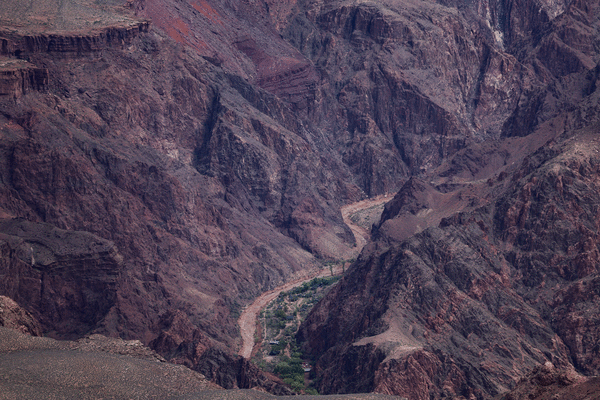
Another round of heavy rain is threatening to complicate search-and-rescue efforts in the Grand Canyon, where two people died and more than a dozen are missing after catastrophic floods swept through popular hiking areas Saturday.
Seasonal monsoon rains dropped roughly a month’s worth of moisture over steep, mountainous terrain in Grand Canyon National Park this weekend, according to estimates from the U.S. National Weather Service.
Flood alerts now cover much of Arizona, with rainfall rates of more than 1 inch (2.5 centimeters) per hour possible through Monday night local time.
“After recent heavy rain and significant flash flooding, the region is extremely vulnerable,” Weather Prediction Center forecaster Joshua Weiss wrote in an update Monday. “Any additional heavy rain today will likely lead to flash flood impacts, which locally could be significant.”
Flash floods swept through the park beginning Saturday at around 2:30 p.m. local time in Bright Angel Canyon, triggering evacuations in the Phantom Ranch area nearby. The ranch — a collection of dormitories and cabins located on the canyon floor — is a key destination for hikers traveling from rim to rim across the park.
The body of a 46-year-old man was recovered over the weekend near Crystal Rapids along the Colorado River, according to the National Park Service. The death toll increased to two on Monday morning as search and recovery efforts continued, according to a post on X. The National Park Service didn’t provide further updates on the number of missing people.
The parks service said in an X post Saturday that it was conducting air evacuations for roughly 50 people in the area near Phantom Ranch, which is only accessible by river raft, on foot or by mule.
The National Weather Service is advising remaining park visitors to check forecasts and ensure they can receive safety alerts in real time.
Still, the weather service didn’t issue safety warnings until shortly before Saturday’s disaster, said Justin Johndrow, a meteorologist with NWS in Arizona. “Warnings were issued pretty much right when the rain started.”
Flash-flood alerts issued long before storms hit are reserved for “a higher threat in a larger area that could be impacted,” Johndrow said, more akin to the threat facing northern and central Arizona through Monday evening.
An advisory issued by the weather service now warns that “raging killer currents will be possible in side canyons and narrow slot canyons” as monsoon rains return to the region.
“Even distant storms can send floods through canyons, which can catch people off-guard,” Johndrow said. “You can have flash flooding where you’re at even if there’s no rain.”
Both the Arizona Department of Public Safety and the Grand Canyon National Park staff responded to the event this weekend and are aiding in evacuations and accounting for those who may have been in the affected areas. The Coconino County Medical Examiner’s Office was also onsite.
The park has said flooding has damaged approximately 40% of the Transcanyon Waterline, leaving the park with limited water reserves. The National Park Service has been gradually replacing the 1960s-era pipeline that supplies campgrounds and lodging areas due to frequent failures and leaks. Due to water shortages, the south rim of the park is set to remain open for day use and “dry camping” only.
_____
With assistance from Sarah Gray, Cedric Sam and Chloe Whiteaker.
_____
©2026 Bloomberg L.P. Visit bloomberg.com. Distributed by Tribune Content Agency, LLC.






Comments