Beshear would support rolling back Kentucky's data center tax breaks
Published in News & Features
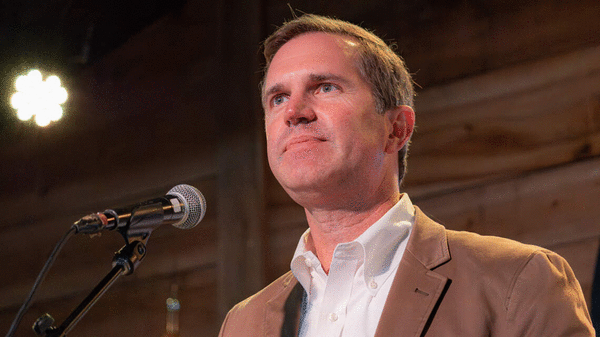
Kentucky Gov. Andy Beshear said he opposes sweeping sales and use tax exemptions for in-state data centers.
“I don’t think data centers need incentives,” he said Aug. 27 during his weekly update. “I don’t think we should be providing them, so I would certainly support rolling back any of that. These are some of the wealthiest companies in human history; they can afford the construction.”
Though no qualifying data center project has been awarded a tax break from the state, Kentucky lawmakers are already angling at changing the policy they passed the expanded to attract the technology facilities.
The Kentucky Qualified Data Center Project Initiative Program was created by the General Assembly in 2024, expanded in 2025 and provides sales and use tax exemptions to some data center projects. The incentive has no cap and no requirements for jobs created or wages paid.
The data center tax exemption covers the purchase, use, installation, repair and replacement of equipment used in qualifying facilities. The exemption — meaning the state is choosing not to collect taxes it otherwise would have — can last as long as 50 years for projects with at least $450 million in capital investment.
The House bills that created the program and later expanded it both became law without Beshear’s signature.
In 2021, Beshear vetoed one the first iterations of the tax exemption policy and said the process was rushed and that he had “concerns about the amount of up-front dollars the bill provides based merely on the promise of a project, as well as the lack of discretion to say ‘no’ to a project that is certain to fail.”
Senate Majority Caucus Chair Robby Mills, R-Henderson, wrote in an Aug. 14 social media post he has “a feeling” the breaks could be “going away or will be substantially reduced.”
His comments came days after a Kentucky Center for Economic Policy analysis found the state could forgo billions of dollars in state sales tax revenue if even a handful of the massive data center projects proposed qualify for the exemption.
Lawmakers, like Mills, are in the middle of the interim legislative session where they spend time in Frankfort hearing updates on policy implementation and question experts as they draft new rules and regulations for consideration during the regular session, which begins in January.
Senate President Robert Stivers, R-Manchester, still believes data centers can be economic opportunities with huge financial tax-based impact, “if done right,” he said on WKYT’s Newsmakers.
He said the state’s two largest cities, and numerous others, putting moratoriums in place on data center proposal acceptance, approval and construction has been done because “in part, they seem to be waiting for the state to set some rules,” and he hoped Beshear, his cabinets and the legislature could work more closely together to create the framework.
But Beshear said Stivers’ insinuation that a special session could be called to hash out details related to data center policy had not been communicated to him, and he had not been approached by legislative leadership about doing so.
Stivers said Beshear, a Democrat, was moving in the right direction when he signed an executive order establishing new standards for data center developers and requiring them to demonstrate they can pay their own way.
Beshear said he has directed his Energy and Environment Cabinet to deny permitting applications when it determines a proposed data center would adversely affect Kentucky’s air quality, water use, water quality, water supply, federally protected wetlands or other natural resources.
Commitment from data center operators to pay their own way and a submission of an energy plan demonstrating how they will protect residential ratepayers is also part of the executive order.
“Not every (data center proposal) is going to be the same,” Beshear said. “The one that appears to be the furthest along in Kentucky is replacing an aluminum smelter so, the impact on the environment going on land you’re going to remediate may be different from a green field.
“The purpose here is to make sure that residents aren’t negotiating impacts to their economy, but that the state is stepping up and saying we are going to prevent negative effects,” he said.
The governor said Thursday most of the data center companies eyeing Kentucky have given positive feedback to the system his executive order creates and those that are submitting applications are “the real ones.”
He said data center development is still “an intensely local decision, but that local decision should be made knowing based on the (executive order) that there is going to be no increase in your electricity rates. Otherwise, they’re not coming. There should be no detrimental impact on the environment. They should pay taxes and be transparent with the local community.”
_____
©2026 Lexington Herald-Leader. Visit kentucky.com. Distributed by Tribune Content Agency, LLC.






Comments