Ban on utility donations plan poised for Michigan ballot despite House vote
Published in News & Features
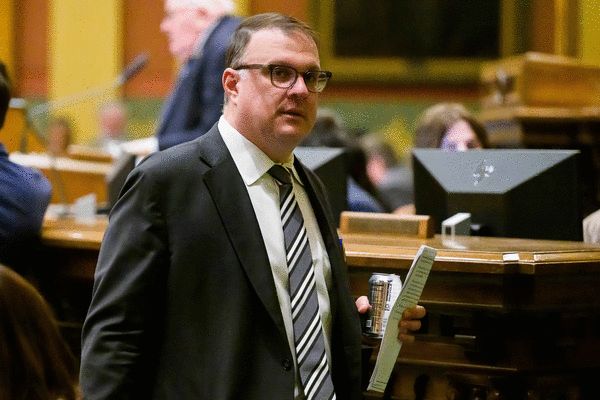
LANSING, Mich. — The Michigan House on Tuesday attempted to intercept an initiative petition that would bar state-regulated corporations from making political contributions before the proposal made it to the November ballot.
The Republican-led state House adopted the Michiganders for Money out of Politics proposal in a 77-26 vote on Aug. 25. But the Democratic-led Senate said it will not vote on the measure, instead allowing it to proceed to the November ballot for a vote.
If both chambers had adopted the measure, lawmakers would have needed just a simple majority to amend it later on. If the ballot initiative is adopted by voters, lawmakers would need a three-fourths majority vote to amend it down the road.
Senate Majority Leader Winnie Brinks, D-Grand Rapids, said the message of those signing the initiative petition was clear: They want it on the ballot.
"Senate Democrats already agree that there is too much dark money in politics, and we are eager to hear what voters have to say on this issue," Brinks said. "In that spirit, we will not be subverting the will of the voters by taking it up legislatively."
House Speaker Matt Hall, R-Richland Township, argued the intent of the initiative petition was to put the question before the Legislature and he wanted to take a stand on it.
"On the balance, the proposal before us will move things in a more positive direction by getting a lot of this money out of politics," Hall said.
State Reps. Jim DeSana, R-Carleton, and Dylan Wegela, D-Garden City, who have introduced similar legislation, told reporters they voted against the proposal because they saw it as an effort to erode the margin needed to amend the law.
"They did not collect the signatures to put the question up to the Legislature to adopt it and then be able to amend it with a 51% vote and render it unenforceable," DeSana said of those who collected signatures for the Michiganders for Money out of Politics proposal.
Michiganders for Money out of Politics argued Brinks' stand against legislative adoption would respect "the will of more than half a million Michiganders who signed petitions to place MMOP on the ballot."
"Don’t be fooled – what we saw from Hall today was nothing more than political gamesmanship," said Maura Cowley, campaign manager for Michiganders for Money out of Politics.
"He never had any intention of getting money out of politics. If he did, he wouldn’t have let common-sense, bipartisan policies to root out corruption in politics sit in committee time and time again."
Protect MI Free Speech, a group created in opposition to the proposal, expressed concern over Brinks' decision.
"It's very disappointing the Senate refused to discuss the issue or an alternative to this proposal, which was crafted in secret back rooms and funded with millions in dark dollars," said John Sellek, a spokesman for the group.
The group's signatures were certified by the Board of State Canvassers July 24, but in early August Protect MI Free Speech challenged that approval in the Michigan Supreme Court. That litigation still is pending.
After the board's approval of the signatures, the state Legislature has 40 days, or by Sept. 4, to either accept the proposal or allow it to proceed to the November ballot.
If approved by voters in November, the initiative would amend the state's campaign finance law to prohibit contributions from monopoly utilities and companies with state government contracts worth more than $250,000. Additionally, the initiative would ban entities and people connected to utilities and large government contractors from giving to political campaigns in Michigan.
The initiative also attempts to expand transparency around so-called dark money groups. Under current law, only groups that run ads expressly telling people how to vote have to report their donors. The initiative would expand the disclosure requirements to ads that clearly identify candidates, which would encompass those ads run by dark money groups that do not usually disclose their donors.
________
©2026 www.detroitnews.com. Visit at detroitnews.com. Distributed by Tribune Content Agency, LLC.





Comments