After Supreme Court setback, Trump again targets immigration by expanding definition of birthright citizenship
Published in News & Features
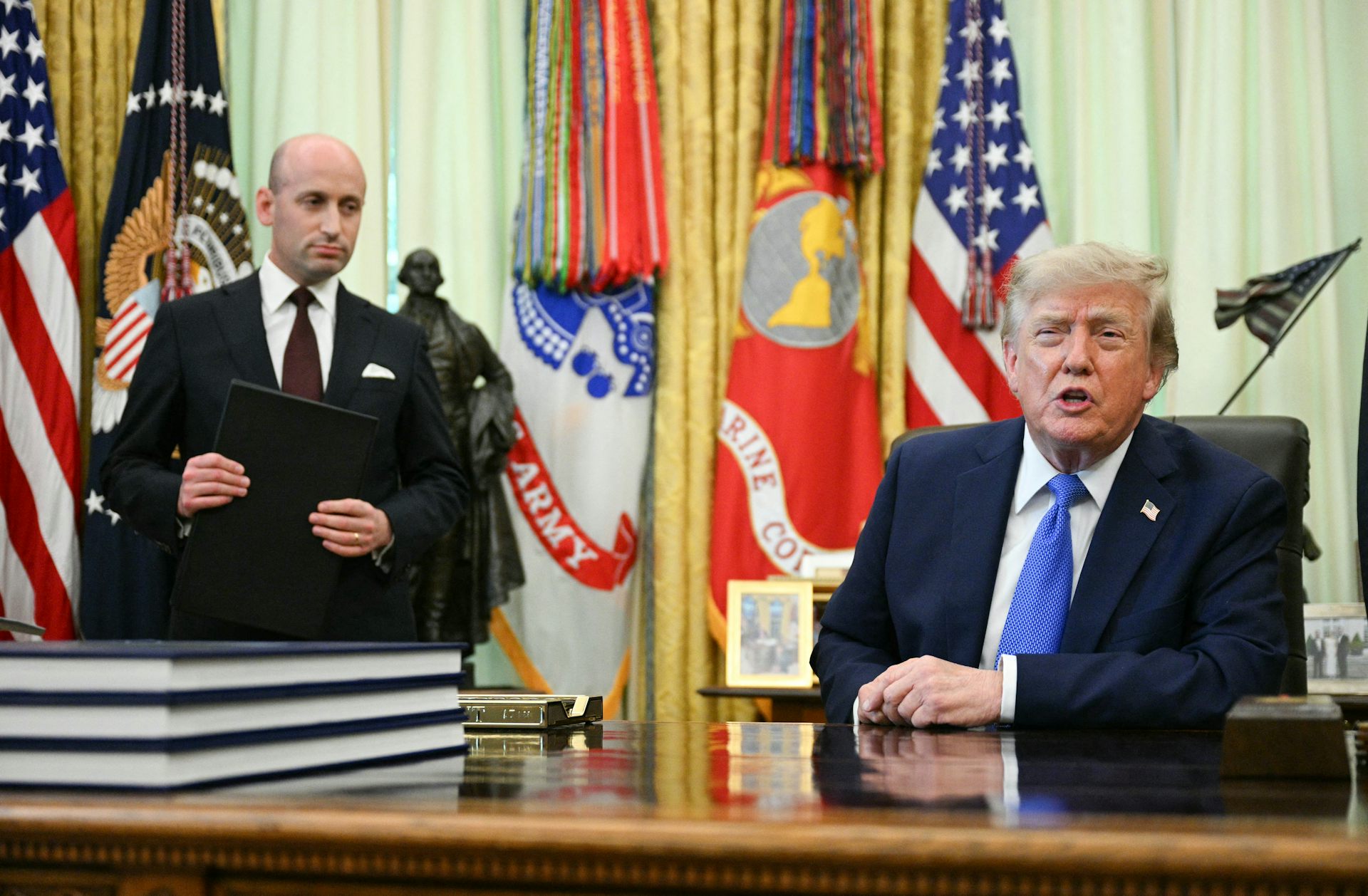
Since his return to the White House, President Donald Trump has issued over 270 executive orders.
That includes two orders issued in August 2026 addressing birthright citizenship, a subject seemingly settled by the U.S. Supreme Court’s recent decision. In June, the high court struck down Trump’s effort to deny citizenship to children born to foreign parents who are unlawfully in the United States.
One order directs federal agencies not to recognize U.S. citizenship for children of certain foreign national parents. They include the children of an “alien enemy,” meaning citizens of a foreign country that is at war with the United States, and children of parents who are employees of a foreign government – such as ambassadors, for example.
The second executive order calls on federal agencies to curtail so-called “birth tourism,” which it defines this way: the “entry of any foreign national into the United States via a nonimmigrant visa for the purpose of giving birth on American soil.”
As someone who has studied citizenship law, I found the two birthright executive orders eye-catching. At first glance, they seemed to defy the Supreme Court’s birthright citizenship decision. But on closer examination, the picture is not so clear. That’s because the orders target aspects of birthright citizenship that the Supreme Court did not address in its June decision.
On the first day of his second term, Trump issued an executive order directing federal agencies to stop recognizing birthright citizenship for babies born in the U.S. if neither parent is a citizen or lawful permanent resident.
In June 2026, the Supreme Court struck down the order. Chief Justice John Roberts wrote: “Children born in the United States to parents unlawfully or temporarily present are … citizens at birth under the Fourteenth Amendment’s Citizenship Clause.”
Roberts noted that the only people excluded from that clause are people who are exempt from U.S. jurisdiction, despite living on U.S. soil, such as ambassadors’ children and members of Native American tribes. The number of people covered by that exception is, as law scholars have noted, “trivial and easily administrable.”
Roberts’ opinion said nothing about birth tourism. That omission seems to have left room for Trump to craft his new executive orders.
While Georgetown law professor Steve Vladeck argues that the president is defying the court, I believe Trump is doing something different. He is engaged in what tax lawyers call “avoidance.”
The president is using lawful methods to identify loopholes in the court’s decision. Some scholars call it “legalistic noncompliance” – that is, getting around the court’s birthright citizenship decision while pretending to follow it.
One way for a president to avoid the implications of an adverse court ruling is to claim a new action is authorized under a rule not discussed in the decision.
Stephen Miller, Trump’s deputy chief of staff, explained the legal basis of the new executiue orders this way.
“Section 215 (a) of the Immigration and Nationality Act gives the president this authority,” Miller told reporters.
Nothing in the Supreme Court’s June birthright citizenship ruling touched on the president’s authority under the Immigration and Nationality Act.
However, the 2018 case Trump v. Hawaii did.
Decided during the president’s first term, after the so-called Muslim ban that suspended entry into the U.S. for people from some Muslim-majority countries, the Supreme Court held that the president “lawfully exercised the broad discretion granted to him… (by) the Immigration and Nationality Act … (to) suspend … the entry of aliens into the United States.”
The emphasis here is on “broad discretion.” As Roberts wrote in the majority opinion, the Immigration and Nationality Act allows the president to make “decisions whether and when to suspend entry … and on what conditions.” It is left to the president to figure out when “the entry of the covered aliens would be detrimental to the interests of the United States.”
The language in Trump’s birth tourism executive order reflects Roberts’ understanding of the scope of the authority granted to the chief executive by the Immigration and Nationality Act.
“Birth tourism,” the order says, “undermines the integrity of the Nation’s immigration system by enabling foreign nationals to exploit their temporary admission to obtain permanent immigration-related benefits. Birth tourism also … impairs the executive branch’s ability to protect the national security.”
Protection of national security was one of the grounds Roberts specifically cited in Trump v. Hawaii as a basis for the president to prevent foreign nationals from entering the United States. The president’s new executive orders try to circumvent the court’s birthright citizenship case by invoking a law not discussed in that case.
During the Oval Office signing ceremony for his two new executive orders, the president was not subtle about his intentions regarding birthright citizenship. With Miller at his side, he called the Supreme Court’s June ruling “very unfair” and said that with new orders “we’re ending it a different way.”
In its Trump v. Hawaii ruling, the Supreme Court charted the route for him to do so.
But, as Vladeck argues, even if the president does not succeed in getting the court to approve the administration’s new effort to end birthright citizenship, it will continue to “try to muddy the waters when it comes to describing categories of non-citizens” and make the definition of citizenship not depend on where a child is born.
Instead, Vladeck says, an immigrant child’s status in this country would depend on “whether officials can pin a disqualifying label on her parent.”
That would leave the court’s birthright citizenship decision undisturbed, while hollowing out its practical effect.
This article is republished from The Conversation, a nonprofit, independent news organization bringing you facts and trustworthy analysis to help you make sense of our complex world. It was written by: Austin Sarat, Amherst College
Read more:
In rebuke to Trump, Supreme Court upholds birthright citizenship, emphasizing the promise of equality in the Declaration of Independence
Justice Jackson’s birthright citizenship opinion includes Black Americans in the story of the nation’s search for equality
‘In the end the court did its job’ – a former federal judge reviews a Supreme Court term full of momentous decisions
Austin Sarat does not work for, consult, own shares in or receive funding from any company or organization that would benefit from this article, and has disclosed no relevant affiliations beyond their academic appointment.






Comments