Environmental groups settle lawsuit against federal government, contractor over Tijuana River pollution
Published in News & Features
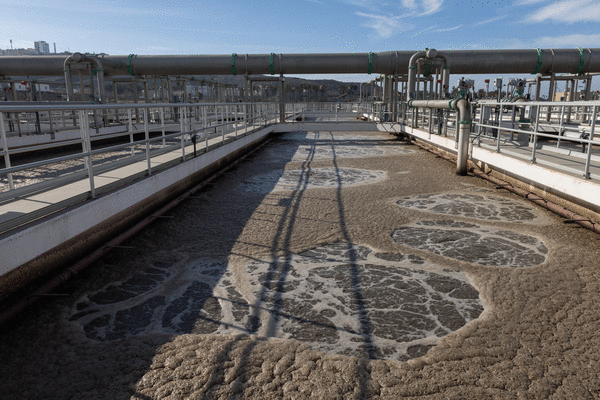
SAN DIEGO — San Diego Coastkeeper and the Coastal Environmental Rights Foundation have settled a yearslong Clean Water Act lawsuit against the U.S. International Boundary and Water Commission and its contractor, Veolia Water West Operating Services, over alleged pollution violations at the South Bay International Wastewater Treatment Plant.
The settlement, reached Aug. 5, resolves litigation the two environmental groups filed in April 2024 alleging the agency and its contractor discharged fecal bacteria, heavy metals and toxic chemicals — including some banned in the U.S., such as DDT and PCBs — into the Tijuana River, its estuary and the Pacific Ocean.
The original complaint alleged more than 500 self-documented violations for inadequately treating sewage before ocean discharge, dozens of canyon collector spill events sending millions of gallons of raw sewage into the estuary, inaccurate self-monitoring reports, and a five-year failure to implement a river valley monitoring program.
Since the suit was filed, USIBWC has received nearly $800 million in federal allocations, funding a full overhaul of the plant. The agency has expanded treatment capacity by 40%, reducing untreated flows into the U.S. by 10 million gallons per day, and has met the facility’s ocean discharge effluent limits for more than 18 consecutive months, according to a news release from the two groups.
Under the settlement, USIBWC and Veolia agreed to increase public transparency on the status of outstanding Minute 328 infrastructure projects and to improve outreach around major repairs or unexpectedly high wastewater flows that could strain the plant or its canyon collector systems.
“The positive impact of our enforcement action has been undeniable,” Coastkeeper Executive Director Phillip Musegaas said in a statement. He said wastewater flows into the U.S. averaged nearly 40 million gallons per day in the summer of 2024, when the plant “was on the verge of failing completely.”
“This is one piece of a much larger problem, but it’s critical that the treatment plant is now working as intended for the first time since 2020,” CERF Programs Director Sara Ochoa said.
Under the settlement’s terms, Veolia is not required to make any monetary payments and has not admitted to liability, the company said in a statement.
“We are grateful that the parties to the litigation have acknowledged the sustained progress being made on both sides of the border to create a 100% solution to the sewage crisis that has burdened South Bay communities for too long,” Veolia’s statement said. “Under strong IBWC leadership, the plant’s treatment capacity has already increased by 40 percent, critical infrastructure has been rehabilitated, and construction is underway to further expand the facility’s capacity to treat up to 50 million gallons of Tijuana sewage per day.”
Veolia called the crisis “a decades-long transboundary infrastructure problem” requiring continued binational cooperation and sustained investment on both sides of the border. The company said it “remains committed to operating the South Bay plant responsibly and supporting IBWC and our partners in that essential work.”
The USIBWC could not be reached for comment at this time.
The lawsuit was one of several filed against the agency and its contractor amid the yearslong crisis. Imperial Beach homeowners filed a class-action suit against Veolia in September 2024 seeking more than $300 million in damages, alleging the company’s failure to maintain the plant degraded property values. The Coronado Unified School District sued Veolia and former plant manager Mark Wippler in March 2025, alleging negligent operation exposed students and staff to noxious fumes.
In March, USIBWC awarded Veolia a $27.29 million sole-source, 12-month bridge contract to continue operating the plant after canceling a prior solicitation over technical deficiencies and an undisclosed conflict of interest.
Coastkeeper said it will continue to press the issue through its Tijuana River Valley sampling program, the One Coastal Community binational partnership and the Tijuana River Coalition.
The group has also filed a petition with the Commission on Environmental Cooperation under the U.S.-Mexico-Canada Agreement, alleging Mexico has failed to enforce its own environmental laws on wastewater management. Mexico’s federal government faces an Aug. 28 deadline to respond.
_____
©2026 The San Diego Union-Tribune. Visit sandiegouniontribune.com. Distributed by Tribune Content Agency, LLC.






Comments