NC sues Trump administration to stop tariffs. How consumers are affected
Published in News & Features
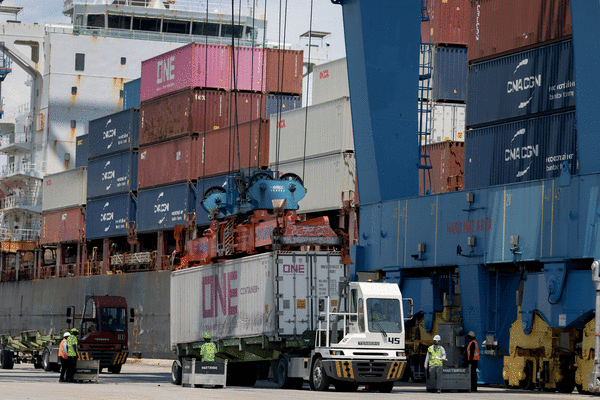
For over a year, Burlington-based TS Designs has been swept up in a chaotic business environment caused by changing tariff policies.
The T-shirt manufacturer lost customers, paid more for shipping, raised prices and now, is working to navigate the refund process, trying to recoup some money that the Supreme Court decided was charged illegally.
But the policies are changing again. In late July, the United States Trade Representative announced new tariffs, or import taxes, on 60 trading partners, affecting 99.4% of U.S. imports.
“People are just kind of frozen. They don’t know what to do, and they’re definitely not making long-term commitments,” TS Designs CEO Eric Henry told The News & Observer in a video interview.
Last week, North Carolina joined a lawsuit to stop the new tariffs, which Attorney General Jeff Jackson said will make it harder for families to afford basic expenses.
More tariffs?
Allowed under Section 301 of the Trade Act of 1974, according to the trade representative, the tariffs went into effect July 23 on countries “for their failure to impose and effectively enforce a prohibition on the importation of goods produced with forced labor.”
North Carolina families could pay $1,100 per year because of tariffs, according to a news release from the attorney general.
“These tariffs are hurting families, farmers, and business owners,” Jackson said in the news release. “They’re illegal, and they’re making things harder for North Carolinians who are working around the clock to keep the lights on, pay rent, and afford gas.”
Attorneys general and governors of two dozen states are joining North Carolina in the lawsuit, which argues that the tariffs exceed the administration’s legal authority and violate the Administrative Procedure Act.
Impact to businesses
These new tariffs are the latest in a series of wide-ranging import taxes imposed by the Trump administration.
In the past, the president forecasted that the tariffs were coming, giving some businesses an opportunity to stockpile imported supplies, said Andrew Greenland, economics professor at N.C. State University.
“Over the next year, they begin drawing down their inventories, and so at some point they have to restock,” Greenland said.
There’s no way for companies that are now importing goods to avoid the tariffs. But, Greenland said, many businesses likely started to restock months ago, anticipating that Trump would pivot, finding new justification for the taxes. In February, the Supreme Court struck down tariffs that were imposed under the International Emergency Economic Powers Act.
Declaring those tariffs illegal has allowed primary importers to get refunds. But getting one is a “painful process,” Henry said, as some businesses are turning to other companies to handle all the paperwork — in exchange for a cut of the refund.
It’s just one more blow to the company that has already made difficult decisions, including raising prices. It has caused TS Designs to lose business, but without it, the company wouldn’t be able to cover its costs.
How consumers will be affected
The news isn’t good for consumers further down the chain, either. They likely paid companies to offset the cost of tariffs, Greenland said, but there’s no way to prove that the higher prices were a result of tariffs and not something else, like inflation or a company just wanting to charge more.
Besides the higher prices consumers have already paid, costs of everyday purchases remain high.
For example, in North Carolina, a gallon of regular unleaded gas costs, on average, about 80 cents more than it did a year ago, according to AAA.
And Consumer Price Index data showed that in June, food prices were up 3% over the past 12 months.
________
©2026 The News & Observer. Visit at newsobserver.com. Distributed at Tribune Content Agency, LLC.






Comments