Volunteer network born during immigration crackdown becomes Democratic organizing force
Published in News & Features





MINNEAPOLIS — A year ago, Hillary Rugroden had never heard of a precinct caucus.
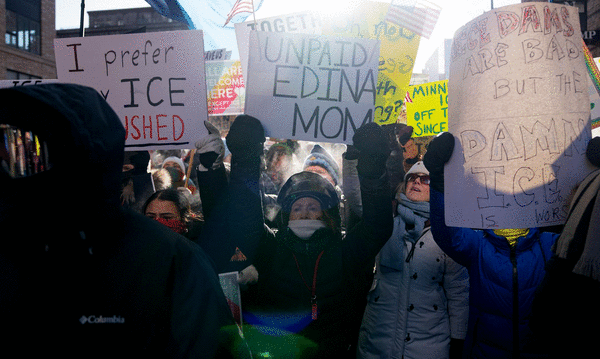
The busy Minneapolis mother of two followed the news, voted in elections and otherwise stayed out of politics. Then the Trump administration’s immigration crackdown hit Minnesota. She found herself organizing grocery deliveries, coordinating bus stop escorts and helping families pay rent.
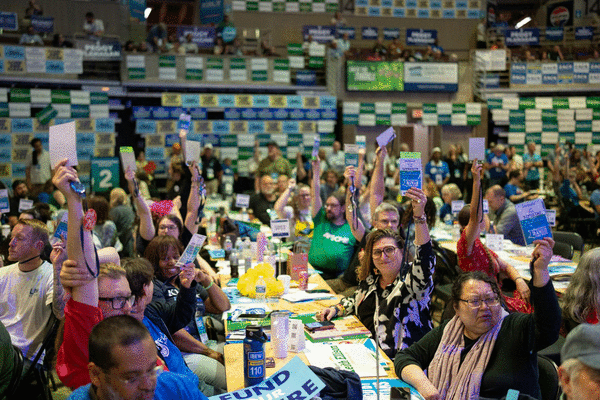
When she walked into her first DFL precinct caucus in February, she showed up early because she wasn’t sure what to expect. By May, she was one of more than 1,000 statewide DFL delegates casting votes to endorse candidates in races for governor and U.S. Senate.
“It was one of the first times I was like, ‘I feel like I’m actually in the room where it happens,’” Rugroden said.
For decades, Democratic organizers in Minnesota have searched for a way to turn moments of outrage into lasting political engagement. Many believe Operation Metro Surge did just that.
A sprawling volunteer network that sprang up almost overnight to help immigrant families is now feeding people into the state’s DFL political infrastructure as precinct chairs, convention delegates, campaign volunteers and even candidates for office.
Organizers say that transformation wasn’t accidental: Years spent building neighborhood networks and organizing infrastructure meant thousands of first-time volunteers had somewhere to go once the immediate crisis subsided.
The next test is whether that civic awakening translates into electoral power in an election year with control of the Legislature, the governor’s office and a U.S. Senate seat all at stake. Trump’s immigration agenda continues to command broad support among Minnesota Republicans, a sign that his base is sticking with him.
But DFL organizers believe the same energy that filled volunteer shifts and precinct caucuses can carry into November.
“I’ve never seen this many people get off the sidelines,” said Amanda Otero, co-executive director of progressive advocacy group TakeAction Minnesota. “I’ve never seen anything like this before.”
From volunteers to activists
For Carl McBurney, the first step was standing outside a school.
The south Minneapolis father of two had always voted and followed politics, but activism had taken a back seat to working and raising a family over the last decade. When the immigration crackdown started, he signed up for a school patrol in his neighborhood.
“January started with just being in a school patrol trying to make sure kids felt safe,” he said. “It snowballed from there.”
Months later, McBurney had attended his first DFL precinct caucus, became a precinct chair and joined his neighborhood association’s board.
The experience changed how he thinks about civic engagement. Instead of jumping in only when there’s a crisis, he said, he’s trying to build the relationships that make communities more resilient before one happens.
“One person can make a huge difference by just establishing some kind of communication across the block,” he said.
Unlike many forms of political activism, organizers say the response to Metro Surge produced immediate, visible results. Participants could literally watch children walk safely into school or see a family receive groceries.
That immediate feedback loop kept people engaged afterward.
“You drop off a food box and you’re like, ‘Someone’s gonna have food.’ That matters,” said Becca Dryden, who organized volunteers during the immigration crackdown. “Or you stand outside the school and you watch kids walking into school and you’re like kids feel safer because there are adults watching.”
“That tangibly makes a difference to my neighborhood.”
The experience completely reshaped Dryden’s view of public office and prompted her to run for school board.
After years organizing in Tennessee, she had moved to Minneapolis hoping to raise her children somewhere that felt more welcoming. Becoming a candidate wasn’t part of the plan, but working alongside hundreds of others organizing school patrols, financial assistance and communications during Operation Metro Surge showed Dryden how regular people responding to a complicated crisis could actually change things.
She’s now running for the Minneapolis School Board in District 5, arguing that the lessons of Operation Metro Surge apply just as much to governing as they did to crisis response. The district’s biggest challenges, she said, won’t be solved by the board alone, but by organizing parents, educators and neighbors into a broader coalition capable of tackling them together.
“The individual people on the board cannot be experts at all of the things that the district is facing,” Dryden said. “It needs to be relational.”
The next campaign
Even in Minnesota, where voter turnout, volunteerism and civic engagement already rank among the nation’s highest, organizers said the response to Operation Metro Surge surprised them.
TakeAction trained more than 2,000 volunteers to observe and document law enforcement activity, coordinated roughly 3,000 patrol shifts a week at the height of the crackdown and helped raise $4 million to keep families fed and housed. Hundreds of people began joining nightly Zoom calls that previously drew 40 or 50 participants.
Otero said groups like TakeAction weren’t creating new organizations from scratch during the crisis. They were plugging thousands of new volunteers into networks that already existed.
Organizers had spent years building toward this moment. After George Floyd’s murder drew enormous demonstrations in 2020, Otero said many struggled to convert that energy into sustained organizing, a challenge compounded by the pandemic. Operation Metro Surge found Minnesota’s organizing infrastructure better prepared.
Now, some of those volunteers-turned-activists are connecting with a broader network of groups working to flip the state House to DFL control as well as the rural First District seat in Congress, she said.
The Minnesota DFL Party also trained 10,000 observers in 48 days and tens of thousands more went through trainings through other organizations, said party chair Richard Carlbom.
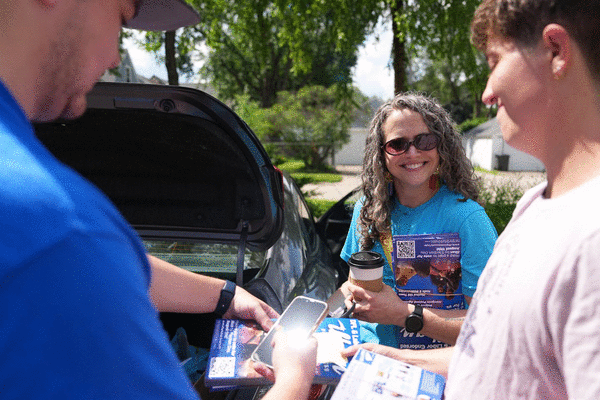
The opportunity was clear, he said: “How do we get you to go from that protest on a roadside or a bridge to door knocking in September?”
The party reported record turnout at February’s precinct caucuses, and more than half of the people who attended the DFL convention this spring were brand new to the process, drawn in by the immigration crackdown.
Volunteers are still showing up in droves in all corners of the states to help campaigns in 90-plus degree heat, Carlbom said.
“People are trying to understand: Where do I plug in to help protect my community?” Carlbom said, adding that he is still thinking about how to best keep people engaged.
Before the immigration crackdown, Allie Boran, a Bloomington mother of two, considered herself informed but not particularly active. She said a feeling of “imposter syndrome” kept her away from politics previously, but doing nothing “wasn’t an option” after the fatal shootings of Alex Pretti and Renee Good.
She joined school patrols and started organizing parents through Minnesota Families for Public Schools, which was active during the surge. Now she’s helping recruit other parents into the work and trying to elect candidates this fall who support boosting funding for the state’s schools.
“The thing that brought me in was knowing that someone wanted to get to know me on a personal level,” Boran said. “That personal relationship and connection made it easier to find the time. ... That is what I want to offer people as well.”
©2026 The Minnesota Star Tribune. Visit startribune.com. Distributed by Tribune Content Agency, LLC ©2026 The Minnesota Star Tribune. Visit at startribune.com. Distributed by Tribune Content Agency, LLC.





Comments