Syria says Russian Mediterranean bases to shift to joint control
Published in News & Features
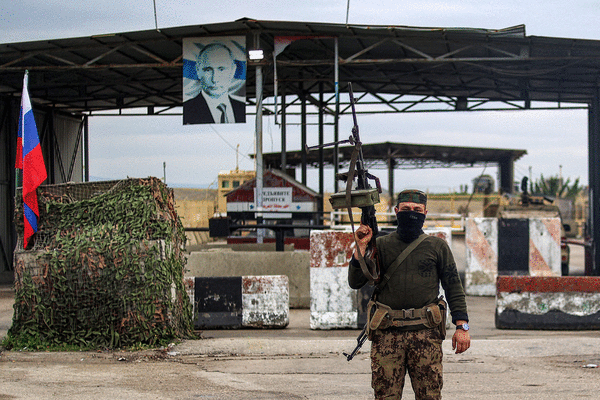
Syria said two Russian bases in the country will be turned into joint training centers after the two sides agreed to redefine the role of the facilities that have given Moscow a military presence on the Mediterranean.
Under the memorandum of understanding announced Sunday, the air and naval bases should be converted to “joint training and qualification centers” within three months, the state-run Syrian Arab News Agency reported, citing a Foreign Ministry statement.
While the Hmeimim air base in Latakia and a Mediterranean port at Tartus gave Russia military reach in the Middle East and Africa, their status has been in question since longtime ruler and Kremlin ally Bashar al-Assad was ousted in 2024.
The memorandum provides for Syria to manage civilian facilities including Hmeimim airport and a commercial berth at the Tartus port. It will reorganize Moscow’s presence on the Syrian coast and aim at “safeguarding the interests of both countries,” Sana reported.
Syria’s Foreign Ministry called the pact “the most significant development since negotiations began about 18 months ago,” adding that “it opens the way for a new phase in Syrian-Russian relations.” The Kremlin didn’t respond to a request for comment.
Syrian President Ahmed Al-Sharaa, who led an Islamist uprising that toppled Assad, met Russia’s Vladimir Putin in Moscow last October as the two countries sought to rebuild ties. The future of the Russian bases was on the agenda, a Kremlin spokesman said at the time. Al-Sharaa visited Moscow again in January.
Al-Sharaa has also met Donald Trump more than once since assuming power in early 2025, building rapport with the U.S. president who lifted sanctions imposed on Syria. A key U.S. goal is to ensure that Syria doesn’t fall back into the orbit of Iran, which also had close ties with Assad.
Russia backed Assad when Syria’s civil war began in 2011, striking rebel-held areas in what a United Nations panel later branded as war crimes. But Moscow didn’t intervene during the 2024 revolt against his rule, forcing Assad and his family to flee to the Russian capital after the rebels toppled his regime.
____
(With assistance from Tony Halpin.)
©2026 Bloomberg L.P. Visit bloomberg.com. Distributed by Tribune Content Agency, LLC.






Comments