Boston Mayor Wu unveils street safety plan that prioritizes cyclists, cracks down on drivers
Published in News & Features
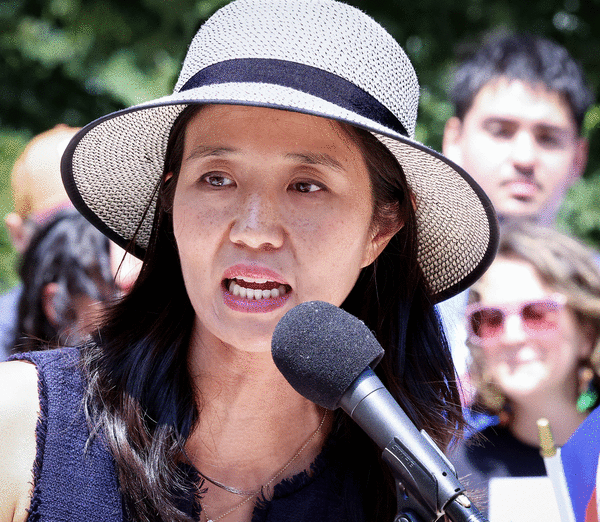
BOSTON — Boston Mayor Michelle Wu released a street safety plan that prioritizes cyclists while cracking down on drivers seen as putting them at risk in response to intense pressure from bike activists following a city worker’s traffic death.
The new plan unveiled on Friday follows the mayor’s vow last week to recommit to stalled street safety projects and bike lanes at a transit advocate-led vigil for Louisa Gag, a 36-year-old city transportation planner who was fatally struck by a truck driver while riding her bicycle earlier this month.
“We remain devastated by the loss of Louisa Gag,” Wu wrote in a letter outlining her plan. “Louisa loved Boston and devoted her life to making our city better every day.
“I know many Bostonians are personally mourning this unfathomable loss while also continuing the fight for safer streets — a movement shaped by Louisa’s leadership, creativity and compassion,” Wu added. “Residents deserve clarity about our vision for streets that are safe, beautiful, and family-friendly.”
Wu said the city will look to provide protection to cyclists by encasing bike lanes in concrete barriers — similar to what’s been built on Congress Street — replacing the flimsy plastic flex posts that have been separating bike and car lanes citywide and are, per the mayor, “creating unacceptable risks for bike commuters.”
The city has added roughly 20 miles of bike lanes under the Wu administration, but the effort stalled after criticism during last year’s mayoral race that bike lanes were worsening traffic, creating hazards, and hurting the bottom line for businesses.
Other plans call for ramping up construction for the “thousands of curb ramps and hundreds of miles of sidewalks that need to be built or fixed” after “years of deferred maintenance.”
The city intends to target those upgrades on areas that are most urgent and used, with a particular focus on “ensuring that children can walk and bike safely to the places where they gather, play and learn” — such as school zones, libraries, parks, playgrounds, and community centers,” Wu said.
Other plans call for cracking down on motorists who double park or block bike lanes, crosswalks or sidewalks, with fines and technology that allow for and encourage more rapid reporting of violations and subsequent enforcement.
Wu said Gag was killed by a large truck, which has prompted the city to crack down on truck safety. She said trucks and other heavy commercial vehicles are to blame for the majority of fatal traffic crashes involving cyclists over the past decade.
A city truck-side ordinance is already on the books to regulate truck safety for city-owned and contracted vehicles, but Wu said the city needs protections for all trucks and large commercial vehicles on Boston streets.
“In the coming months, we will work to advance more comprehensive truck-safety legislation, strengthen side-guard enforcement, review city routes used by heavy commercial vehicles, and assess additional safety measures to prevent future crashes,” Wu said.
Police have not identified the truck driver who fatally struck Gag on the morning of July 9 nor pressed charges.
Gag was fatally struck on Tremont Street between Brigham Circle and Roxbury Crossing, an area that transit advocates say was “blocks away from an intersection” the Wu administration had “studied and stalled” for improvements.
Wu vowed at last week’s vigil that the city would conduct an analysis of road design at the corridor where Gag was killed — Tremont Street in Mission Hill — and recommit to bike lanes and street safety projects that she has been hammered for pausing in the wake of Gag’s death.
Her letter on Friday states that the corridor review will be aimed at identifying “important fixes.”
Wu said she plans to convene a group of advisors to review the effectiveness of her Streets Cabinet, and has taken steps to enhance operations by appointing two of her senior staff members to oversee the cabinet full-time. She identified them as Chris Osgood, the city’s senior advisor for infrastructure and former chief of streets, and Tali Robbins, her deputy chief of policy.
The plans were framed by Wu as advancing the city’s Vision Zero goals of eliminating all fatal and severe crashes by 2030.
“Boston should be a city where every resident and visitor can move comfortably and confidently,” Wu said. “We will carry forward Louisa’s legacy by working to make this vision a reality.”
_____
©2026 MediaNews Group, Inc. Visit at bostonherald.com. Distributed by Tribune Content Agency, LLC.






Comments