Michigan Gov. Gretchen Whitmer's final state budget includes some cuts, focus on state's literacy crisis
Published in News & Features
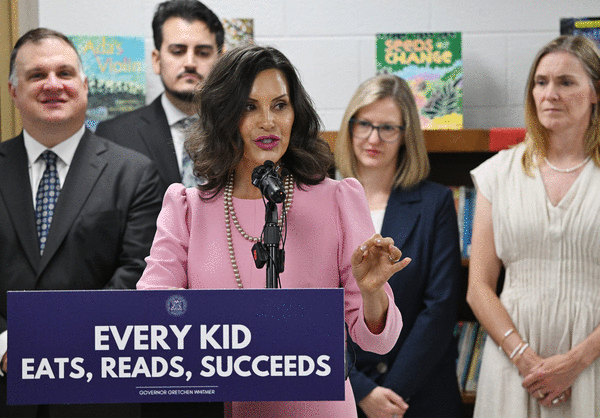
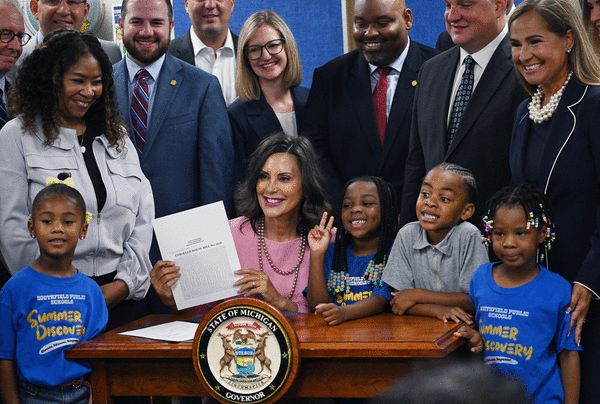
SOUTHFIELD, Mich. — Gov. Gretchen Whitmer signed off on the annual state budget Tuesday, giving the final stamps of approval to the last yearly state spending plans in her eight years as governor.
The Democratic governor signed the education budget Tuesday morning in Southfield and signed off on the omnibus budget, which funds all of the state's departments and agencies, later in the day in Lansing.
Whitmer and lawmakers noted Tuesday that federal funding cuts made balancing the state budget particularly challenging this year, specifically in terms of federal money the state relies on to fund Medicaid and the supplemental nutrition assistance program (SNAP).
"I’m proud of our work over the last seven-and-a-half years to grow Michigan’s economy, from creating tens of thousands of jobs to historic investments in communities and people," Whitmer said. "Let’s keep building on that progress and helping more families ‘make it’ in Michigan.”
Lawmakers passed the "compromise" budget after a marathon session at the start of the July 4 holiday weekend. The spending plan used an array of spending cuts and funding maneuvers to close a $1 billion tax revenue gap.
The new budget will be somewhat close to the current budget with an overall amount of approximately $84 billion. The exact total is difficult to quantify because, for the past two years, Michigan lawmakers have been giving contingency authorization for the spending of federal funds, a maneuver that allows that federal funding to be accounted for in boilerplate instead of the budget total.
“While each budget cycle during my time as majority leader has posed its own set of unique circumstances and challenges, Senate Democrats have remained dedicated to the same priorities since day one: delivering opportunity, equity, and real relief for the hardworking people of Michigan," said Senate Majority Leader Winnie Brinks, D-Grand Rapids.
House Speaker Matt Hall, R-Richland Township, said the budget delivered on priorities for Michigan residents despite it not including property tax relief as the speaker had hoped.
"This budget deal moves even more money out of wasteful spending and into the real priorities of Michigan families, like road repairs, schools, and public safety," Hall said. "This plan delivers better value for Michigan’s taxpayers, and I’m glad we were able to get it done together."
A handful of cuts in new state budget
The omnibus budget, the largest portion of the spending plan accounting for state departments, the judiciary, Legislature and executive office, took shape around the need to mitigate the effects of more state tax revenue being pushed to roads and federal cuts to a variety of programs.
Specifically, lawmakers had to plan for how to accommodate decreases in administrative cost sharing in SNAP, new social benefits oversight requirements and changes in Medicaid funding.
In February, Jen Flood, Whitmer's budget director, said the state was facing a $1.8 billion financial gap.
In all, 10 state departments will receive less money than the year before and a variety of state programs, such as the arts and culture program, Pure Michigan and the Office of Global Michigan, will see cuts.
Additionally, the omnibus budget included roughly $125 million in special projects sought by lawmakers, many of those tied to local infrastructure projects.
Lawmakers' final plan also cut $8 million in funding for the Pure Michigan tourism campaign, which received $17 million in support in the current year. The Office of Global Michigan got $500,000 less, dropping its total to about $41.4 million. And the arts and culture program got $685,200 less, reducing its total to $8 million.
Among state departments, the Department of Environment, Great Lakes and Energy saw the largest percentage drop in funding, at 31%, from $967 million to $671 million. The decrease was largely due to the reduction of money for a federal sewage and stormwater program.
K-12 spending plan contains targeted increases
The annual education budget and companion bills Whitmer signed Tuesday fund public safety and mental health programs, ensure all reading teachers can teach phonics and cement a "weighted funding" formula designed to aid schools with more student learning challenges.
The spending plan increases the per-pupil allowance by $250, from $10,050 to $10,300; increases funding for literacy programs; and hikes dollars for schools with at-risk students or kids whose primary language at home is not English. The spending plan also continues the state-subsidized breakfast and lunch program for all students.
"I'm proud that this budget continues delivering on key promises that we've made over the years during my administration," Whitmer said during a bill signing at Morris Adler Elementary School in Southfield.
The K-12 budget went down from $21.3 billion to $19.8 billion, a 7 percent drop in federal funds on paper.
But the plan appears to allow the federal funds not included in the tally to be spent, so it wasn't clear how much total spending there would actually be under the legislation.
The budget and accompanying legislation signed Tuesday puts a specific emphasis on literacy efforts, including providing more funding for tutoring and requiring training for teachers on how to teach phonics. The investments come as Michigan currently ranks 44th in fourth-grade reading on the National Assessment of Educational Progress, also known as the Nation's Report Card.
"The school aid budget that we are signing today is not perfect, but it includes key victories for our kids and our education system," said state Sen. Darrin Camilleri, a Trenton Democrat who helped lead the Senate's K-12 budget process. Camilleri secured accompanying legislation that cemented a weighted funding formula meant to push more dollars toward schools with students with learning challenges.
House Speaker Matt Hall, R-Richland, touted the budget's literacy spending as well as language requiring students to participate in the President Fitness Test.
"We did a lot with the free breakfast and lunch, which was a big priority for the Republicans in the budget, and we ensured it was healthy food," Hall said.
Lawmakers took some criticism for shifting a larger amount of School Aid Fund money, which would normally go to K-12 schools, toward higher education and community colleges.
The number appeared to rise from about $1.3 billion in the current year to about $2 billion in the fiscal year beginning Oct. 1, setting a new record. Whitmer had proposed using $1.7 billion from the School Aid Fund to support the operations of universities and community colleges.
The moves effectively free up money in the General Fund, where tax dollars are currently tight, for other needs.
As a Michigan senator, Whitmer spoke out forcefully against "raiding" the school aid fund. But on Tuesday, the governor defended the shift, arguing Congress' One Big Beautiful Bill Act created challenges toward arriving at a balanced budget.
"The practicalities of how we build budgets are a lot more difficult than what it appears," Whitmer said. "...I think we struck the right balance of prioritizing education, protecting people from cuts that are going to be mandated by the federal government because of all the money they've taken out of health care. I think this represents a good balance. But, ideally, in the future, hopefully, there are more resources so that you can fulfill all these priorities and make even greater investments in education."
©2026 www.detroitnews.com. Visit at detroitnews.com. Distributed by Tribune Content Agency, LLC.






Comments