A legal shortcut greenlit a data center on public land -- and shut the public out
Published in News & Features









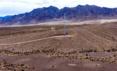
An unusual legal shortcut has allowed a developer planning a data center on federally owned land in Boulder City to avoid public scrutiny and additional environmental review while securing approval under a Trump administration executive order, according to a former Bureau of Land Management official.
It could make Boulder City a test case for the nation.
“It’s an extraordinary and liberal interpretation of existing law and regulations,” said Mike Ford, who rose through the ranks of the BLM to lead public lands policy nationally during his 25-year agency career before becoming a consultant. “It’s unprecedented in my personal experience.”
In late June, federal land managers granted Townsite Solar 2, a subsidiary of a Texas-based hedge fund, an amendment to its existing permit from 2023 that allowed the company to build a solar farm. The Trump administration shut out the public when they determined the environmental review for the solar farm could apply to the data center, too.
“The public involvement and interagency review associated with the existing environmental document is adequate for the new proposed action,” wrote Bruce Sillitoe, manager of the BLM’s Las Vegas Field Office, in a final decision.
Those closed-door dealings occurred while company executives publicly sought a lease for city-owned property, courting favor from skeptical residents at town halls. Instead of an estimated $2.3 million in annual city revenue from a lease and taxes, the last publicly disclosed rental payment the developer made to the BLM in 2023 for the plot came in at $1,207.67.
According to internal emails provided to Ford as part of the case file, BLM’s Nevada office drafted a news release about the approval that officials later decided not to post online. In the release, the agency’s national director, Steve Pearce, said the project reflected “responsible stewardship and sustainable use of public lands for current and future generations.”
When asked for comment this week, an Interior Department spokesperson sent the same statement.
Officials wrote that the effort complies with President Donald Trump’s 2025 executive order on permitting for data centers, which instructed agencies to speed up environmental reviews and identify available federal land.
Meanwhile, the decision has incensed Boulder City residents and officials alike, albeit for different reasons.
It’s no secret that data centers remain unpopular among many Boulder City residents. The message is all over colorful signs that dot people’s lawns and one vintage motel sign off the main street.
“We will not sleep until this is defeated,” resident Branden Smith said.
Data centers are often nondescript and highly guarded warehouses that feature computer servers that power services such as cloud storage and artificial intelligence. The developer declined to answer questions about the BLM’s approval process, offering in a statement last week that it plans to still engage with Boulder City officials.
Townsite Solar 2, to comply with the Southern Nevada Water Authority’s ban on evaporative cooling, will use an air-cooled system that doesn’t require excessive water to regulate temperatures. According to the environmental review, the closed-loop system will require a one-time fill up of 400,000 gallons of purified water mixed with a synthetic alcohol.
Still, data centers demand massive amounts of power — so much that the facilities may account for 64% of NV Energy’s sales by 2046, according to the utility. The developer has said it plans to purchase its energy from outside Nevada via transmission lines rather than waiting in line for NV Energy service.
Some residents find themselves concerned about the unknowns associated with data centers, such as air pollution from backup diesel generators, the emission of heat and more. Official statements from the city focus more on the revenue it will lose from the loss of a city lease, though one councilman remarked that the lack of a separate environmental review for the data center was “absolutely out of line.”
Following a unanimous vote on Tuesday, Boulder City will file an appeal to the Interior Department’s Board of Land Appeals, asking for what’s known as a stay to prevent the development while an administrative law judge reviews the case.
City Attorney Brittany Walker has said federal land managers’ consultation with the city was far from enough.
“We were not involved in a collaborative way in the process of looking at the application at all,” Walker said at the meeting.
An administrative law judge at the Interior Department will evaluate the city’s petition.
First, they will decide whether to grant a stay, which serves the same purpose as a preliminary injunction would in court, halting construction. That’s a high bar that Patrick Donnelly, Great Basin director at the nonprofit Center for Biological Diversity, doesn’t believe a judge will decide has been met.
The board is “a graveyard for administrative procedures,” Donnelly said, adding that his organization’s appeals take upward of half a decade to get anywhere close to a decision. The next move would be a federal lawsuit, challenging the use of a “determination of National Environmental Policy Act adequacy,” or DNA, that determined the environmental review for a solar project was sufficient.
The BLM’s use of the maneuver is a concerning precedent to set, Donnelly said.
“These things have a way of taking on a life of their own,” Donnelly said. “If, all of a sudden, we start seeing DNAs being used to authorize data centers willy-nilly on public land, it becomes a crisis.”
Even Tray Abney, a lobbyist for the pro-industry Nevada Data Center Alliance, said in an interview that he believes the public should have a say in what happens on public land. While Abney said he hasn’t heard much about whether tech companies are interested in developing data centers on federal land, he understands the route Townsite Solar 2 took.
“If I’m a developer, I am going to look at this and say, ‘If there’s a parcel right next door that allows me a much easier path forward, am I going to take that?’” Abney said. “Unfortunately for the local governments, now you’re stuck with the data center that you say you didn’t want, and you get none of the benefits from it.”
However, as cities and counties across Nevada weigh moratoriums on data centers, Abney sees that developers are wary of investing their capital. Existing rules for warehouses and industrial uses of land that apply to data centers are enough, Abney said.
Ford, the career bureaucrat who is now a private consultant, said the BLM will face an uphill battle should the federal government be challenged in court.
_____
©2026 Las Vegas Review-Journal. Visit reviewjournal.com.. Distributed by Tribune Content Agency, LLC.






Comments