Trump renews monument wars, putting some Nevadans on high alert
Published in News & Features

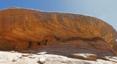
With two swoops of his pen, President Donald Trump again razed a decades-long push by tribes and conservationists to preserve two cherished national monuments, dramatically shrinking them in size by about 90%.
Trump, flanked by Utah Republicans on Monday, falsely claimed during the signing that national monument protections have hindered open access to recreation.
“You can’t go hunting, you can’t go fishing,” Trump said. “You can’t do anything. You can virtually not even walk on it.”
In reality, hunting, fishing and hiking are among the activities people love most about national monuments — the land protection that has the support of 91% of Western voters of all political affiliations, according to a 2026 Colorado College poll.
In his proclamation, Trump wrote that the lands will be reviewed for their mineral development potential, and new mining claims could be staked in 60 days. National monument protection precludes any new oil, gas or mining claims.
It’s the second time Trump has attempted to use his powers under the Antiquities Act of 1906 to change the boundaries of Grand Staircase-Escalante and Bear Ears National Monuments. His first set of executive orders, which President Joe Biden reversed in 2021, were signed during his first term.
Some environmentalists say the move, if it withstands likely court challenges, could be bad news for Nevada, where four national monuments safeguard land: Gold Butte, Basin and Range, Tule Springs Fossil Beds and Avi Kwa Ame.
The White House did not respond to multiple requests for comment this week on whether Nevada monuments are on Trump’s radar for future action.
Thomas Delehanty, a lawyer with the nonprofit group Earthjustice, said in an interview that his organization intends to challenge the decision in court, as it did during the first Trump administration. That federal lawsuit stalled when Biden restored the monuments, but Earthjustice and others plan to re-up those efforts to reverse the proclamation and stall mining.
“This was a completely illegal abuse of power that President Trump just does not have,” Delehanty said.
The Antiquities Act of 1906, signed into law by Republican President Theodore Roosevelt, grants presidents the power to establish national monuments. What it doesn’t allow, Delehanty argues, is for a president to reduce their size.
That reduction power is explicitly reserved for Congress, Delehanty said.
Utah’s delegation, including Gov. Spencer Cox, argues that the law demands that protections are relegated “to the smallest area compatible with proper care and management of the objects to be protected.” The state’s Republicans have long called for the transfer of federal lands to state control.
“The long-term answer isn’t found in which president happens to occupy the White House,” Utah Attorney General Derek Brown said in a statement. “The answer lies in honoring the textual limits the Antiquities Act already places on monument sizes.”
In Project 2025, a right-wing think tank’s set of policy proposals that many have connected to Trump, one chapter says the law should be repealed entirely, and declared that the president’s attempt in his first term was insufficient.
Democratic members of Congress from Colorado, New Mexico and Arizona joined tribal leaders at a virtual news conference on Tuesday, condemning what they see as a thinly veiled land grab to allow the mining industry to run afoul of federal lands that are sacred to Native Americans.
Sen. Martin Heinrich, D-New Mexico, who serves as ranking member of the Senate Energy and Natural Resources Committee, called it a dark day in American history and for the spirit of tribal consultation.
“This action by this president is in such contrast and contradiction to the intent of the Antiquities Act and to what Teddy Roosevelt stood for,” Heinrich said. “It should not stand.”
Tribal representatives said Utah’s federal delegation did not consult with them ahead of working with Trump to undo the monument boundaries. They warned that even more mineral exploration — particularly for uranium — would not only desecrate Native American prayer sites and remains, but is likely to pollute sacred waterways.
Davina Smith-Idjesa, a tribal member from the Navajo Nation who helps lead an inter-tribal coalition that manages Bear Ears National Monument, called Trump’s decision heartbreaking.
“Our connection to Bear Ears did not begin with a presidential proclamation, and it will not end with one,” Smith-Idjesa said. “You can abolish a commission, you can redraw a boundary, but you cannot erase our prayers from this land. You cannot erase the footprints from this land of our ancestors. You cannot erase us.”
Federal land debates couldn’t be more ripe in Nevada, the state with the most federally owned land by percentage.
The most recent national monument designation in the Silver State came from President Joe Biden in March 2023. Avi Kwa Ame, or Spirit Mountain, encompasses more than 500,000 acres in Southern Nevada near Searchlight that several Native American tribes consider to be their people’s place of creation.
Barbara Hartzell, executive director of Indigenous Voices of Nevada, said in a statement that Trump’s proclamations set a concerning precedent for the inclusion of tribes in political decisions that affect them and their ancestral homelands.
“It tells every Tribal Nation that even after showing up, even after collaborating, even after trusting the process, generations of stewardship can still be treated as though they matter less than politics,” Hartzell said. “That is how erasure happens. Not all at once, but decision by decision, until the people who have loved a place the longest are treated like strangers to it.”
When it was designated, Republican Gov. Joe Lombardo criticized the monument’s size, calling it a “federal confiscation” and a “historic mistake.” Nevada’s sole Republican in Congress, Rep. Mark Amodei, introduced a bill in 2025 alongside a Utah congresswoman to strip the president’s authority to designate monuments under the Antiquities Act.
In a statement last week, U.S. Sen. Catherine Cortez Masto, D-Nev., said she remains concerned about Avi Kwa Ame — and stands ready to protect it against threats from Washington, D.C.
“President Trump’s decision to slash the Bears Ears and Grand Staircase-Escalante National Monuments by nearly three million acres is a slap in the face to the Tribal communities, outdoorsmen and conservationists who fought to preserve these treasured spaces for future generations,” Cortez Masto said.
But it’s not just Avi Kwa Ame that has faced scrutiny from the political right. In 2017, Trump’s Interior secretary recommended the reduction of Gold Butte National Monument 90 miles northeast of Nevada.
Delehanty, of Earthjustice, said he believes the Trump administration is testing whether it can push the boundaries of federal law. Above all, Delehanty said, this decision is about putting extractive industries like mining above the desires of the American people.
“If the administration got a ruling that allowed it to undertake these rollbacks, I think it would potentially take that as an invitation to go after other monuments elsewhere around the country,” he said. “It’s really troubling for not just Bear Ears and Grand Staircase, but the Antiquities Act as a whole.”
_____
©2026 Las Vegas Review-Journal. Visit reviewjournal.com.. Distributed by Tribune Content Agency, LLC.




Comments