NYC Council approves $10,000 checks for teacher aides despite legality concerns
Published in News & Features
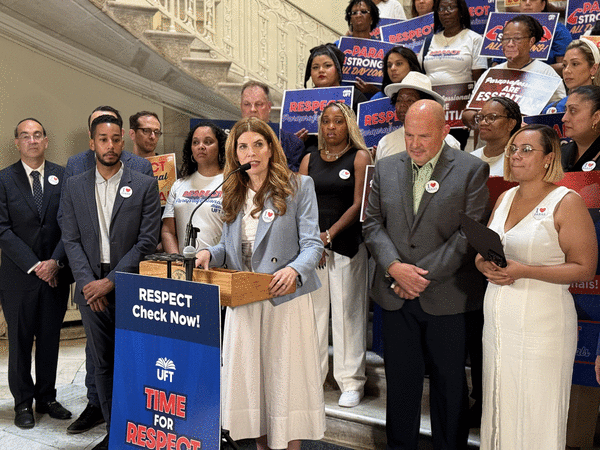
NEW YORK — The New York City Council on Thursday approved a bill to send $10,000 in checks to low-paid teacher aides, despite questions about the legality of pay bumps outside of collective bargaining.
Mayor Zohran Mamdani has said pay should be negotiated at the bargaining table, not through Council legislation. The bill passed the Council with 49 votes — all of the members present and enough to override a veto if the mayor chooses to do so.
“Would we have preferred to do this through collective bargaining? Of course. Would we have preferred to do this in the budget? Absolutely,” Speaker Julie Menin, D-Manhattan, said during a news conference at City Hall. “But the (Mamdani) administration did not want to do either of them, so the Council is going to use every tool in its toolbox to act.”
The bill would send quarterly installments of $2,500 next year to public school paraprofessionals, whose starting salary is about $32,600. The Council and the United Federation of Teachers, the local union that represents the aides, said persistent low wages have led to a staffing shortage felt most acutely by students with disabilities.
It’s the latest example of Menin choosing to home in on issues Mamdani previously supported that now pose political weak points, from expanding the city’s housing vouchers to banning 24-hour shifts for home health aides. The speaker told the Daily News that she’s looking to serve city-dwellers with “common sense” measures — not aiming to hold the mayor to his campaign pledges.
“My role is focused on the Council,” Menin said. “I’m focused on trying to do the right thing by New Yorkers.”
Mamdani can sign or veto the bill, or otherwise let it lapse into law without his signature.
Asked before the vote about the possibility of a veto, Mamdani did not reveal his plans, but was skeptical about pay raises outside of collective bargaining. The mayor enthusiastically supported an earlier, more costly version of the bill on the campaign trail, but has since changed his tune in office.
“I want to first just underline the importance of paraprofessionals in our city and our education system. The work that they do is critical,” Mamdani said at an unrelated news conference on the Lower East Side. “I’ve also said that I believe that this is a matter that is best treated at the bargaining table. And we will see what the City Council does.”
During the rally at City Hall, UFT President Michael Mulgrew said the bill was carefully drafted so the checks do not qualify as a salary and risk violating labor law.
“Those are just political games, as always,” Mulgrew said. “They’re obfuscating the real issue, which is to help us overcome this crisis and put city workers in a place where they’re not going to food pantries or in shelter.”
Undrea Polite, a Brooklyn paraprofessional of three decades from School District 75, which enrolls students with the most significant disabilities, added the bill was necessary to recruit and retain qualified staff.
“You know, I’ve had to eat peanut butter and jelly sandwiches so I can pay my student loans back,” Polite said. “I could have left this job, and I could have gone and worked someplace else and made more money, but I love my students. I can’t walk away from my students.”
The checks come with a price tag of $244 million over one year, but two fiscal cycles, a Council fiscal impact statement showed. The payments are one-time and not used to calculate pension benefits, according to the bill sponsored by Councilwoman Carmen de la Rosa (D-Manhattan), the former chair of the labor committee.
Ana Champeny, vice president for research at the Citizens Budget Commission, said in a statement on Wednesday the checks “wrongly circumvent” collective bargaining and “set a dangerous precedent with significant fiscal consequences” if more unions seek pay bumps via legislation.
“Our opposition is not about whether paraprofessionals deserve higher pay — we support fair compensation for city employees. It is about how compensation is determined,” Champeny said.
“The Mayor should veto it. The City should continue to determine employee compensation at the bargaining table, not the legislative chamber.”
----------
©2026 New York Daily News. Visit at nydailynews.com. Distributed by Tribune Content Agency, LLC.






Comments