Trump's nuclear watchdog to ditch 50-year-old radiation guidance
Published in News & Features
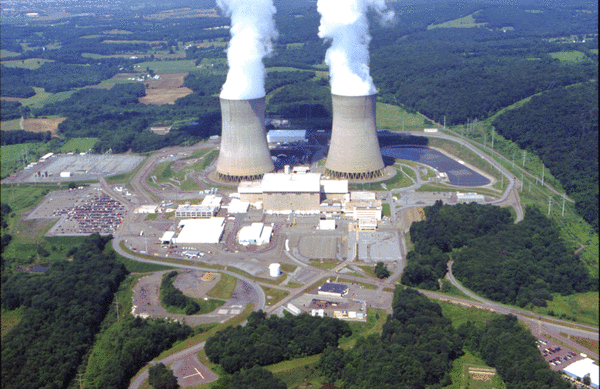
The U.S. Nuclear Regulatory Commission plans to scrap guidance on radiation exposure for power plant workers that’s been in place since the mid-1970s.
The NRC has proposed replacing the “as low as reasonably achievable” standard, abbreviated as Alara, with regulations the agency considers more cost effective and less complex. The new policy would be based on existing federally regulated dose limits.
The commission also proposed a range of reforms to licensing practices in an effort to streamline nuclear power plant development.
NRC Chairman Ho K. Nieh said he doesn’t expect major changes in operations at existing nuclear facilities but the rule change will have a greater impact on new technologies.
“These new reactor designers and new technology designers are trying to hit a moving target,” Nieh said. “What we’re doing is putting in place structure that does not currently exist today. It’s a logical, well thought out approach to managing doses below the regulatory limits.”
Nuclear advocates endorsed the shift away from Alara, saying it could free reactor developers from potentially onerous and costly requirements.
Critics argue that eliminating Alara will put workers and public health at risk.
“The issue here is that routine exposures to workers and the public are already well below regulatory limits,” Edwin Lyman, director of nuclear power safety at the Union of Concerned Scientists said. “This rule could allow facility owners to change practices that have led to these low levels.”
The NRC’s new approach stems from a May 2025 executive order in which President Donald Trump instructed the agency to accelerate nuclear deployment and reform regulations. The order included the mandate to reconsider the Alara standard.
_____
(With assistance from Ari Natter.)
_____
©2026 Bloomberg L.P. Visit bloomberg.com. Distributed by Tribune Content Agency, LLC.





Comments