Bison restoration efforts and grazing rights hinge on one question: Are bison wildlife?
Published in News & Features
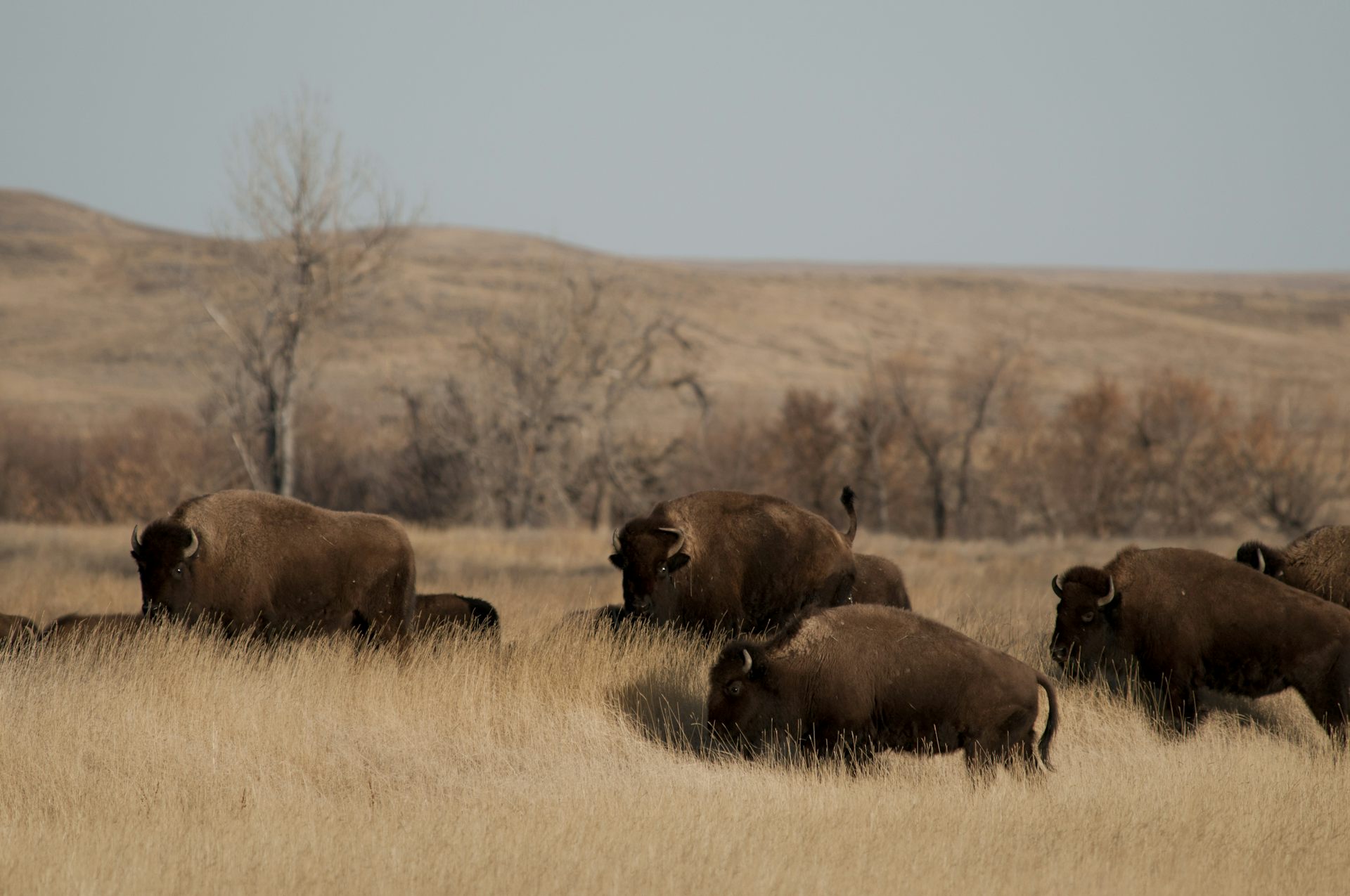
Bison are political animals. A federal decision to revoke grazing leases for bison on public lands on the rolling plains of eastern Montana is the latest manifestation of long-standing contention. The largest land animal in North America, bison are considered a “keystone” species, meaning they have high ecological and cultural importance.
The May 2026 decision represents a significant setback for a decades-long effort by American Prairie, a private conservation organization, to restore wild bison to the Great Plains. Those in favor of the decision are describing the move as a boon for rural farmers and ranchers because it would reduce competition for grazing lands.
The legal question at the heart of the federal decision is a seemingly simple one: Are bison wildlife or are they domestic livestock? Approximately 400,000 bison roam the North American landscape today, of which nearly 90% are considered livestock.
The U.S. Bureau of Land Management argues that American Prairie’s herd of around 940 animals is intended as wildlife conservation, so it does not qualify as livestock production and is therefore ineligible to hold federal permits to graze on public lands.
American Prairie plans to appeal the decision, countering that it follows all pertinent regulations for livestock management – including containment and annual testing for diseases. Despite the organization’s vision of recreating an “American Serengeti,” these bison are privately owned and managed as livestock: wild in rhetoric only.
As political ecologists who study the human dimensions of conservation, we are interested in how environmental decisions – such as how people legally define and manage animals – reflect power dynamics and how people understand the value of wildlife.
Our own research focuses on how tribal nations are navigating complex legacies of colonial settlement to restore bison as keystone relatives in a shared ecosystem. Collaborating closely with advisers from across the four nations of the Blackfoot Confederacy, including the Blackfeet Nation in Montana, we have learned that this perspective on bison, also known as buffalo – and “iinnii” to our Blackfoot partners – complicates, and enriches, this distinction between wildlife and livestock.
Less than 200 years ago, an estimated 30 million bison roamed the North American grasslands, vital to plains ecosystems and Indigenous ways of life.
By the late 1880s that number dropped to less than 1,000. Bison were brought to near-extinction by a combination of commercial hunting, disease, drought and deliberate persecution as part of a broader effort to assimilate tribal nations into reservation life.
The legacies of this destruction reverberate through Plains Indigenous communities today. But increasingly, so does a sense of hope for recovery and repair.
Bison restoration efforts have been underway for over a century. Since the beginning, a motley crew of advocates have each seen something different in returning bison: a business opportunity, an ecological keystone or, since 2016, the United States’ national mammal. For the Blackfoot Nations and other tribes, the buffalo is a returning relative and a symbol of resurgence.
This symbolic ambiguity has brought together a broad coalition of “bison cheerleaders,” as one of the people we interviewed put it.
This diverse base of support may also help explain the mixed system of legal classification that now governs this controversial species. On federal lands, bison are wildlife. Most states, however, consider them livestock. In a few states, including Montana and Colorado, bison are dual-listed as both wildlife and livestock, which bison advocates say allows for more flexible management.
Meanwhile, many Native American tribes, including the Blackfeet Nation, formally recognize bison as wildlife. Yet they also challenge the distinction altogether, arguing that categorizing the animals as livestock or wildlife fails to reflect Indigenous worldviews that consider buffalo as both food and kin.
In a practical sense, the distinction between wildlife and livestock matters because how bison are listed determines how they are managed and under whose jurisdiction they fall.
Imagine a bison in Yellowstone National Park. Managed as a wild animal by the National Park Service, she roams freely – watched by curious tourists – as she forages, breeds and protects her calf from large predators, such as wolves and grizzly bears. Come one harsh winter, she migrates north across the park boundary into the state of Montana.
Because Yellowstone bison carry a disease called brucellosis that can infect cattle, when she leaves the park she becomes a “species in need of disease management,” subject to state and federal disease-management rules. She is allowed to roam only within a limited tolerance zone to avoid infecting cattle.
Also, outside the park she may be hunted, both by sovereign tribal nations exercising their treaty rights and by state-licensed hunters.
Less than 50 miles away, another bison lives an ostensibly similar life, also moving with the seasons and calving among the sagebrush, vigilant for predators. Yet according to the state of Montana, this bison is a privately owned, domestic animal.
She counts among the more than 45,000 bison that are owned by one specific “bison cheerleader”: media mogul and private conservation advocate Ted Turner, who died May 6, 2026. Turner’s flagship Flying D Ranch, a 113,600-acre property near Big Sky, Montana, is home to around 6,000 bison – nearly as many as live in Yellowstone National Park, the largest wild herd on the continent.
Bison managers and ecologists explain that animals managed as livestock are selectively bred and handled. Yet “wildness” isn’t always cut and dry. While managed for meat production, the bison at the Flying D Ranch are still a big herd occupying a large land base with wild predators. This makes them, in some senses, wilder than most herds managed for conservation by the U.S. Department of Interior, which average only 300 animals.
Like American Prairie’s bison, their management also reflects a vision of restoring wildness to the landscape through private land conservation.
When we began interviewing people about buffalo restoration in 2022, momentum for restoring free-roaming bison was at an all-time high, elevated as a key priority by Interior Secretary Deb Haaland. In that year, the U.S. Bureau of Land Management granted American Prairie the now-contested grazing leases, following extensive environmental review.
In a profound culmination of decades of grassroots advocacy, in 2023 the Blackfeet Nation released a herd of 48 buffalo near Chief Mountain, the first to roam freely on Blackfoot territory in over 150 years. In 2024, Yellowstone National Park adopted a new bison management plan to manage a larger, more migratory population.
Yet these developments were not without detractors. In places like Montana, bison have been received by some as a symbol not of hope but of government overreach and the power of elites over rural futures in a changing West.
One way people are seeking to change the discussion is by changing the definitions, underscoring once more why they matter. In 2021, the Montana State Legislature gave county commissioners authority to veto wildlife reintroductions in their county and redefined wild bison as only those bison that have not been handled or descended from handled animals.
In passing these laws, state lawmakers effectively “defined wild bison out of existence,” as a former Montana Fish, Wildlife and Parks official told us.
Ironically, those changes were intended to make it impossible for private entities to reintroduce bison as wildlife. Yet now the federal government is saying the animals are too wild to be classified as a productive use of the landscape.
This contradiction makes more sense when seemingly technical debates over listing are understood as conflicts over competing visions for the landscape: Are public lands – and even large private holdings – places to produce food or preserve pristine wilderness? Or something else? One Blackfeet community leader we interviewed reminded us that for Indigenous people, these lands remain both home and livelihood.
The effects of the BLM decision to revoke grazing leases could ripple well beyond American Prairie. An organization representing more than 50 tribes has filed a complaint against the decision, arguing that it threatens not only buffalo restoration but growing tribal-federal co-stewardship efforts.
An unlikely coalition brought the buffalo back from the brink. In a moment of growing uncertainty over the future of conservation on public lands, our research tells us that the long-term success of bison restoration will require finding common ground – and compromise – across diverse visions for the North American landscape.
This article is republished from The Conversation, a nonprofit, independent news organization bringing you facts and trustworthy analysis to help you make sense of our complex world. It was written by: Madison Stevens, Montana State University and Elizabeth (Libby) Lunstrum, Boise State University
Read more:
Bison are sacred to Native Americans − but each tribe has its own special relationship to them
Wildlife recovery means more than just survival of a species
The dark history of forced starvation as a weapon of war against Indigenous peoples
Madison Stevens received funding from the National Science Foundation (#2404531; #2117652) and Montana State University to conduct this research.
Elizabeth (Libby) Lunstrum receives funding from the National Science Foundation (grant #2117652) and Boise State University.






Comments