Beyond Disney: A 1616 portrait of Pocahontas shows how English colonizers saw Indigenous Americans
Published in News & Features


Thanks to the Walt Disney Company, Pocahontas may be the most famous Native American who lived in the 17th century. The animated film version of her early life included her speaking with a willow tree, befriending animals, singing about “the colors of the wind,” and being caught up in an ill-fated romance with Captain John Smith.
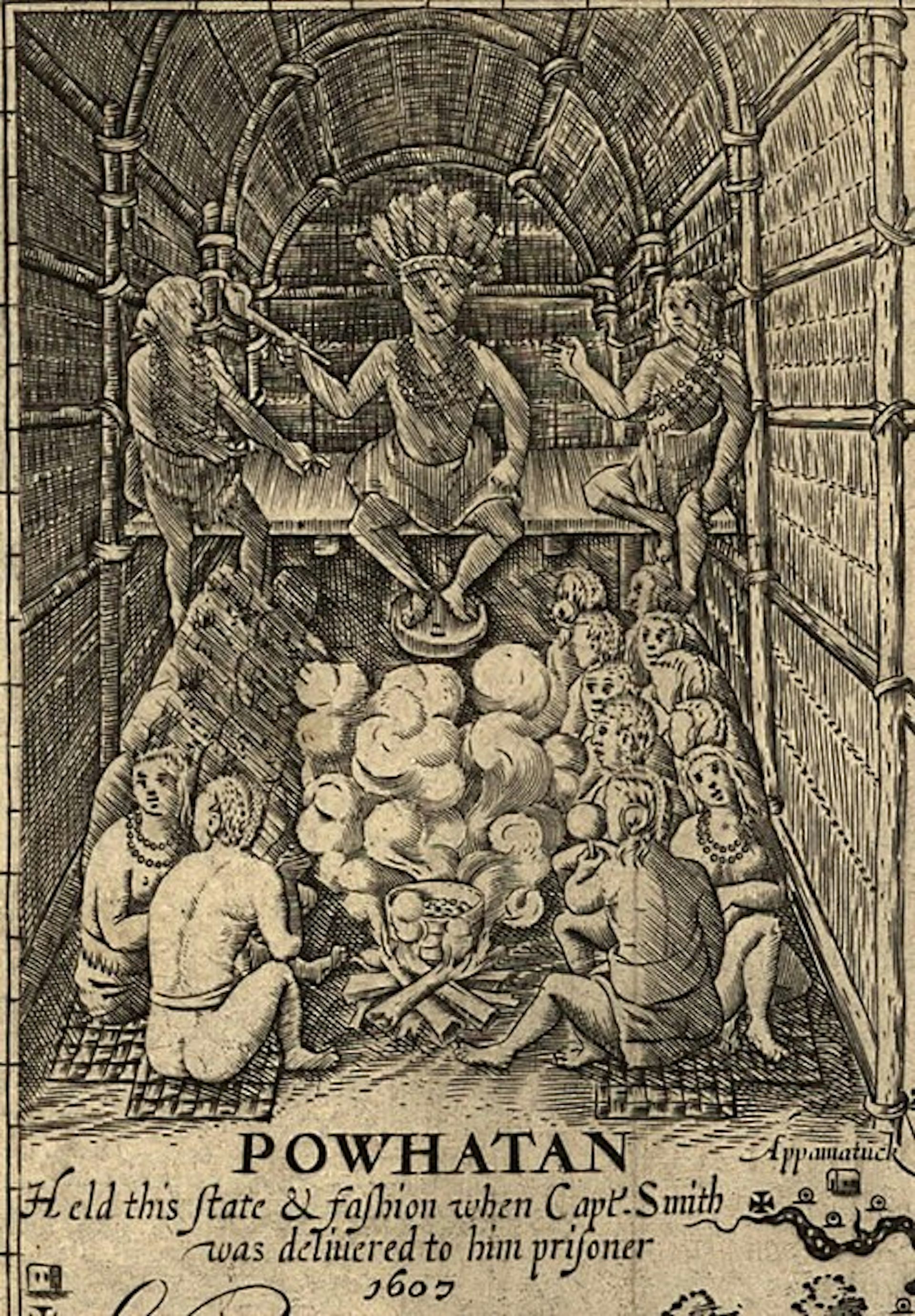
The 1995 film created an enduring visual image of Pocahontas, and contained some details drawn from the historical record, though plenty is pure fiction. Smith was, in fact, one of the English colonists who arrived in Jamestown, Virginia, soon after its founding in 1607. Pocahontas’ father Wahunsonacock – whom colonists and Disney called Powhatan – was the paramount chief of the Powhatans, who lived in communities along the edges of Chesapeake Bay and its tributaries.
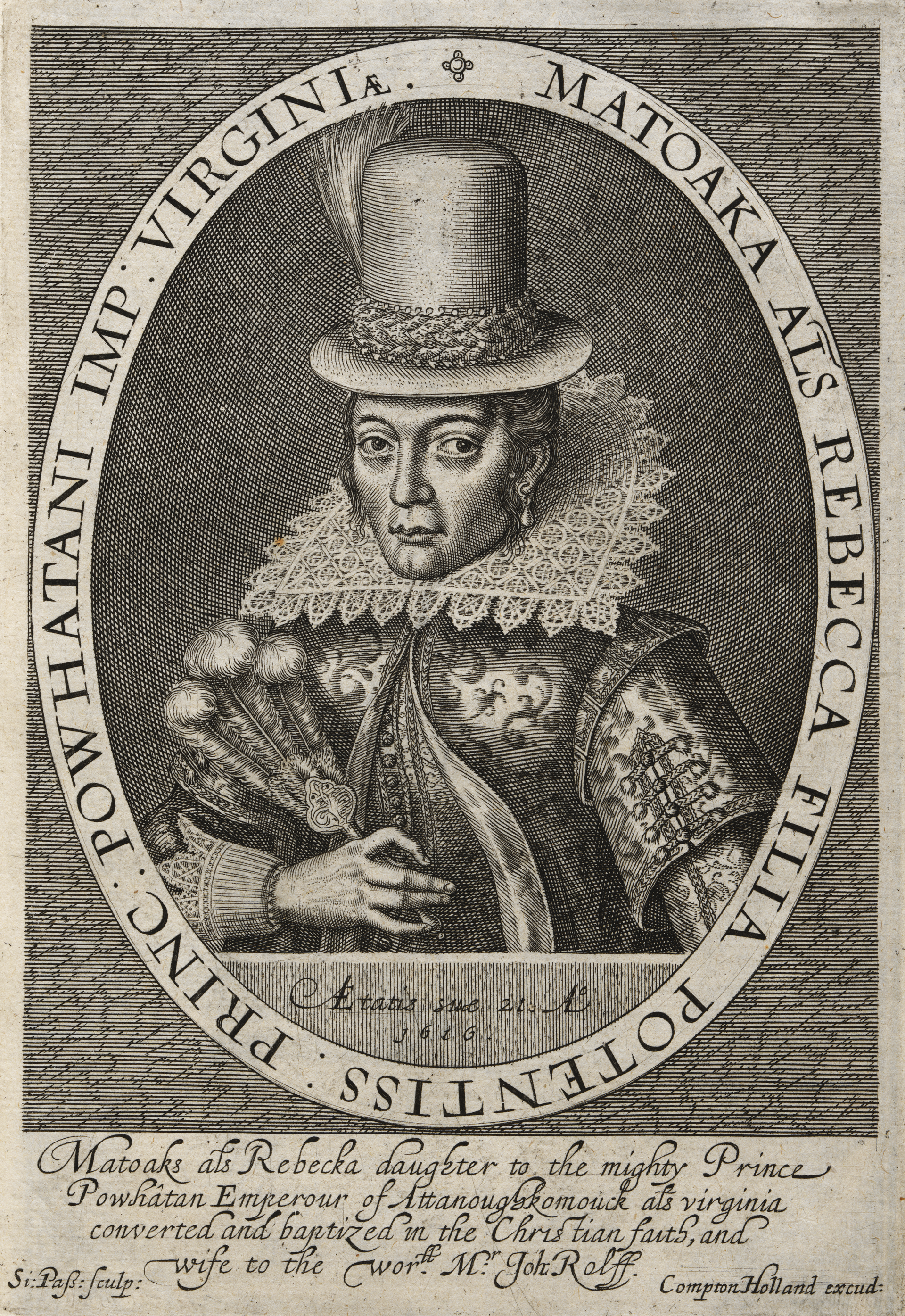
Only one portrait of Pocahontas from her lifetime exists – a sharp contrast with the Disney-drawn image most Americans know. And it speaks volumes about how the English saw colonization.
As I describe in my 2026 book, “Contested Continent: The Struggle for North America, c. 1000 to 1680,” Wahunsonacock was the most consequential political figure in early Virginia, the land Powhatans knew as Tsenacommacah. Through personal alliances and shrewd stratagems, he controlled perhaps 30 communities along the shores of Chesapeake Bay and its tributaries.
Pocahontas, also known as Matoaka and Amonute, was probably about 10 or 11 years old when she encountered Smith in late 1607. At that moment he was a captive of her father, who, Smith later wrote, was about to have him killed. Though scholars believe Wahunsonacock was likely putting Smith through a ritual adoption, the colonist claimed Pocahontas saved his life.
In 1613, the English took Pocahontas captive during a conflict known as the first Anglo-Powhatan War. After obtaining his daughter’s freedom in 1614, Wahunsonacock approved her marriage to John Rolfe, who played a leading role the colony’s tobacco economy, and she converted to Christianity. Sometime between 1615 and 1617 she gave birth to their son, Thomas.
Two years after the marriage, Pocahontas and Rolfe sailed to England, where she played a leading role in her father’s diplomatic mission.
During her stay in London, which included meeting King James I, Pocahontas sat for a portrait by the artist Simon van de Passe. Her clothing and pose echoed portraits of other elite English women of the era. The image emphasizes her tall stovepipe hat, ample lace collar, a dress with detailed embroidery or brocade, and a pearl earring dangling from her left ear.
In addition to her English clothing, Pocahontas holds a quill pen, suggesting that she had learned to write. Since Europeans considered literacy a crucial marker of civilization, the engraving highlights English hopes that Indigenous Americans could rapidly embrace the colonists’ culture.
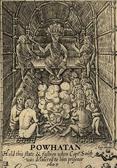
The engraving of Pocahontas was not the first image of Native peoples of the mid-Atlantic coastline circulating in England. Illustrations in one widely reprinted book played a crucial role in convincing the English to establish settlements in North America.
In the late 16th century, advocates of English colonization understood that descriptions of North America could make foreign territory more enticing to potential migrants. They wanted to demonstrate to English men and women that they could create profitable economies and coexist with Native peoples.
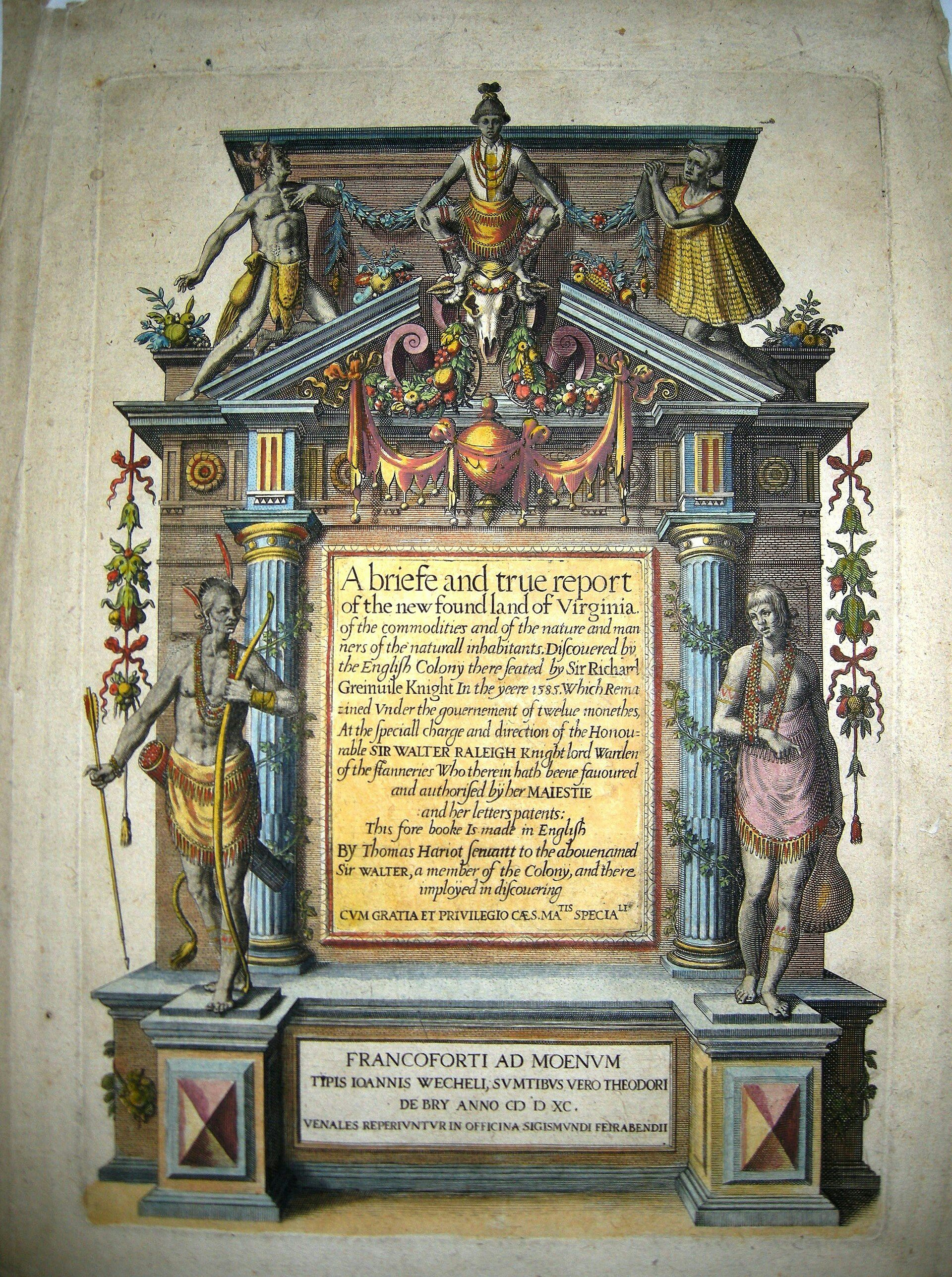
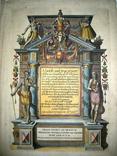
Some promoters recognized that watercolor images painted in 1585 by the artist John White depicting the Carolina Algonquians of the Outer Banks could perhaps generate interest – and investments. The promoters, who had ties to leading figures in the English court as well as to printers, also saw the benefits of an in-depth study of the region by the young English mathematician and writer Thomas Harriot, “A Briefe and True Report of the Newfound Land of Virginia.” In 1590, the promoters worked with the Flemish printer Theodor de Bry to produce an illustrated version, which contained engravings based on White’s paintings.
The volume described Carolina Algonquians’ practices and enumerated commodities that could be extracted for profit. Some of the Native Americans depicted in these pages are clad with only a deerskin loincloth. Some of the women wear skirts but not tops.
To Europeans bred on the idea that clothing an entire body was a marker of civilization, these Alqonquians’ appearance was significant. People who colonizers considered “savages” were often depicted nude, like the Tainos whom Christopher Columbus encountered a century earlier. English men and women reading the book about the Algonquians, on the other hand, saw them as a people who would, under the right tutelage, adopt English-style culture – including Protestant Christianity.
“Some religion they have alreadie,” Harriot wrote in “A Briefe and True Report,” “which although it be farre from the truth, yet being as it is, there is hope it may been the easier and sooner reformed.”
To make the point that Native Americans could be converted to European culture, the engravers added depictions of ancient Britons, allegedly based on an old chronicle. Three of these images of Picts depicted them as nude, bearing tattoos more extensive than the Algonquians’. These individuals are also portrayed as more violent: A Pict man holds a head still dripping blood, with another head at his feet, while a Pict woman brandishes spears and a broadsword.
When Pocahontas sat for Van de Passe, his portrait did more than create a resemblance of the young woman, who would die the following year, soon after leaving London – felled either by disease or, as a Virginia tribe’s oral history suggests, poison.
Like the images popularized by Harriot’s book, her portrait suggested that Native Americans would soon embrace English ways. Pocahontas herself, as the words on the engraving noted, had become Rebecca Rolfe after her marriage. In his writings, her husband celebrated her conversion to the Anglican faith. The proof of the model of cultural conversion seemed to be on plain view in the portrait.
Pocahontas’ father died in 1618. Four years later, the Powhatans launched a rebellion against English colonists. On March 22, 1622, under the direction of a war captain named Opechancanough, they killed approximately one-fourth of the colonists in Virginia. The English labeled the violence a “barbarous massacre” and launched a war of vengeance, which included a mass poisoning of Powhatans in 1623 – an action that the English at the time knew violated the emerging law of war.
Seeing Pocahontas poised on a chair, wearing an elegant hat and holding a quill pen, the English had assumed that Native Americans would embrace the colonizers’ ways. March 1622 proved them wrong.
This article is republished from The Conversation, a nonprofit, independent news organization bringing you facts and trustworthy analysis to help you make sense of our complex world. It was written by: Peter C. Mancall, USC Dornsife College of Letters, Arts and Sciences
Read more:
The Cherokee Bible, one of the language’s first books, is a window between worldviews
How the Plymouth Pilgrims took over Thanksgiving – and who history left behind
Native American mothers whose children have been separated from them experience a raw and ongoing grief that has no end
Peter C. Mancall has received funding from the Huntington Library, the National Endowment for the Humanities, and the Mellon Foundation.




Comments