A gray wolf has entered Sequoia National Park for the first time in a century
Published in News & Features
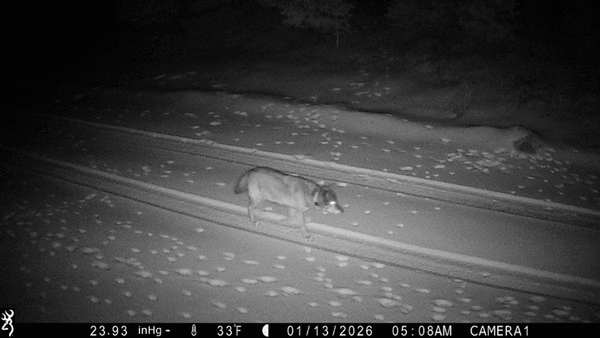
LOS ANGELES — A wolf known as BEY03F seems intent on making history over and over again.
The 3-year-old, black-furred wolf has become the first of her kind known to venture into Sequoia National Park in more than a century — after making similarly momentous visits to Los Angeles and Inyo counties.
By 7 a.m. Sunday, BEY03F had passed just south of Mount Whitney, trekking over mountainous terrain rising at least 13,000 feet, said Axel Hunnicutt, gray wolf coordinator for the California Department of Fish and Wildlife.
“She did some hiking,” he said.
It’s just a day in the life of the peripatetic wolf, who was born in far Northeastern California in 2023. She’s racked up hundreds of miles since leaving home, all of which appear to be in service of one thing: finding a mate to settle down with. Her continued sojourn suggests she’s still looking.
“Her travel patterns continue to demonstrate the unpredictable movements of a dispersing wolf seeking a mate and territory of its own,” John Marchwick, of the educational group California Wolf Watch, said in a statement.
Hunnicutt likened her journey to that of OR-7, a wolf that himself became famous when he wandered from Oregon to California in 2011 — marking the first wild wolf in the Golden State since they were extirpated in the 1920s.
He roamed thousands of miles in a quest for love. Eventually, he hightailed it back to the Beaver State but his historic journey presaged the return of the apex predators to California, with the first pack established in 2015. There are now at least 55 wolves roaming the state, as of the end of last year — up 10% from the count at the close of 2024.
Last month, BEY03F, affectionately called “bae” by some, became the first wolf to set paws in Inyo County in at least 100 years. She settled for a time in the Eastern Sierra towns of Bishop and Independence. Hunniccutt spotted her, alone, in the latter town last weekend.
But she’s since moved on.
“Until they find a mate — that is their goal in life — she’ll just keep looking,” Hunnicutt said.
That goal is what brought her to L.A. County — to the mountains north of Santa Clarita — in February. It was another 100-year first. She didn’t find what she was looking for there either and quickly moved on.
It’s possible BEY03F is on her way back to Yowlumni pack territory in the Southern Sierra, according to Hunnicutt. She had spent time with that pack and was collared there last May.
However, there might not be wolves there anymore. Hunnicutt said they haven’t detected any activity recently and if they don’t for several months more, Yowlumni will no longer be considered a pack.
Amaroq Weiss, senior wolf advocate with the Center for Biological Diversity, said it’s comforting that BEY03F is still alive and well, given the duration of her travels.
“You want them to find a mate and be able to establish a territory, but what you don’t want is for them to end up dead in the process of searching, whether killed by a vehicle or illegally killed — or some other misfortune could befall them.”
In California, the No. 1 known cause of wolf deaths is vehicle strikes.
For conservationists like Weiss, the broad-muzzled canids’ comeback in California is a major success – and a testament to the state and federal endangered species protections they enjoy.
But their return has come with challenges, particularly in rural areas in the northern part of the state where ranchers contend with the pack hunters preying on their cattle. In 2025, state wildlife officials documented 198 confirmed or probable livestock kills by wolves. Through April 13 of this year, there were 26 more, according to a recent report.
BEY03F’s birthpack was responsible for what officials described as an unprecedented number of attacks last year, leading the state to take the unusual step of euthanizing several members. BEY03F left the pack before the attacks occurred, according to Marchwick.
Should you encounter a wolf, in Sequoia or elsewhere, Weiss said to wave your arms, yell and haze it away. And don’t offer it a sandwich — or any other food. The idea is to keep the animal wild.
“I sometimes tell people, ‘If you’re lucky enough to see a wolf in the wild and you have your camera — I guess, your iPhone — with you, take a picture,’” she said. “But the alternative to that is don’t take a picture. Just soak in that moment.”
_____
©2026 Los Angeles Times. Visit at latimes.com. Distributed by Tribune Content Agency, LLC.






Comments