Supreme Court bolsters donors’ free speech rights in unanimous crisis pregnancy center ruling
Published in News & Features
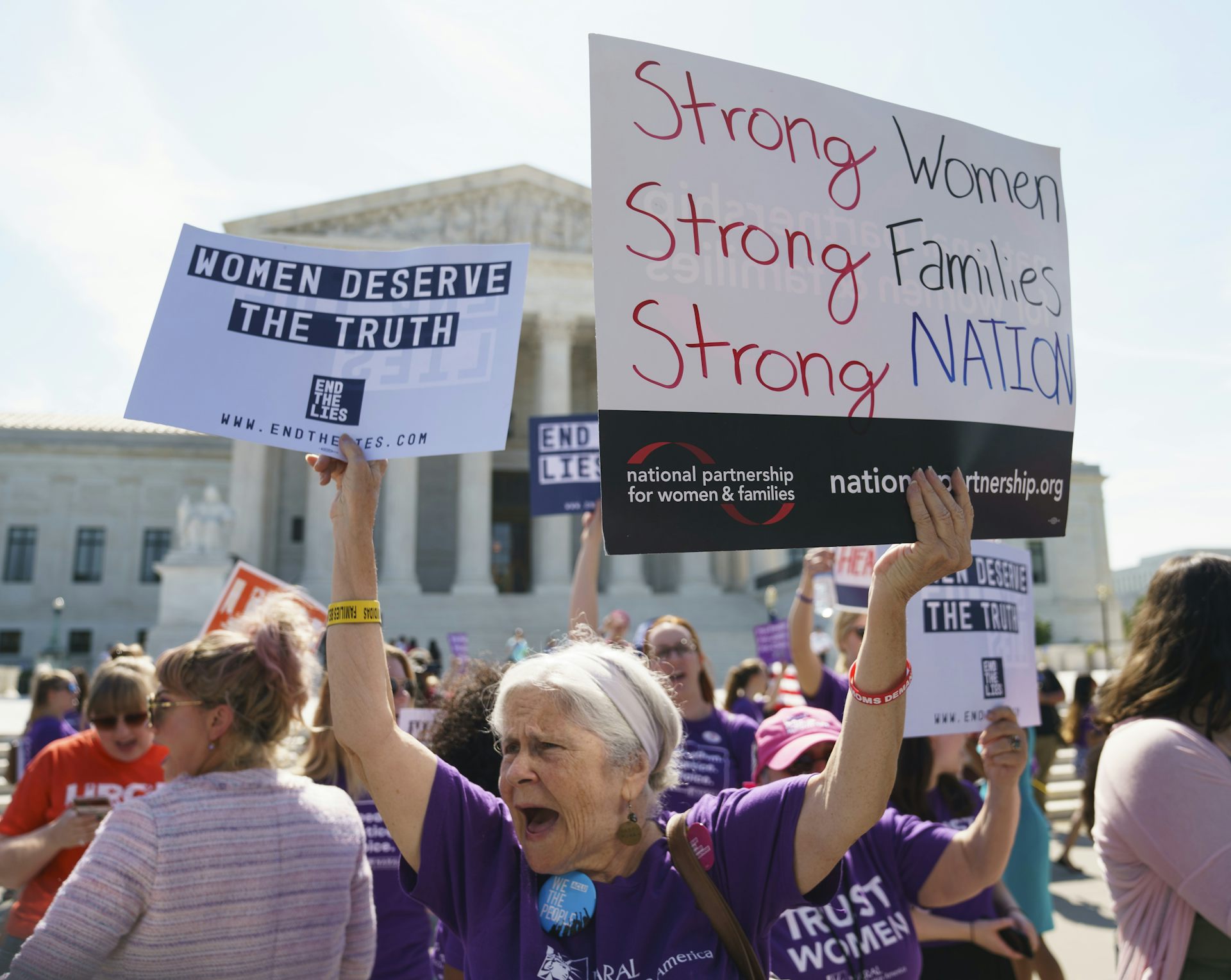

The U.S. Supreme Court has cleared the way for a chain of crisis pregnancy centers based in New Jersey to challenge a subpoena from New Jersey’s attorney general.
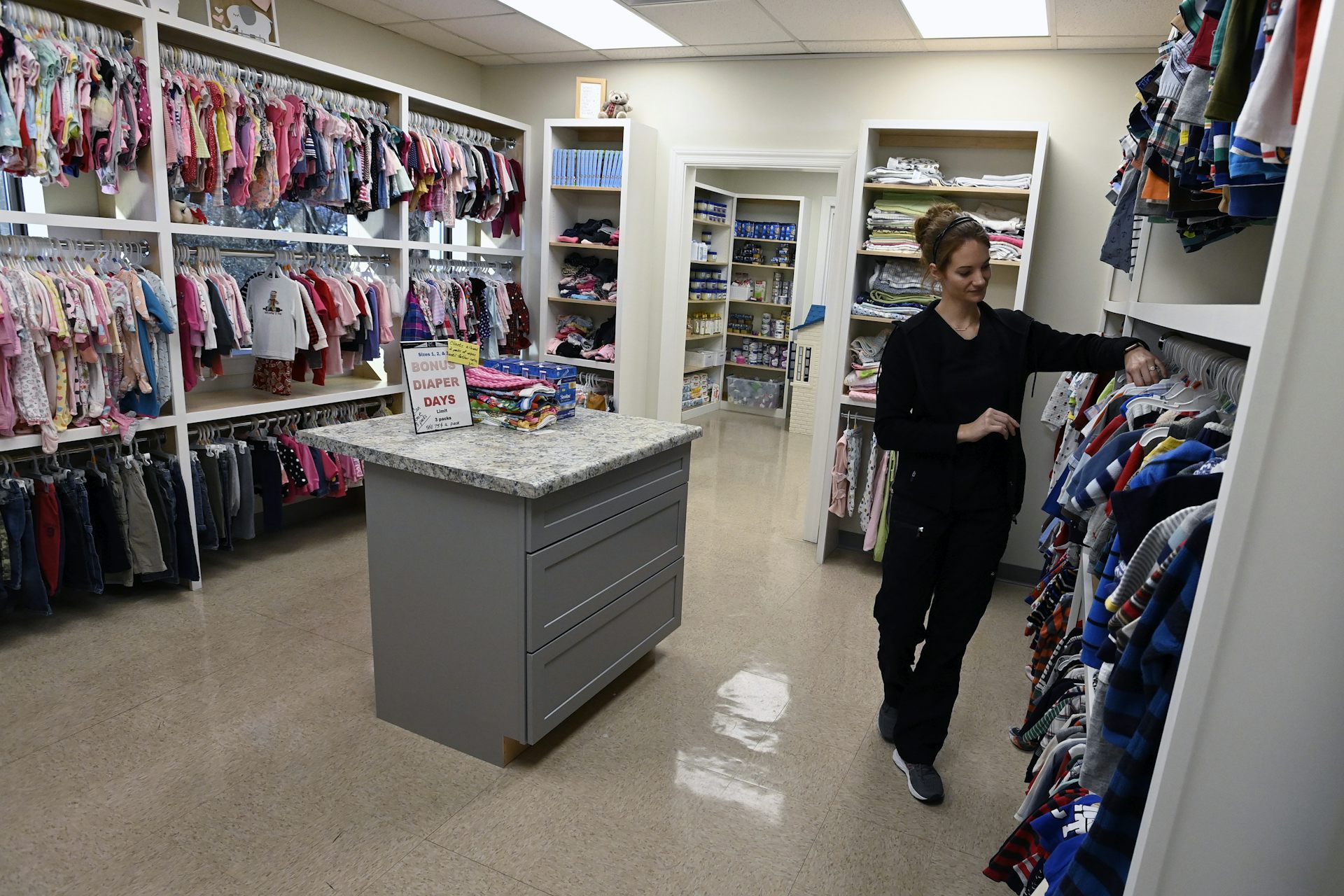
First Choice Women’s Resource Centers operates at several locations throughout New Jersey. There are more than 2,500 of these Christian-led nonprofits in the United States. Most try to discourage pregnant women from obtaining abortions. Some offer free medical services, such as over-the-counter pregnancy tests and sonograms. Many give their clients clothing, diapers and other items that the parents of babies require.
First Choice caught the attention of Matthew Platkin in 2023 while he served as the state’s attorney general. He suspected that it violated New Jersey’s Consumer Fraud Act by misleading its donors about its mission and operations. According to court filings, Platkin wanted to determine if First Choice had misled its donors and patients into believing that the centers provide “comprehensive reproductive health care services, including abortion care and contraception, when they in fact have an objective of deterring individuals from seeking such services.”
As part of New Jersey’s investigation, Platkin issued a subpoena demanding that First Choice produce donation records, including the personal information of the donors, over a 10-year period so that his office could “contact a representative sample” of them to determine if they had “been misled” by First Choice about what the group does – that is, whether or not it provided abortions.
First Choice asserted that the subpoena violated its First Amendment rights, and that it had a right to sue New Jersey’s attorney general in federal court to quash the subpoena.
The Supreme Court sided with First Choice in its unanimous ruling on First Choice Women’s Resource Centers, Inc. v. Davenport. The case now bears the name of New Jersey’s current attorney general, Jennifer Davenport.
In my view as a privacy and constitutional law scholar, the court ruled correctly by concluding that issuing a subpoena for personal information regarding a crisis pregnancy center’s donors may deter those donors from supporting the organization.
After First Choice sued to block the subpoena, Platkin argued that federal courts lacked jurisdiction to decide the case. That’s because First Choice’s alleged injury – deterring donors from supporting the organization – had not yet materialized because New Jersey had not yet tried to enforce the subpoena in court.
In other words, Platkin argued that the case was premature.
But First Choice argued that merely issuing a subpoena can deter donors from making a gift. To further its argument, First Choice presented what it said was an “anonymous declaration from several donors describing the present chill on their First Amendment-protected association.” In its view, the injury was real and concrete enough for the federal courts to decide the case.
The justices have now cleared the way for First Choice to continue with its lawsuit against New Jersey authorities in federal court.
The First Choice case might sound similar to a case the court decided in 2018.
In National Institute of Family and Life Advocates v. Becerra, the Supreme Court considered a different First Amendment claim asserted by a California-based organization that counsels crisis pregnancy centers.
In 2015, California enacted the Reproductive Freedom, Accountability, Comprehensive Care, and Transparency Act, better known as the Reproductive FACT Act. That law required clinics to inform their patients of California’s free or low-cost access to family-planning services, prenatal care and abortion. Several anti-abortion groups objected to California’s mandate, claiming the Reproductive FACT Act unconstitutionally compelled crisis pregnancy centers to disclose a message they do not support.
The Supreme Court agreed. Justice Clarence Thomas, writing for the court, concluded that the Reproductive FACT Act required clinics to “provide a government-drafted script about the availability of state-sponsored activities” that the clinics opposed.
In the court’s view, this violated the clinics’ First Amendment rights because it compelled them to speak a message containing an implicit viewpoint – support for abortion – that the clinics fundamentally opposed.
Both cases sit at the intersection of abortion politics and the First Amendment, but they raise distinct questions. The prior one, which addressed California’s attempt to regulate crisis pregnancy centers, asked whether the government can force those centers to make mandated statements. This new one, First Choice, asks whether the government can force the centers to disclose their donors’ identities.
The court has found previously that donations are a form of protected speech, including in its Citizens United v. Federal Elections Commission ruling. In that 2010 decision, the majority recognized that “All speakers, including individuals … use money amassed from the economic marketplace to fund their speech.”
As Justice Neil Gorsuch wrote in the Free Choice ruling, each right protected by the First Amendment “necessarily carries with it a corresponding right to associate with others.” Without such a right, he added, “no two men could safely share the same soapbox.”
This crisis pregnancy center ruling also reaffirms what the court decided about seven decades earlier in NAACP v. Alabama. The NAACP, founded in 1909, is one of the nation’s biggest civil rights groups.
In this 1958 ruling, the court concluded that any government actions that “may have the effect of curtailing the freedom to associate” warrant the highest form of protection under the First Amendment.
That ruling protected the privacy of NAACP members in Alabama. While there were no donors involved in that case, I believe that the rights of donors in the First Choice case are analogous to the rights of the NAACP’s members in the 1958 case – in that both have the right to the protection of their privacy.
In the 1950s, Alabama Attorney General John Patterson wanted to shut down the local NAACP chapter, based on his belief that the civil rights organization was “causing irreparable injury to the property and civil rights of the residents and citizens of the State of Alabama” by operating within the state as an unincorporated association.
As a part of his effort to oust the NAACP from Alabama, Patterson sought the membership lists of the local chapter, which, if disclosed, would have unquestionably caused “intimidation, vilification, economic reprisals, and physical harm.”
Similarly, in the 2026 First Choice case, Gorsuch, who wrote the 9-0 decision, “demands for private donor information inevitably carry with them a deterrent effect on the exercise of First Amendment rights.”
That is similar to Alabama’s demand for the NAACP’s membership list in 1958.
“It is hardly a novel perception that compelled disclosure of affiliation with groups engaged in advocacy may constitute as effective a restraint on freedom of association,” Supreme Court Justice John Marshall Harlan II declared in the ruling, which essentially shut down Alabama’s effort to ban the NAACP.
“This Court has recognized the vital relationship between freedom to associate and privacy in one’s associations,” Harlan added.
Many conservatives today will surely see the court’s decision as a win for the anti-abortion movement and its associated organizations. And many progressives will perceive it as another ruling from a supermajority conservative court that favors the rights of Americans who oppose access to abortion over those who support abortion rights.
The court, for example, overturned the nationwide right to abortion in 2022 in its Dobbs v. Jackson’s Women’s Health Organization ruling.
I think both interpretations are wrong because this case is more about free speech than abortion.
The fundamental principle the court asserted in NAACP v. Alabama remains intact – there is a vital relationship between the right to privacy and the freedom to associate.
Since its ratification in 1791, the First Amendment has protected much more than the rights that are expressly mentioned in its text. It protects the right to speak freely, just as it protects the right not to speak and the right to speak anonymously.
The First Amendment protects the right to associate with groups and organizations, just as it protects the right to associate with those groups and organizations anonymously.
It protects the right to think freely, to hold certain beliefs and to reject others. And as the Supreme Court reaffirmed in the First Choice case, the First Amendment protects individuals’ rights to associate with organizations that align with their beliefs by donating to them.
This article is republished from The Conversation, a nonprofit, independent news organization bringing you facts and trustworthy analysis to help you make sense of our complex world. It was written by: Wayne Unger, Quinnipiac University
Read more:
Supreme Court ruling on Colorado conversion therapy case is not a clear win for conservatives
Supreme Court hands victory to pro‑life crisis pregnancy centers
Supreme Court case about ‘crisis pregnancy centers’ highlights debate over truthful advertising standards
Wayne Unger does not work for, consult, own shares in or receive funding from any company or organization that would benefit from this article, and has disclosed no relevant affiliations beyond their academic appointment.






Comments