Trump’s Medicaid fraud crackdown may sound sensible, but it could harm Americans who require long-term care
Published in News & Features
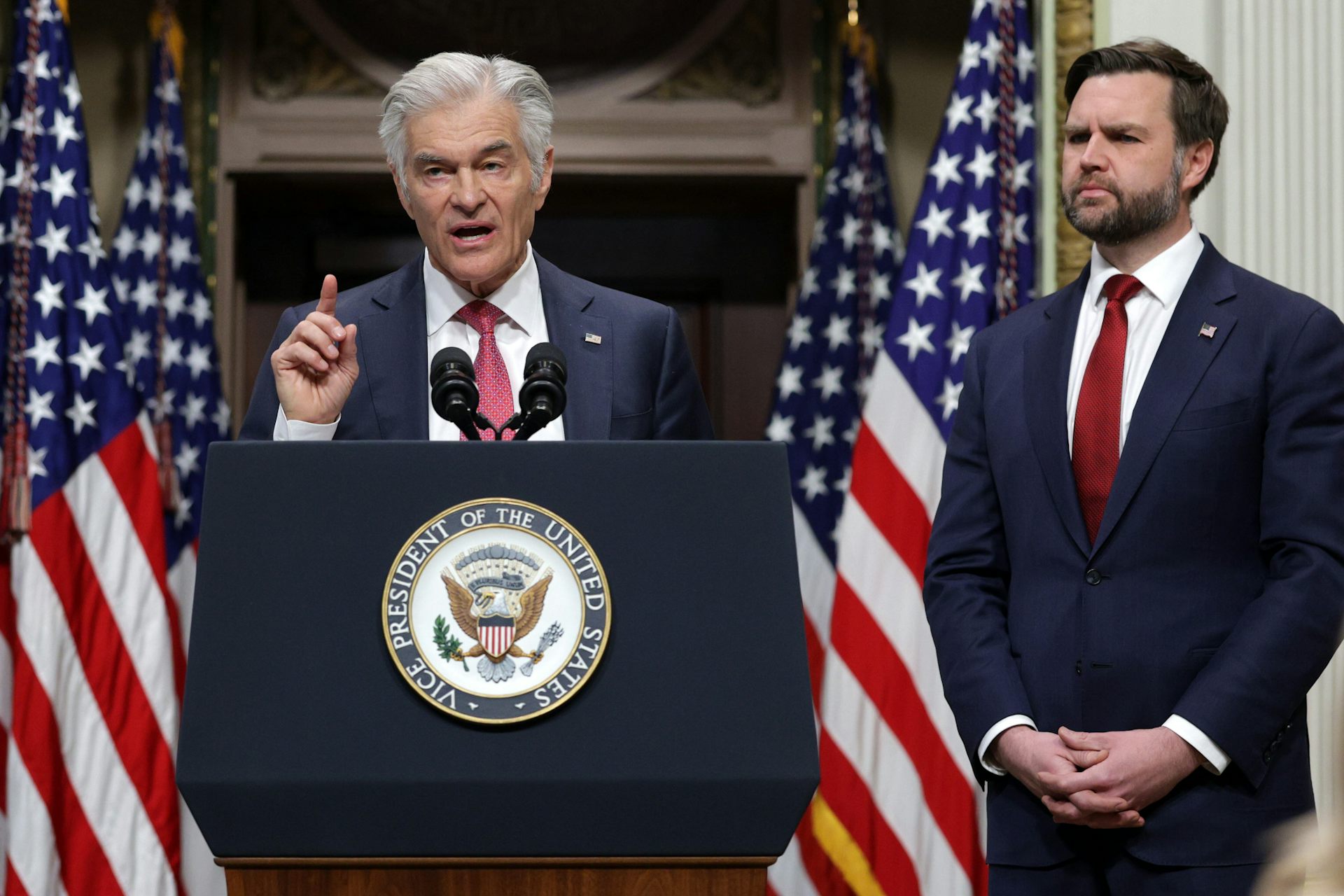



Mehmet Oz, the Centers for Medicare & Medicaid Services administrator, is ordering all states to step up their efforts to crack down on Medicaid fraud.
His April 21, 2026, announcement expanded on the Trump administration’s related enforcement actions, such as withholding Medicaid funds from Minnesota and threatening to do that for New York, California and Maine.
The Trump administration says there’s a big problem with fraud tied to government-funded care delivered in a person’s home or in the community, officially known as home and community-based services, along with nonmedical transportation, behavioral health and new or high billing providers.
The agency Oz leads is now asking states to immediately “revalidate” providers they claim are “high risk.” That is, states are supposed to require providers to prove that they remain eligible to participate in Medicaid and bill the program. The providers primarily offer at-home care, transportation, behavioral health and other services.
Related legislative initiatives, sponsored by Republicans, are also pending in Congress.
We are health services researchers who study the development and growth of the Medicaid home and community-based services program. One of us (Barkoff) previously served in the role of administrator and assistant secretary for aging of the Administration for Community Living.
We strongly believe that it is sensible and necessary for the government to take steps to prevent, root out and punish Medicaid fraud. But we are mindful that the government’s anti-fraud strategies and tactics could unnecessarily disrupt the very services that people depend on day to day.
We aren’t alone. Many researchers, advocates and policy experts are alarmed by this White House policy.
All told, Medicaid provides health insurance coverage for about 75 million low-income Americans, including many who are at least 65 years old.
More than 5 million Americans benefit from government-funded home care, which is aimed at keeping low-income people with disabilities and frail older people living in their own homes and communities. Medicaid pays for most home care, covering nearly two-thirds of all such spending in 2023.
When home care works well, people become less likely to have to move into nursing homes or other assisted living facilities. If a home care aide doesn’t show up, the consequences are immediate and can be dire.
An older adult may be unable to get out of bed. A person with disabilities may miss meals or medications. A family caregiver may have to take time off without notifying their employer in advance and lose wages.
That’s why the federal government’s actions – particularly those targeting services provided in a person’s home or community – could endanger millions of people.
Home and community-based services include help with bathing, dressing, eating, medication management and mobility – services that allow people to remain in their homes rather than moving into nursing facilities. A shift toward home-based care has been underway for decades, driven by both costs and civil rights protections.
One reason for the shift was the 6-3 ruling in 1999 by the Supreme Court in the Olmstead v. L.C. case. The majority affirmed the right of people with disabilities to live in their own homes and communities when possible.
Today, most Medicaid long-term care spending covers the cost of services provided in a person’s home or local community, rather than in an institution. These services cost less and lead to better outcomes. Research and program data consistently show that fraud in these programs is relatively rare.
This is especially true due to safeguards like electronic visit verification, which ensures providers are actually providing services in the home.
Another safeguard in place is that most states contract with and approve fiscal intermediaries, which act as payroll, payment and compliance managers, to make sure that there are verifiable records, payment controls and audit trails in place for the Medicaid program.
A central problem in the Trump administration’s strategy to root out alleged Medicaid fraud is a basic mischaracterization of many things as fraud that aren’t fraudulent.
Federal agencies are tracking “improper payments” and incorrectly equating them with fraud. The Centers for Medicare & Medicaid Services makes clear that most improper payments stem from documentation errors or administrative issues – not intentional wrongdoing.
The Government Accountability Office, a nonpartisan government agency that produces in-depth research, notes that while fraud does lead to improper payments, the reverse is not necessarily true. That is, improper payments can have a cause besides fraud, such as administrative errors and eligibility processing mistakes.
Blurring the distinction between improper payments and fraud can make it seem like providers are illegally taking advantage of the system. And when that happens, policymakers may turn to blunt solutions that do little to punish actual fraudsters, such as cutting or withholding funding, rather than fixing administrative problems.
In our view, proposals to overhaul Medicaid’s enforcement methods should be grounded in strong and objective data. Yet much of the argument for structural reform relies on anecdotal examples, isolated cases and select audit findings without broader context.
One of the more egregious cases perpetrated by providers was a home care agency in Pennsylvania that billed fraudulent claims between 2020-2023 totaling US$1.8 million. Another was the Minnesota provider penalized in 2025 after billing for services not delivered.
But those infractions do not justify characterizing an entire category of services that helps tens of millions of Americans remain in their homes as rife with fraud and in need of dramatic changes.
By contrast, as we explained in Health Affairs ForeFront in March 2026, federal oversight bodies – including the Centers for Medicare & Medicaid Services, the Government Accountability Office and the Health and Human Services’ inspector general – produce systematic, data-driven analyses.
These sources consistently caution against equating improper payments with fraud and emphasize targeted approaches to program integrity.
The government designated some 6% of the annual payments by Medicaid as improper payments between 2022-2025, which were worth about $37 billion. Yet, more than 3 in 4 improper payments resulted from insufficient documentation, which usually doesn’t indicate fraud or abuse.
What’s more, Medicaid fraud is regularly subject to enforcement actions. In 2025, Medicaid fraud control units reported 1,185 convictions for fraud nationwide, and combined recoveries from criminal and civil cases totaled about $2 billion.
Again, a few widely publicized fraud cases in Minnesota and a few other states do not prove that fraud is a chronic problem for Medicaid billing in home care programs.
In an agency as big as Medicaid, which spends nearly $1 trillion annually, some level of fraud will occur. The key question is whether fraud is widespread, systemic or goes unpunished.
Available evidence suggests Medicaid fraud is none of those things.
For example, large-scale home care programs serving hundreds of thousands of people report extremely low rates of confirmed fraud cases. Enforcement data from Medicaid Fraud Control Units, which investigate and prosecute Medicaid fraud, show that when fraud occurs, it is investigated and prosecuted.
In other words, the presence of enforcement activity is evidence that oversight systems are working – not that they’re failing.
We believe that many strategies that are better than those that the Trump administration is embracing are readily available. Some examples include improved data analytics, stronger referral systems within managed care plans, enhanced provider screening and documentation standards, and continued support for Medicaid Fraud Control Units.
These approaches target fraud directly without jeopardizing access to the essential Medicaid services that help tens of millions of older adults and disabled people remain where they want to be: in their own homes instead of in more expensive nursing homes.
Given that the U.S. spends about $930 billion a year on the program, we don’t question the wisdom of engaging in its oversight.
But we are concerned that the policy response to alleged fraud could harm the very people that the Trump administration says its efforts are meant to protect.
This article is republished from The Conversation, a nonprofit, independent news organization bringing you facts and trustworthy analysis to help you make sense of our complex world. It was written by: Marc Cohen, UMass Boston; Alison Barkoff, George Washington University; Jane Tavares, UMass Boston, and Sara Rosenbaum, George Washington University
Read more:
25 million people lost Medicaid after the COVID‑19 pandemic — and state policies shaped who stayed covered
Why rural hospitals in Pennsylvania and across the country are closing in increasing numbers – 5 myths about rural health care
Why do cuts to Medicaid matter for Americans over 65? 2 experts on aging explain why lives are at stake
Marc Cohen receives funding from the RRF Foundation for Aging.
Alison Barkoff receives funding from the Commonwealth Fund.
Jane Tavares receives funding from the RRF Foundation for Aging.
Sara Rosenbaum receives funding from the Commonwealth Fund.







Comments