DeSantis officials gave $1.5 million to data center campus. They say they were tricked
Published in News & Features
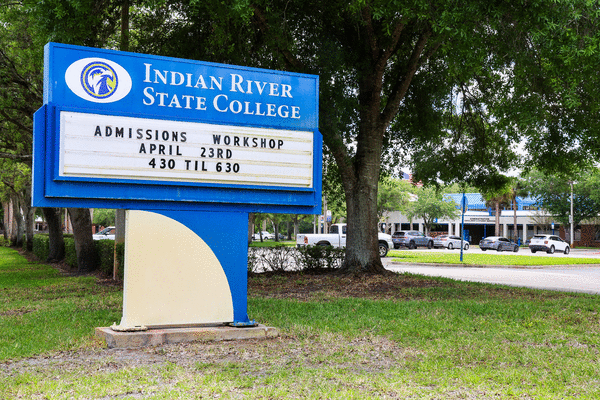
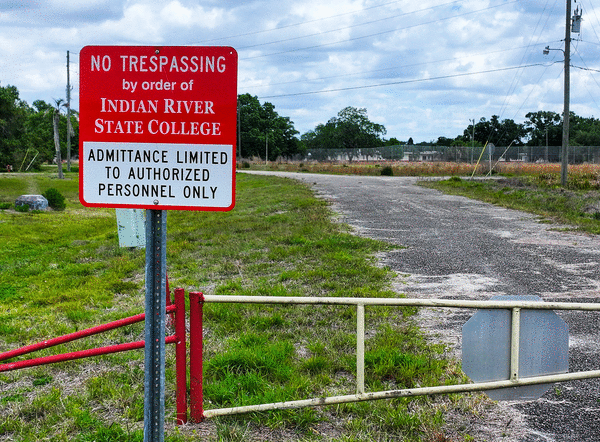
A Florida state college’s plan to build a data center near Lake Okeechobee has stoked fierce pushback from residents and an about-face from the DeSantis administration, which granted $1.5 million in state funds to the project and now says it was deceived. But college leaders say that the conflict is just a misunderstanding.
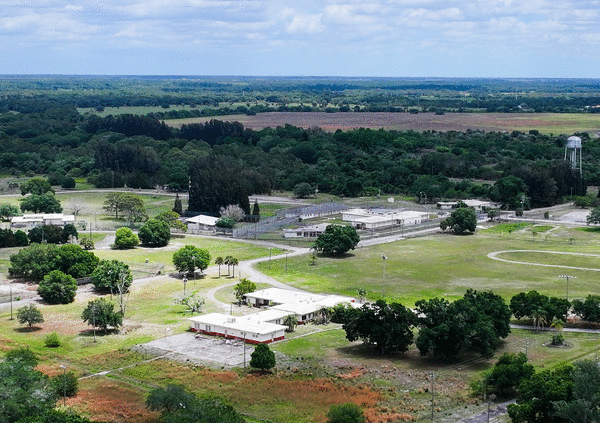
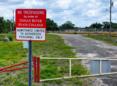
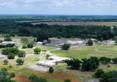
Indian River State College has been working for years on the “Okee-One Data Campus” in the town of Okeechobee. The campus, which is slated to include a data center, is planned for a 205-acre rural parcel that sits along Highway 441, about two and a half hours east of Sarasota.
In a February presentation before the Okeechobee County Commission, a college official noted multiple times that the project would not have moved forward without support from Gov. Ron DeSantis’ administration.
He also stirred anxiety — noting the project’s potential to grow in size, use more electricity and possibly involve a mega-data center corporation like Nvidia. The project has proceeded without any public vote for approval in the city or county governments, because the land is controlled by the state college.
The parcel has a dark history. To make way for the center, the college plans to bulldoze most of the remnants of the former Florida School for Boys at Okeechobee, an infamous reform school where students were systematically abused. It’s the sister campus to the more well-known Arthur G. Dozier School for Boys in Marianna, where students were so brutally beaten that dozens of bodies have been found in unmarked graves.
This month, a handful of people who live in Okeechobee flocked to a county commission meeting to raise concerns. They waited their turn to speak at the lectern, where they were summoned by their first names, a sign of the tight-knit community. Some worried about environmental impacts, others about the treatment of this site with painful historical significance. Some simply didn’t want to lose the peace and quiet central to this place’s natural beauty and identity.
“There’s something deeply wrong about sacrificing a small community so that a massive, faceless corporation can expand without limits,” said resident Korinne Curren. “This town is more than just open land on a map. It’s our home, and once we give that up, we won’t get it back.”
The Tampa Bay Times reached out to DeSantis’ office in late March to ask about a $1.5 million grant from the state’s Rural Infrastructure Fund for the project. Molly Best, a spokesperson for the governor, declined to answer questions, only pointing a reporter to DeSantis’ recent remarks about the dangers of AI chatbots.
But last week, as local backlash grew, the Florida Department of Commerce responded by accusing the college of deceiving state officials into funding the campus.
“After further review, it became clear that (the college)’s plans, much like the data center industry around the nation, is based on falsehoods and pretenses about energy and water,” department spokesperson Emily Hetherington said in an email.
She added that the state had already declined Indian River State College’s application for a second round of funding because state officials “will provide no financial support, in any business development projects related to data centers on that site and anywhere else in the state.”
The administration did not inform the college of its 180-degree turn.
In an interview with the Times two days later, college president Timothy Moore said a reporter’s question was the first he’d heard of the change. He blamed misinformation, saying that the campus is designed to be a training facility for students — not the type of massive operation that devours land and energy.
“The governor would be mistaken — politely, respectfully,” Moore said, when informed about the remarks the administration provided to the Times.
The saga exemplifies the sense of powerlessness that regular people feel in this breathless data center boom, as they try to protect their rural neighborhoods from the incursion of well-funded and often secretive projects. Some of the country’s most controversial data center projects have proceeded with limited transparency, so that residents only fully knew the scale of the operations after local officials had greenlit them.
The episode also shows how DeSantis has seen political opportunity in this moment. His decision to take on data centers contrasts with other national Republicans. It also is at odds with decades of party tradition to embrace big business.
What is the planned Okeechobee data center campus?
During the February meeting of the county commission, Andrew Treadwell, the college’s head of government and community relations, said that demolition of parts of the old juvenile center would begin in March. That timeline has stalled.
Treadwell outlined an initial plan for a data center that uses 9 to 10 megawatts of power, much smaller than the massive, resource-hungry operations that have taken root in other states. The bill that Florida lawmakers passed earlier this year to regulate data centers, for example, set rules for any data centers that consume at least 50 megawatts at their peak usage. The largest operations, sometimes called “hyperscalers,” usually consume more than 100 megawatts continuously.
Because of that smaller size, the project won’t drive up locals’ electric bills nor will it jeopardize the water supply, the college has said.
“What you see in the news, and there’s a lot of pushback — I know the governor has been speaking against hyperscaler data centers, these 200-megawatt, enormous projects — this is not that. At least at the beginning," Treadwell told the commission.
The 9-megawatt figure was chosen because Florida Power & Light informed the college that it was the maximum power capacity at the site, according to the presentation. School leaders, though, are hoping that will grow, and Treadwell mentioned that officials are exploring ways to generate more electricity on-site so it could take fuller advantage of the 200 acres.
“I know we’re close to natural gas pipelines — is there an opportunity to build generators out there, turbines out there, or maybe even beyond that?” he remarked. “We’re going to be engaged in discussions about how we can fire up more of the site.”
Treadwell also said that the school would soon be announcing its corporate partner for the campus. While noting that he couldn’t break his nondisclosure agreements, Treadwell mentioned the name of one of the largest data center companies in the world: Nvidia.
J. Alex Kelly, the secretary of the commerce department within DeSantis’ administration, introduced college leaders to “someone very high up on the Nvidia chain,” Treadwell said.
Nvidia did not respond to emails seeking comment.
These comments set off alarm bells in Okeechobee, as residents fear this smaller project is only the beginning, said Wyatt Deihl, a Tampa resident who grew up in Okeechobee. He started a petition against the project.
It got 500 signatures the first day, Deihl said, which was considerable since the town of Okeechobee has about 5,500 people.
It now has about 3,000 names.
“There’s a lot of unanswered questions,” Deihl told the Times. “It’s a very small, rural country town. When I was growing up, our biggest store was Walmart — and still is. I just don’t see the need for a data center in a community like that, especially if it’s going to bring more harm than good."
Moore, the college president, has since tamped down the idea that an expansion would mean a bigger data center.
He said the campus is solely envisioned as educational, allowing college students to get hands-on training in lucrative fields that are in high demand because of data centers: technology, cybersecurity, electrical systems, welding and air conditioning. Any actual computing or data storage capabilities of the site would be purely to make the learning experience realistic, he added.
“All I’m trying to do is answer a digital workforce training shortfall by building a digital workforce training site,” Moore said. “In retrospect, if I had to do it all over again ... we would call it a ‘digital workforce training site’ versus calling it a ‘data campus.’”
A big-name corporate partner would help shape the training to make it as real-world as possible, Moore added, not store their data there.
The Okeechobee County government has noticed the surge in apprehension about the project.
But because it’s classified as an educational campus, Okee-One is exempt from local government rules like permitting, county spokesperson Jarret Romanello said. That means that while the commissioners have received updates on the project’s progress, they are not expected to take any votes on it.
Romanello said county officials recognize that locals have concerns and are listening.
“There’s a lot of misinformation out there, and a lot of people think the county has approval over it and that’s not the case,” he added. “We have a responsibility to our citizens, we want to hear what they have to say — but it’s not our property."
Despite DeSantis’ rhetoric, his administration funded the project
This proposal has received material support from the DeSantis administration, even as the governor has been a vocal critic of data centers and how they can harm consumers.
The Okee-One project received $1.5 million from DeSantis’ Rural Infrastructure Fund, a pot of funding whose recipients DeSantis has personally announced at news conferences. The land was previously owned by the state, which transferred it to the college by passing a law in the Legislature.
Treadwell told county commissioners that Indian River State College leaders met with DeSantis in June 2022 about the project, and that Kelly, the commerce secretary, has been a backer since he was a deputy chief of staff in the governor’s office.
Treadwell himself said he started working on the proposal because of his personal ties to the governor’s office.
“I got involved in this project by happenstance,” he said in February. “My brother was the chief deputy general counsel for the governor and I think when this all happened, that’s how I got involved.”
After Raymond Treadwell served in the governor’s office, DeSantis appointed him to a judgeship at the First District Court of Appeal.
With the revelation of the state declining future funding, the project could face setbacks.
“We’ve honored everything the state has asked us to do,” Moore said. “If commerce has decided to go in another direction, that’s news to me.”
Residents have raised environmental concerns. The site is across the street from a wildlife preserve that serves as a wetland that cleans stormwater before it flows into Lake Okeechobee.
Indian River State College has said it will minimize harms to wildlife on the site, which since it was abandoned has been reclaimed by nature.
Locals have also wondered for years if the land holds unmarked graves. Roughly 80 bodies have been found buried at the Dozier school in Marianna. In the years since both reform schools closed, the state has formally apologized for the treatment of the boys and established compensation funds for the victims.
No graves have been found at the former Okeechobee school, despite some survivors telling journalists that they witnessed beating deaths there. In 2015, law enforcement searched the former school grounds using cadaver dogs and found nothing. Investigators concluded that all former Okeechobee students had been located.
Deihl said that the college needs to release more information about how the property was assessed to assuage the community.
“There are people who are incredibly concerned about the fact of the historical significance of the boys school and the weight it carries and feel that it should be a memorial,” he said.
“There’s longstanding community knowledge there are bodies buried on that property. It’s rumored — but enough people believe it that there should be some kind of transparency in the process."
Moore said as the plans for the data campus become solidified, he wants community support. He’s willing to adjust in response to meaningful criticism.
But right now, he said the backlash is based on a contortion of their plans that’s not reality.
“I’m a scientist by training, and there’s a great saying that I live by,” he said. “The less the data, the more the speculation.”
_____
©2026 Tampa Bay Times. Visit tampabay.com. Distributed by Tribune Content Agency, LLC.






Comments