Kansas Gov. Kelly vetoes unlawful approach of first responder bill. Override push looms
Published in News & Features
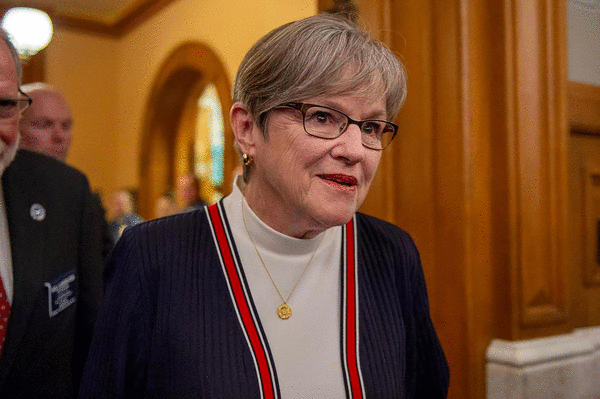
Kansas Gov. Laura Kelly has vetoed a bill that would make it a crime to approach or remain within 25 feet of a first responder who warns that doing so could distract them or put people or property in danger.
In her veto message, Kelly said the bill poses “a myriad of legal concerns” and creates “serious tension between ensuring law enforcement officers can carry out their duties while respecting the First Amendment rights of Kansans to observe and record their actions.”
“There are already federal laws in place establishing the crime of interfering with federal law enforcement, meaning there is no need to create a state crime for the same unlawful activity,” Kelly added.
The Democratic governor vetoed House Bill 2372 on Wednesday, a day before lawmakers reconvened in Topeka for a two-day veto session. The bill passed the Senate 30-9 and the House 85-39 last month — both of which would be sufficient for Republican supermajorities to enact it into law without Kelly’s approval.
In his own statement on Wednesday, House Speaker Dan Hawkins vowed to do just that.
“House Republicans back the men and women who put on the badge every day and want to make sure they have the tools they need to keep our communities safe. Law enforcement should not have to second-guess whether they will be supported for doing their job,” said Hawkins, a Wichita Republican who is running for insurance commissioner.
The unlawful approach legislation, originally introduced by Senate President Ty Masterson, is modeled after similar laws in Florida and Indiana that create buffer zones for first responders. The U.S. Court of Appeals upheld a lower court ban on the Indiana law as written last year, ruling it to be “unconstitutionally vague” and “susceptible to arbitrary enforcement.”
The Kansas version of the first responder buffer zone law would apply to federal officers, including ICE agents, but it could only be enforced by state or local law enforcement.
The bill would also make several significant changes to Kansas law regarding how local agencies coordinate with federal immigration authorities, including removing the requirement that sheriff’s offices obtain county commission approval before entering into agreements with ICE.
The legislation would shield agencies and individual officers from civil liability while deputized on behalf of ICE, requiring the attorney general’s office to represent local agents and officers implicated in civil rights lawsuits stemming from ICE action. It would also require the state to pay for ensuing damages not covered by the federal government.
According to the attorney general’s office, the expected caseload associated with immigration-related litigation would require Kansas to hire another assistant attorney general at $133,905 for salary and benefits in 2027, the bill’s fiscal note says.
In her veto message, Kelly said the bill would “increase liability exposure, increase costs, and remove local control from county commissions in making determinations about preserving public safety and law enforcement operations.”
©2026 The Kansas City Star. Visit at kansascity.com. Distributed by Tribune Content Agency, LLC.






Comments