Judge denies motion to exclude term 'genocide' from Stanford felony vandalism trial
Published in News & Features
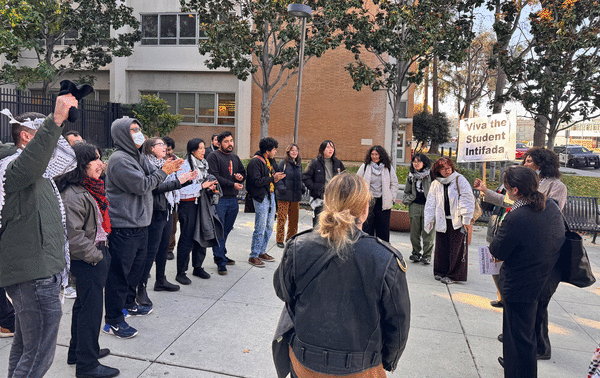
SAN JOSE, Calif. — Santa Clara County Superior Court Judge Hanley Chew on Tuesday denied a motion by the District Attorney’s Office seeking to bar defense attorneys from referencing “genocide” in the felony vandalism trial of five pro-Palestinian demonstrators at Stanford University.
In a related decision earlier Tuesday, Chew also denied a motion to exclude political motivations from being argued by the defense, but said any discussion would be “severely limited” under evidentiary rules.
“What I’m going to rule is this: I will deny the prosecution’s motion. However, I would ask defense counsel to be very judicious with the use of the word ‘genocide,’ because, as all of you pointed out, the word is very powerful and politically charged. If I feel that parties are exploiting that word, I’ll sustain an objection and exclude its further use. In addition, I will give a limiting instruction to the jury,” Chew said.
Accused of damaging Stanford’s executive offices during a June 2024 demonstration calling on the university to divest from Israel-linked companies, five defendants remain of the 13 initially arrested. The five – German Gonzalez, Maya Burke, Taylor McCann, Hunter Taylor Black and Amy Zhai – face up to three years in jail if convicted.
The others arrested accepted plea agreements or were admitted into diversion programs. District Attorney Jeff Rosen declined to charge a student journalist who was arrested while covering the event.
Supporters filled the courtroom gallery Tuesday morning, many wearing kaffiyehs in solidarity with the Stanford protesters and Palestinians in Gaza. Chew admonished several audience members for disruptions during arguments, though no repeated incidents occurred. After the hearing, supporters gathered peacefully outside and chanted in support of Palestinians, marking three years since intensified military operations in Gaza left tens of thousands dead.
Deputy District Attorney Rob Baker argued that allowing testimony about genocide and political motivations could invite hearsay and speculation.
“I’m asking the court to exclude testimony and argument that characterizes Israel’s actions as genocide,” Baker said. “Unless defendants personally observed Israel’s intent, it’s irrelevant. Any argument otherwise is based on inadmissible evidence.”
Defense attorney Leah Gillis countered that the term reflects the defendants’ perspective and is not prejudicial.
“Israel isn’t a witness, a victim, or the district attorney in this case,” she said. “Using the word ‘genocide’ is describing what our clients believed and acted on. The court’s job isn’t to decide Israel’s actions; it’s to decide whether we can argue what our clients believed at the time of the alleged crime.”
Public defender Avanindar Singh, representing Gonzalez, said the defendants’ motivations are central to questions of intent — a key element of the vandalism charges. Chew agreed but stressed narrow limits.
“I think defendants do have a right to speak about motivations and actions,” Chew said, “but testimony must avoid non-relevant and hearsay evidence. The motion is denied, with the understanding that testimony will be severely limited.”
Earlier in the morning, Chew also ruled against a prosecution motion seeking to exclude political context from the defense strategy.
“My concern is defendants are going to get up there and start talking about hearsay, opinions, what they’ve seen on social media, what they’ve seen on the news,” Baker said, urging Chew to restrict such arguments even if the motion were denied.
Singh responded: “Motivations of defendants in connection with the sit-in are significant factors with intent. Their reasons are relevant and should not be excluded. We don’t believe this motion should be granted.”
Chew said when he ruled on those motions: “I think defendants do have a right to testify to speak about motivations and actions. But when they are testifying, I would limit rules of evidence so that non-relevant and hearsay evidence would not be testified to. I’m going to deny the motion, with the understanding that testimony will be severely limited. They will have a right in a limited fashion.”
During a recess, Taylor Black’s attorney, Tony Brass, told this news organization that the prosecution wants the trial to focus on the alleged vandalism itself, rather than the context behind the protesters’ actions.
“By their actions and words, what they want is a clean vandalism trial, as though these people simply decided to vandalize a building,” Brass said. “The question is whether they vandalized it, without allowing the defense to tell the human story behind why they did it — what brought them there and their sense of urgency.”
Several other motions on evidence and discovery were deferred for future hearings. Jury selection is expected to begin January 2026.
_____
©2025 MediaNews Group, Inc. Visit at mercurynews.com. Distributed by Tribune Content Agency, LLC.





Comments