Sports
/ArcaMax
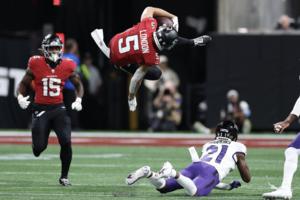
Ravens rally behind Tyler Huntley, dominate OT to beat Falcons
ATLANTA — Ravens longtime backup quarterback Tyler Huntley said last week that starting for the first time this season, replacing the injured Lamar Jackson on Sunday night, would be like riding a bike.
It turned out to be a thrilling ride.
With Baltimore trailing 23-15 and just over two minutes remaining Sunday night against the Falcons, ...Read more
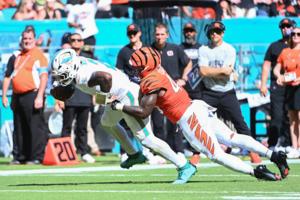
Chris Perkins: Dolphins know their identity, now they must turn it into wins
MIAMI GARDENS, Fla. — Miami Dolphins coach Jeff Hafley knows who and what he has in his locker room. The same goes for his players. This isn’t a team with an identity crisis.
Ask anyone. Veteran edge rusher Josh Uche. Promising left tackle Patrick Paul. Upstart safety Dante Trader Jr. They know who they are. They simply need to find a way ...Read more
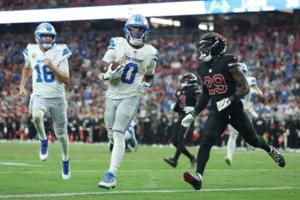
Lions overcome quiet start to pummel Cardinals
GLENDALE, Ariz. — After the first quarter of Sunday's game at State Farm Stadium, it looked like the Detroit Lions were going to have some tough conversations on both sides of the ball going into the bye week.
But the dam broke at the end of the first quarter.
The Lions scored 31 consecutive points and forced five straight three-and-outs for...Read more
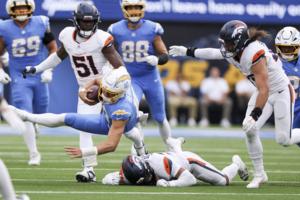
Justin Herbert's fourth-quarter meltdown dooms winless Chargers in loss to Broncos
LOS ANGELES — The Los Angeles Chargers finally made a play they could hang in the Louvre — a spectacular 42-yard touchdown run — but in the end Sunday only wound up with another L.
It was their fifth loss in a row this season, another turnover-plagued nightmare, that resulted in a 23-17 defeat to the Denver Broncos.
Most painful for the ...Read more
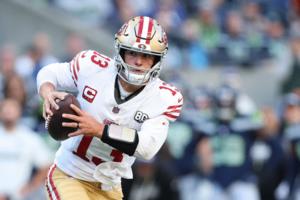
Brock Purdy leads 49ers past Seahawks in 32-29 win
SEATTLE – An NFC West prize fight broke out Sunday, complete with touchdowns, turnovers, taunting, tie scores and tense trading of leads.
Once this Week 5 doozy ended, the San Francisco 49ers’ undefeated record ratched up to 5-0 via a 32-29 triumph over the defending Super Bowl-champion Seattle Seahawks.
It took a midfield stand, of all ...Read more
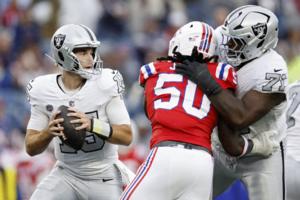
Raiders pummeled by Patriots, leading to Fernando Mendoza's NFL debut
FOXBOROUGH, Mass. — So much for the 3-0 start for the Las Vegas Raiders, who are losers Sunday for the second straight week.
This time uncompetitively.
The Raiders were eviscerated 45-17 at Gillette Stadium by a New England Patriots team down star cornerback Christian Gonzalez — along with three other cornerbacks. Mistake-averse its first ...Read more
49ers LB Dre Greenlaw ejected after head-butt in Seahawks game
Dre Greenlaw, the San Francisco 49ers’ emotional leader who often toes the line on physical play, went a bit too far on Sunday in Seattle and got himself ejected.
Greenlaw headbutted Seahawks linebacker Ernest Jones IV, who was not wearing a helmet, on the Seattle sideline during a brief second-quarter scuffle. The pushing began after ...Read more
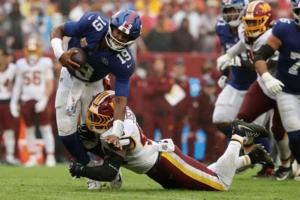
Giants tie Commanders, 27-27, after Washington's Jayden Daniels lets clock run out in OT
LANDOVER, Md. — Cam Skattebo fumbled away a New York Giants win on Sunday. Then Jayden Daniels handed them a 27-27 tie in a jaw-droppingly dysfunctional ending for the Washington Commanders.
The Giants’ running back seemingly had fumbled the ball and the game away at Washington’s 24-yard line while needing only a field goal to win in ...Read more
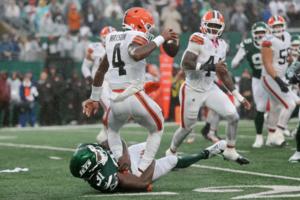
Rookie David Bailey gets 3 sacks as Jets defeat Browns
NEW YORK — The New York Jets kept giving the ball away.
Their defense refused to give the game away.
Behind a dominant pass rush led by rookie David Bailey, the Jets (2-3) snapped their three-game losing streak with a 17-12 victory over the Cleveland Browns (3-2) on a rainy Sunday afternoon at MetLife Stadium.
Braelon Allen delivered the ...Read more
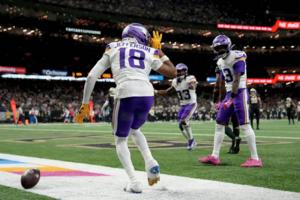
Unbeaten Vikings ride winning formula to victory over Saints
NEW ORLEANS — The Minnesota Vikings, after a 23-13 victory over the New Orleans Saints at Caesars Superdome, remain perfect to start the 2026 NFL season.
The Vikings won Sunday without Jordan Addison, who was deactivated after a brief pregame workout to determine whether his sore hamstring would affect his availability, and without T.J. ...Read more
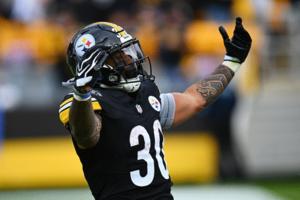
Big days from Aaron Rodgers and Jaylen Warren power Steelers past Colts
PITTSBURGH — The Pittsburgh Steelers didn’t exactly mop the floor with the Indianapolis Colts on Sunday. And their defense didn’t exactly wash away what happened 10 days earlier in Cleveland.
But they dusted off a couple big plays from Jaylen Warren and did enough to clean their house — in Mike McCarthy’s words from earlier this week...Read more
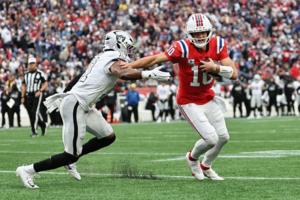
Drake Maye leads Patriots to blowout win over Raiders
FOXBOROUGH, Mass. — The New England Patriots are officially back on track and should be considered one of the top threats in the AFC after thoroughly dominating the Las Vegas Raiders 45-17 at home on Sunday.
The Raiders entered Week 5 with a better record than the Patriots but were completely overmatched by last year’s AFC champions.
The 3...Read more
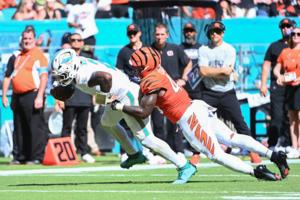
Dolphins QB Malik Willis struggles in 31-24 loss to Bengals
MIAMI — Miami Dolphins quarterback Malik Willis called the Week 4 loss a backward step.
Unfortunately, Sunday’s outing was an even further step in the wrong direction.
The Cincinnati Bengals beat the Dolphins 31-24 in large part due to the offense’s inability to get the passing attack going.
After failing to reach 100 yards through the ...Read more
Bears commit 5 turnovers and QB Jordan Love leads Packers to a 31-7 rout
GREEN BAY, Wis. — After all the magic the Chicago Bears found against the Green Bay Packers last season, Sunday’s first meeting of 2026 between the rivals turned out to be a disaster for coach Ben Johnson’s team.
The Packers clobbered the Bears 31-7 at Lambeau Field, with the visitors turning the ball over five times and failing to get ...Read more
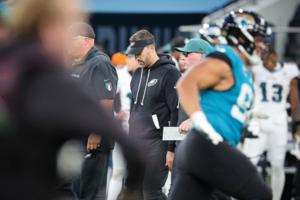
Eagles coach Nick Sirianni takes the blame for final kickoff decision: 'That'll stick with me'
LONDON — Philadelphia Eagles coach Nick Sirianni stood in front of his team Sunday evening at Tottenham Hotspur Stadium and later on a stage in front of a podium and blamed himself.
“What hurts there is that the guys fought so hard and then I don’t make the decision that I should make at the end of the game and I cost us that game,” ...Read more
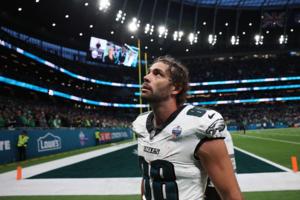
Depleted Eagles stunned in London, fall in 19-17 thriller to Jaguars on 57-yard Cam Little field goal
LONDON — Once again, the Philadelphia Eagles were down their top two offensive weapons in Saquon Barkley and DeVonta Smith. The offensive line featured yet another reconfigured starting combination.
And once again, the Eagles were in a position to win, but they couldn’t put the game away.
The Eagles went up, 17-16, over the Jacksonville ...Read more
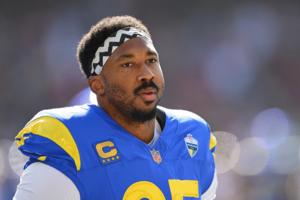
Rams star Myles Garrett likely will not return to practice next week
LOS ANGELES — Star edge rusher Myles Garrett is eligible to return from injured reserve next week, but the Rams probably will wait to open the 21-day window for him to rejoin the roster, coach Sean McVay said Saturday.
"It's kind of week to week in terms of how he feels, but I would say it's more likely that we do not start his clock next ...Read more
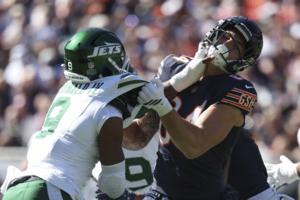
Brad Biggs: Ben Johnson wants a physical identity for the Bears. After 4 games, that is emerging.
CHICAGO — The symmetry of a 16-game season has been gone for a while, but in the NFL they still talk about the “first quarter” of the season as a period for self-discovery.
Chicago Bears coach Ben Johnson said in training camp — and again last month — that it would take four games to determine the identity of this team, even as it ...Read more
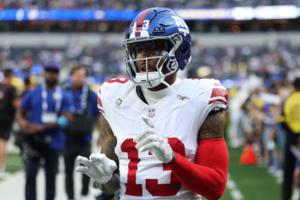
Vikings plan to elevate Odell Beckham Jr. for Saints game, but will he play?
MINNEAPOLIS — After adding Odell Beckham Jr. to their practice squad on Wednesday, the Vikings will have the wide receiver available to play on Sunday in New Orleans.
Beckham will be elevated from the practice squad for the Vikings’ game against the Saints, according to a source with knowledge of the situation. The 33-year-old receiver ...Read more

Mike Vorel: Ex-Seahawk Russell Wilson surprisingly fun to watch with CBS Sports
SEATTLE — I wasn’t convinced that Russell Wilson’s personality would translate to television.
Because during 14 NFL seasons, and a decade in Seattle, I rarely saw one. Publicly, Wilson was purposefully unknowable. He was a winner, a magician, a play-extender and a moonball maven. He was a relentlessly positive, remarkably durable, a ...Read more
Popular Stories
- Drake Maye leads Patriots to blowout win over Raiders
- Giants tie Commanders, 27-27, after Washington's Jayden Daniels lets clock run out in OT
- Depleted Eagles stunned in London, fall in 19-17 thriller to Jaguars on 57-yard Cam Little field goal
- Bears commit 5 turnovers and QB Jordan Love leads Packers to a 31-7 rout
- Raiders pummeled by Patriots, leading to Fernando Mendoza's NFL debut
Comics