Sports
/ArcaMax
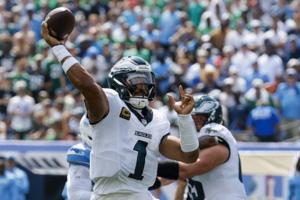
Eagles win 24-20 thriller; Jalen Hurts atones for two INTs with epic two-minute drive vs. Titans
NASHVILLE, Tenn. — On Sunday afternoon in the Music City, the Tennessee Titans wound up singing the blues.
While the Titans went up, 20-17, on a 32-yard field goal late in the fourth quarter, the Philadelphia Eagles got the ball back with one minute, 56 seconds left to play.
Jalen Hurts, who threw two interceptions earlier in the game, ...Read more
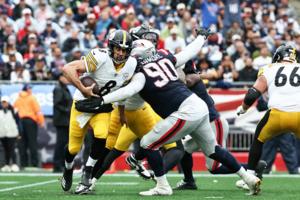
Steelers' offense goes from bad to worse in an ugly loss to Patriots
FOXBOROUGH, Mass. — This is certainly not what anyone expected from Mike McCarthy’s offense.
If the Pittsburgh Steelers were “herky-jerky” in the season opener against the Atlanta Falcons — those were McCarthy’s words — then they were just plain ol’ choppy-dropsy in Sunday’s 20-3 loss to the New England Patriots at ...Read more
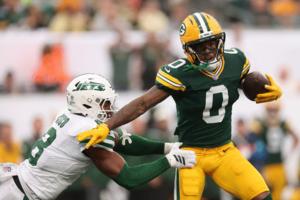
Jets blow 10-point lead before Packers kick game-winning FG in OT
NEW YORK — The rain poured. The New york Jets blew a 10-point lead. And Green Bay stunned them in overtime.
On a soggy day at MetLife Stadium, the Packers (1-1) defeated the Jets (1-1), 20-17.
Geno Smith completed 27 of 41 passes for 247 yards and a touchdown in the loss. Jordan Love completed 16 of 29 passes for 145 yards and two touchdowns...Read more
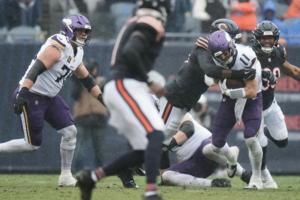
Carson Wentz, Vikings offense slog through the rain to get past Bears and start season 2-0
Minnesota Vikings Receiver Justin Jefferson initially seemed prescient.
During his media session with local reporters last week, Jefferson said “there’s definitely potential to create some big, explosive plays” against a Chicago Bears defense that looked vulnerable in a Week 1 win against Carolina.
Quarterback Carson Wentz’s first pass...Read more
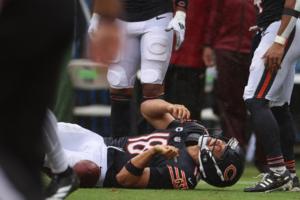
Bears lose QB Caleb Williams to a hamstring injury and fall 9-3 to Vikings
CHICAGO — Chicago Bears quarterback Caleb Williams exited Sunday’s game in the fourth quarter with a right hamstring injury, and the Minnesota Vikings closed out a 9-3 win at Soldier Field.
With the Bears trailing 6-3 midway through the fourth quarter, Williams had the offense moving into the red zone, looking to take the lead. Moments ...Read more
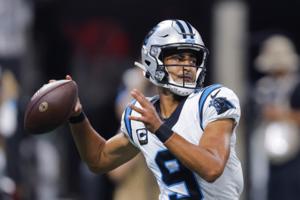
Panthers rebound, blow out Falcons behind Bryce Young, Devin Lloyd
ATLANTA — The Carolina Panthers had Bryce Young at quarterback Sunday, and he’s never better than when he’s playing Atlanta.
The Atlanta Falcons had Cooper Rush at quarterback, because their top two QBs were hurt.
That was the biggest difference in a nutshell Sunday, as the Panthers blew out the Falcons, 34-3, to even their record at 1-1...Read more
Ravens squander lead, allow late TD in stunning 24-17 loss to Saints
BALTIMORE — All summer, Baltimore Ravens coach Jesse Minter talked to anyone who would listen about his players needing to be at their best when they needed to be.
Baltimore was anything but Sunday afternoon.
With the Saints facing fourth-and-goal from the Ravens’ 1-yard line with just over 90 seconds remaining in Sunday’s home opener at...Read more
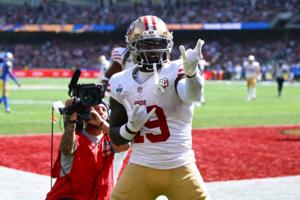
Dieter Kurtenbach: Don't overthink it: 49ers will steamroll nascent Dolphins
Professional football games usually require a buildup of careful parsing, subtle tactical deduction and the kind of respectful coach-speak that makes an opponent sound like the eventual Super Bowl champion.
Not this game.
The 49ers shouldn’t just beat the Miami Dolphins on Sunday in their home opener; they should walk all over them. The ...Read more
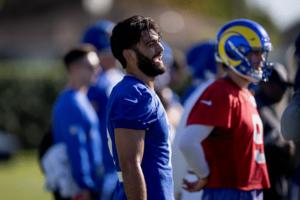
Puka Nacua dealing with injury, might not play for Rams vs. Giants
LOS ANGELES — Aaron Donald will play on Monday night against the New York Giants, but Los Angeles Rams star receiver Puka Nacua did not practice and is questionable for the game at SoFi Stadium, coach Sean McVay said Saturday.
"He's got a little bit of soreness in that groin, being smart with him as a skill player," McVay said. "Whether or ...Read more
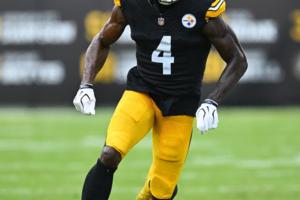
Noah Hiles: It's time for DK Metcalf to play like the player he's paid to be
PITTSBURGH — Aaron Rodgers made a point to declare his confidence in DK Metcalf earlier this week.
“I’m not worried about DK at all, man,” the Steelers quarterback said Wednesday. “I love DK. He’s one of my closest friends on the team, and I’m going to keep feeding him.”
But while Rodgers might not be worried, it’s easy to ...Read more
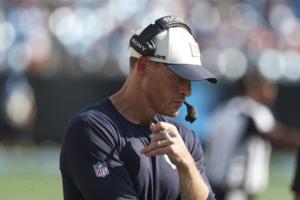
Brad Biggs: Shades of 'Greatest Show on Turf'? Mike Martz's influence on Ben Johnson's Bears offense.
CHICAGO — Asked for his initial reaction, a front-office official for another team didn’t hesitate after watching the Chicago Bears offense in the season opener.
“That was some ‘Greatest Show on Turf’ (stuff) right there,” he responded.
It was an off-the-cuff comparison for Ben Johnson’s offense — which scored the second-most ...Read more
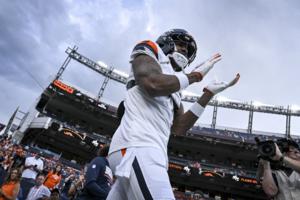
The Broncos believe in their altitude advantage. The data says it's complicated.
DENVER — The Broncos had spent the first half chasing the Packers around Empower Field at Mile High. Green Bay put together scoring drives of eight, 10, nine and eight plays, and Denver found itself trailing 23-14 early in the second half, with its 10-game winning streak in jeopardy of coming to a whimpering end at home.
But during a timeout ...Read more
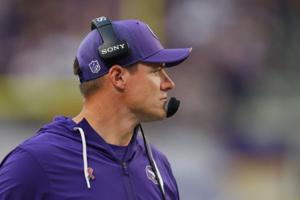
Chip Scoggins: Kevin O'Connell has adjusted his approach. It's about winning, not style points.
MINNEAPOLIS — The stat sheet caused a double take. Kevin O’Connell called more run plays than pass plays and won the time of possession margin in a game in which his team trailed until midway through the fourth quarter.
Afterward, the Vikings head coach sounded like someone who had sat in solitude on a beach in Maui and discovered the ...Read more
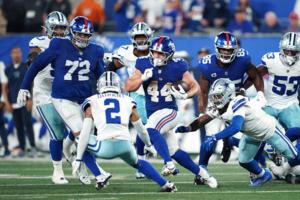
Giants' Cam Skattebo loves prime time: 'When the lights are on, I probably play my best ball'
NEW YORK — Cam Skattebo plays his best in prime time.
That bodes well for the Giants (1-0) as they pivot from an opening week Sunday Night home win to the bright lights of Monday Night Football in Week 2 at the Los Angeles Rams (0-1).
“I’m the type to, when the lights are on, I do probably play my best ball,” Skattebo, 24, said this ...Read more
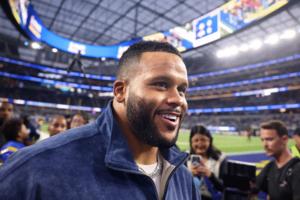
Aaron Donald plans to play vs. Giants; Puka Nacua sits out Rams practice
LOS ANGELES — Aaron Donald said Friday that he planned to make his season debut for the Rams against the New York Giants on Monday night, but star receiver Puka Nacua's status is more hazy because of a hip injury.
Donald, 35, rejoined the Rams after ending a two-year retirement. The three-time NFL defensive player of the year did not travel ...Read more
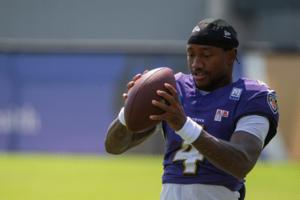
Ravens injury report: Zay Flowers doubtful, Nnamdi Madubuike out for home opener
BALTIMORE — After producing more than 500 yards in Week 1, the Ravens’ offense is facing far more uncertainty entering its home opener Sunday against the New Orleans Saints.
Pro Bowl wide receiver Zay Flowers practiced for the first time this week on Friday but was limited and is listed as doubtful with a hamstring injury. Left tackle ...Read more
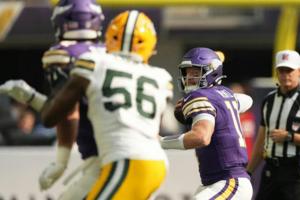
Vikings QB Kyler Murray out for Bears game. Can Carson Wentz build on his Week 1 showing?
MINNEAPOLIS — The Vikings went into the season hoping for quarterback stability after using three different starting QBs in 2025.
Instead, they’ll prepare for their second game of the season with their second different QB.
Carson Wentz will start for the Vikings on Sunday in Chicago, coach Kevin O’Connell announced Friday, as the team ...Read more
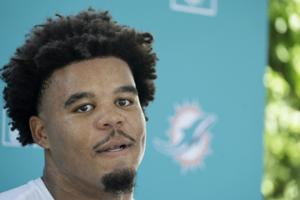
Dolphins' Chop Robinson ruled out vs. 49ers with concussion
NAPA, Calif.— Miami Dolphins edge defender Chop Robinson was ruled out for Sunday’s game against the San Francisco 49ers due to his concussion.
Dolphins coach Jeff Hafley said ahead of the team’s practice on Friday in Napa that Robinson will not play in Sunday’s 4:25 p.m. kickoff at Levi’s Stadium.
Hafley said Robinson suffered the ...Read more
Raiders' Brock Bowers doubtful vs. Chargers but could be game-time decision
LAS VEGAS — There is a chance Brock Bowers could play Sunday for the Las Vegas Raiders just 12 days after undergoing a procedure on his left knee.
Bowers was on the field with his teammates for the start of Friday’s practice, and coach Klint Kubiak said the star tight end would be worked out in the pregame before the Raiders face the Los ...Read more
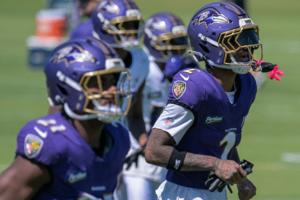
Josh Tolentino: Ravens look ready for deep run with top corners
BALTIMORE — Nate Wiggins believes Year 3 is his time.
The Ravens cornerback made that abundantly clear when we spoke one-on-one Wednesday at his locker stall.
“This year is very big for me,” Wiggins said. “Going on to Year 3, man, I need to stand on business. For me, I just want everybody [to] know I’m one of the best cover guys in ...Read more
Popular Stories
- Dieter Kurtenbach: Don't overthink it: 49ers will steamroll nascent Dolphins
- Fantasy football Week 2: Start, sit and sleepers
- Puka Nacua dealing with injury, might not play for Rams vs. Giants
- Patriots RB TreVeyon Henderson opens up about post on Massachusetts custody battle with abuse allegations
- Fantasy football waiver wire: Week 2 adds, stashes and streamers
Comics