Sports
/ArcaMax
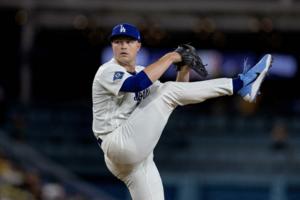
Dodgers to name Tarik Skubal their Game 1 starter against Braves
LOS ANGELES — When the Dodgers acquired left-hander Tarik Skubal at the trade deadline, they expected him to be a big part of their postseason plans. But they didn't necessarily pencil him in as their Game 1 starter.
After mulling over their options this week, the Dodgers are expected to announce Friday that Skubal will take the mound in Game...Read more
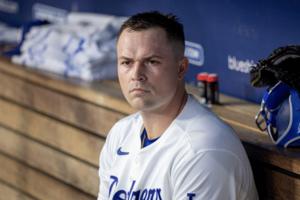
Bill Shaikin: 'Hired gun' Tarik Skubal opens up on the pressure, pain and lessons of October
LOS ANGELES — The Dodgers did not need Tarik Skubal to win the National League West. They traded for him to help them win a third consecutive World Series.
Their legacy is at stake. So is his.
That could be hyperbole. Skubal turns 30 next month, already the winner of two Cy Young awards, one of them unanimously. He could sign the largest ...Read more
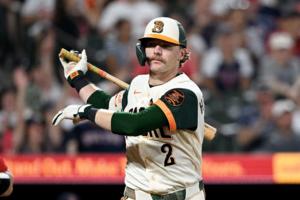
Analysis: For Orioles' Gunnar Henderson, letting go is key to 2027 rebound
BALTIMORE — After the Orioles’ final loss of a disappointing season, the club’s most important player answered questions one last time about how another year went wrong.
Gunnar Henderson spent the past six months frustrated, an emotion that bled through television screens after each strikeout, lineout and pop-up. After his MVP-caliber ...Read more
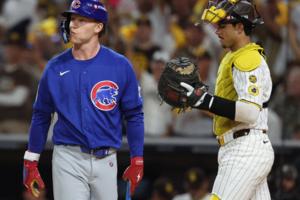
Paul Sullivan: One city, two teams and plenty of emotions after White Sox and Cubs split wild-card series
CHICAGO — The Cubs and White Sox clinched postseason spots two minutes apart Sept. 24, a crazy coincidence for the city rivals.
On Wednesday the Sox advanced to the American League Division Series with a 7-3 win over the Houston Astros in their wild-card series, about three hours before the Cubs bowed out of their wild-card series with a 4-1 ...Read more
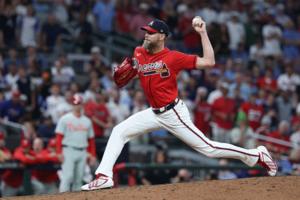
Phillies' weaknesses on display in season-ending 6-2 loss to Braves in Game 3
ATLANTA — Like statues, there they stood, this Phillies team. Leaning against the dugout railing, chins resting on their crossed arms as they watched it all slip away once again.
This one was a slow death. But the end could have been discerned a mile away.
Even before Michael Harris II’s first-inning homer off Aaron Nola that gave Atlanta ...Read more
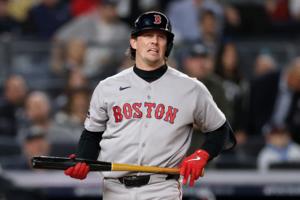
Josh Tolentino: Adley Rutschman isn't difference-maker Red Sox needed
BALTIMORE — The Red Sox paid a pretty penny for Adley Rutschman, hoping he could catapult them to October glory.
Orioles fans, though, surely recognized the version of Rutschman who showed up this week in the postseason. The No. 1 overall pick from the 2019 MLB draft again struggled to deliver when it mattered most.
Boston’s deadline ...Read more
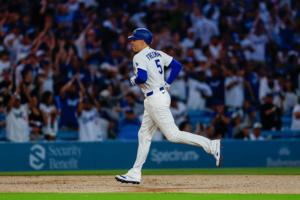
Bill Shaikin: Will his health allow Dodgers' Freddie Freeman to deliver another postseason signature moment?
LOS ANGELES — The Dodgers' back-to-back World Series championships each have been punctuated by the Freddie Freeman Signature Moment.
It is the flair for the dramatic. It is coming through in the clutch, at the clutchiest of times. When you tell your friends about the game the next day, it is the first thing you mention.
Did you see that?
...Read more
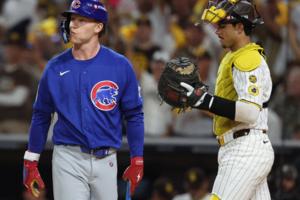
Padres pitch, slug way to NL Wild Card Series sweep over Cubs; Brewers next
The Padres have extended the most successful era in franchise history.
And just as there is no contesting that assessment of this decade, their National League Wild Card Series victory over the Cubs was not close.
The Padres finished off a two-game sweep on Wednesday at Petco Park with a 4-1 victory.
That was far more tense than the previous ...Read more
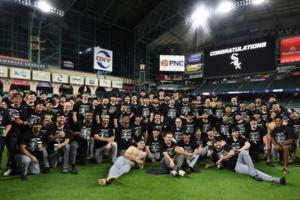
Paul Sullivan: White Sox have made converts out of everyone -- including Jerry Reinsdorf
HOUSTON — The Chicago White Sox made believers out of skeptics this season, going from three straight seasons of 100-plus losses to the 2026 postseason.
And now they’re in the American League Division Series after sweeping the Houston Astros in a best-of-three wild-card series.
Whether Pope Leo XIV had anything to do with it is anyone’s ...Read more
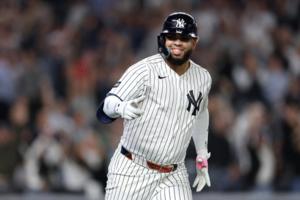
Luis Garcia Jr. has first Yankees moment in wild-card series-clinching win vs. Red Sox
NEW YORK — If you would’ve told Luis Garcia Jr. before this season what he’d be doing on Sept. 30, he probably wouldn’t believe you.
That’s because the 26-year-old was slated to bat in the middle of the order for the lowly Washington Nationals, who had virtually no aspirations of competing, with October as a good target month for a ...Read more

Max Fried stifles Red Sox as Yankees complete wild-card sweep, advance to ALDS
NEW YORK — Max Fried waited nearly a year for this.
Last postseason, Fried was lined up to start a decisive Game 5 in the ALDS, only for the Toronto Blue Jays to eliminate his New York Yankees in four games.
That meant the final start of Fried’s debut Yankee season was an Oct. 5 loss in which he surrendered seven runs over three innings in...Read more

Marcus Hayes: Alec Bohm's homer saved the season for the Phillies against the Braves. He'd 'love' to stay. Re-sign him.
ATLANTA — Alec Bohm sat behind a microphone for what could have been the last time as a Phillie on Wednesday morning, and he reflected on his 6 1/2 seasons in the majors as a Phillie, supporting rosters dotted with future Hall of Famers. He will be a free agent this winter, and his inconsistent play combined with his occasional truculence have...Read more
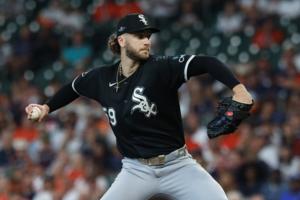
White Sox complete sweep for 1st playoff series win since 2005 -- and face Guardians next
HOUSTON — The Chicago White Sox lead, which at one time stood at four runs, was down to one in the fifth inning of Game 2 of the American League wild-card series against the Houston Astros.
The Sox made a pitching change, calling on Anthony Kay with two on, one out and the dangerous Yordan Alvarez coming up.
Kay got Alvarez to line out to ...Read more
Red Sox activate Curtis Mead as replacement for Roman Anthony
NEW YORK — When the Red Sox acquired Curtis Mead a week prior to the trade deadline in exchange for Connelly Early, they envisioned the 25-year-old fortifying the club’s lineup ahead of what the team hoped would be a big playoff push.
The Red Sox probably didn’t expect Mead to fulfill that role quite like this.
Mead was activated from ...Read more
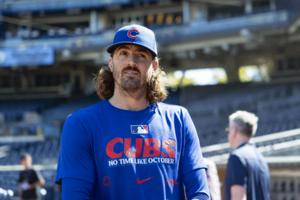
Cubs turn to veteran Kevin Gausman -- whose shoulder feels 'good enough' -- to start in must-win Game 2
SAN DIEGO — Six days ago, Kevin Gausman faced uncertainty surrounding whether he would be available to pitch for the Chicago Cubs in the National League wild-card series.
The left shoulder injury Gausman sustained during his final regular-season start last week while making a diving tag at third base did not feel great the next day. The Cubs ...Read more
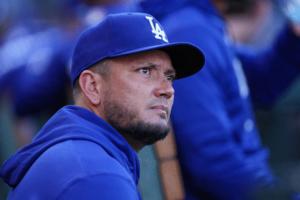
Dodgers' Miguel Rojas soaking up possible last hurrah: 'I wouldn't play for another team'
LOS ANGELES — Miguel Rojas has remained composed at the field. But away from it, on the precipice of what could be his last postseason run as a player, he hasn't been able to hold back the tears.
"It's been hard," Rojas said in a recent conversation with The Los Angeles Times. "I'm not going to lie. I've been crying by myself at home.
"Every...Read more
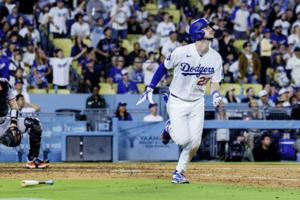
Who's hot and who's not as Dodgers prepare for the postseason
LOS ANGELES — Dodgers right fielder Kyle Tucker has never shied away from just how bad his performance at the plate was for much of his first season in Los Angeles.
For the first five months of the season, when he'd show brief glimpses of progress before sinking back into an extended slump, Tucker's .683 OPS was the third-worst among Dodgers ...Read more
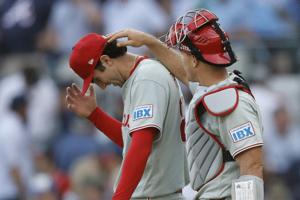
Alec Bohm, Phillies find power late to beat Braves and force a Game 3
ATLANTA — Staring down the potential end of his Phillies tenure, Alec Bohm set up against Didier Fuentes in the 10th inning.
With the Phillies facing elimination from their wild-card series in Game 2, and Bohm nearing free agency, it was fair to wonder as he dug in if it could be his final at-bat in a Phillies uniform. But with one swing, ...Read more
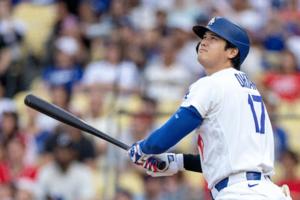
The Dodgers have an old roster. But that isn't necessarily a drawback in October.
LOS ANGELES — When Dodgers rookie Josue De Paula debuted a little over two weeks ago, he was the youngest player in the lineup by four years. And when veteran infielder Miguel Rojas pinch-hit for Alex Freeland in the eighth inning, the 21-year-old De Paula and 29-year-old Kyle Tucker were the only Dodgers under 30 remaining in the batting ...Read more
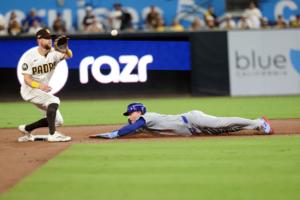
Padres rout Cubs in Game 1 of NL Wild Card Series
Fernando Tatis Jr. and Manny Machado showed up, and Michael King could pitch more than one inning.
On their own, those factors had the Padres in an entirely different space than they were a year ago.
In the end, too, Joe Musgrove could pitch at all, and the San Diego native was the one who threw the final pitch of an 8-0 victory over the Cubs ...Read more
Popular Stories
- Josh Tolentino: Adley Rutschman isn't difference-maker Red Sox needed
- Phillies' weaknesses on display in season-ending 6-2 loss to Braves in Game 3
- Paul Sullivan: One city, two teams and plenty of emotions after White Sox and Cubs split wild-card series
- Bill Shaikin: 'Hired gun' Tarik Skubal opens up on the pressure, pain and lessons of October
- Analysis: For Orioles' Gunnar Henderson, letting go is key to 2027 rebound
Comics