Haiti farmers battered by Hurricane Melissa are still reeling, UN says
Published in Weather News
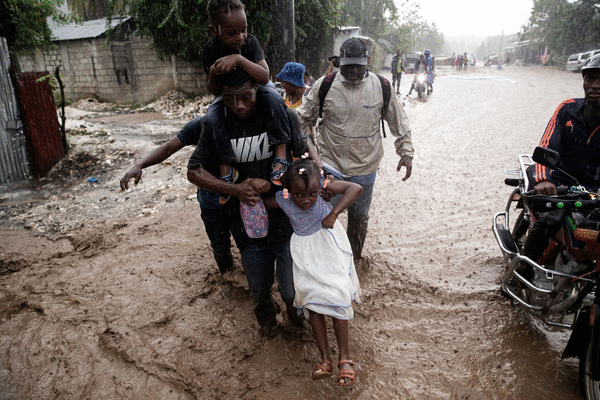
A month and a half after Hurricane Melissa killed dozens of people in Haiti, the country is still struggling with its aftermath.
Haitians, who were already going hungry because gang violence has blocked highways and cut off commerce, are grappling with even more shortages and the loss of crops, the regional director of the United Nations’ World Food Program said Thursday during a visit to the country.
As she spoke via video, a helicopter, still the only way humanitarian aid workers can get in and out of Port-au-Prince and into storm-ravaged areas, flew overhead.
“We cannot forget Haiti,“ Lola Castro said, adding it remains one of five countries in the world where people “don’t have enough to eat every day.”
Among the places she visited, Castro said, was the coastal town of Petit-Goâve, where a river overflowed its banks, killing at least 25 people. Along with homes and livelihoods, residents also lost their crops.
“They have lost their families, their livelihoods, their crops, their cattle, their houses, and now they are trying to rebuild their lives,” she said.
At least 43 storm-related deaths were reported in Haiti, even though Melissa did not hit the country directly and U.N. agencies tried to prepare the public ahead of the storm.
There are ongoing efforts by the ministry of agriculture and the Food and Agriculture Organization of the United Nations “to see how these communities can replant and rehabilitate their livelihoods,” she said.
Castro said the U.N. agency is working on recovery and rehabilitation in a number of ways, including school feeding programs and working with the government on a system that registers everyone affected.
The World Food Program provides more than 600,000 children a hot meal every day in many schools in Haiti. Castro noted that with up to 90% of Haiti’s capital under gang control, the agency has created a large logistics operations to help get access to vulnerable communities.
The World Food Program is equally active in Jamaica, where fishermen have lost their boats, and in Cuba, where the loss of almost all crops on the eastern end of the island and an ancient, trouble-plagued electrical grid has made for “a very difficult situation.”
©2025 Miami Herald. Visit miamiherald.com. Distributed by Tribune Content Agency, LLC.






Comments