Wildfires can leave surviving homes and their water unsafe – safety tips for residents as they return
Published in Science & Technology News
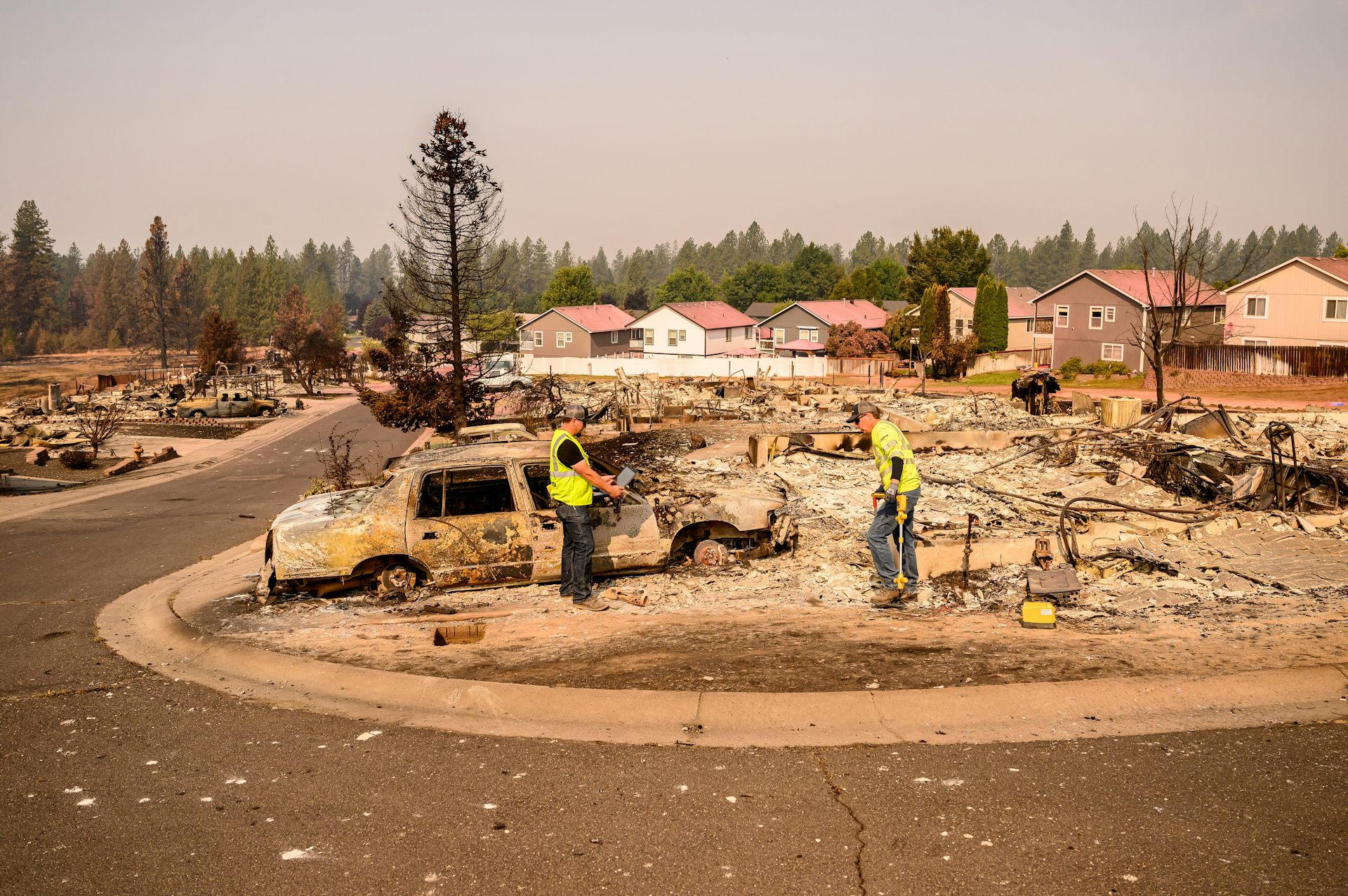
When fire evacuation orders are lifted and residents start returning to burned neighborhoods, many people assume “cleared to return” means “safe.” It rarely does.
As an environmental engineer who has worked with communities recovering from some of the most destructive wildfires in U.S. history, I have seen the same pattern repeatedly: Families return to still-standing homes, turn on taps without knowing whether plumbing has been contaminated, and view debris removal as the end of recovery when it is often only the midpoint.
While there are many safety concerns after a wildfire like the destructive blazes Spokane, Washington, experienced in August 2026, three deserve particular attention: chemicals in surviving buildings, the safety of drinking water and whether burned lots are ready for rebuilding.
Buildings that appear unscathed after a nearby fire may still be unsafe. Smoke, toxic ash and chemicals from burning buildings and vehicles can enter through windows, vents, HVAC systems and other openings.
These contaminants settle in ductwork, walls, carpets and furniture, as well as on clothing, blankets and toys.
They can include lead, which can harm human lungs and children’s brain development; arsenic and asbestos, which can cause cancer and damage the respiratory system; and volatile or semi-volatile organic compounds, known as VOCs, which can damage the organs; among other risks. Exposure to each through the air, food or drinking water can harm human health.
The home might seem fine, but contamination like this cannot be reliably identified by sight or smell. That’s why, before moving back into a home near where a wildfire burned, owners should consider professional inspections, especially if part of the home or a nearby structure burned.
Inspections should test living spaces, attics, crawlspaces, garages, HVAC systems, ductwork and indoor surfaces for harmful metals, chemicals and other substances. Dust is often tested for lead and other metals, as well as asbestos, while indoor air is often analyzed for volatile organic compounds.
The quality of the testing is critical.
Reviews of wildfire recovery efforts have found instances of inappropriate laboratory methods, incorrect comparison standards and results that could not be properly interpreted. Property owners should ask what contaminants will be tested, where samples will be collected, which analytical methods will be used, how results will be reported and when the report will be delivered.
If tests reveal contamination, remediation work comes next, followed by confirmation testing conducted by an independent firm. Visitors and workers restoring the site must use protective equipment and safe practices to protect their health.
Drinking water contamination is one of the least visible wildfire hazards. A functioning faucet can create a false sense of security.
Fires may damage water systems when firefighting demands and broken pipes cause the system to lose pressure. This can allow smoke, contaminated air or debris to enter pipe networks. Heat from a fire can also damage plastic pipes and plumbing equipment, releasing chemicals into the water supply.
Contaminants such as benzene, which can cause cancer, have been detected in plumbing and water systems after fires at concentrations capable of causing illness through drinking, bathing or showering. Boiling water does not remove these chemicals and may actually increase the chance people will be exposed to them by releasing them into indoor air.
A loss of water pressure, discolored water, melted plastic components or nearby fire damage can signal problems, but the contamination is often invisible, so testing is essential.
Utilities are generally responsible for testing and repairing infrastructure up to the property line and should provide public guidance on water safety.
Property owners are responsible for water safety once it enters the property. That includes pipes, water heaters, irrigation systems and private wells. Even when utility water has been declared safe, contamination can persist inside a building’s plumbing.
Tests can look for volatile organic compounds, bacteria and, in some cases, semi-volatile compounds and metals. The samples for testing are commonly collected after water has been stagnant in plumbing for about 72 hours, allowing contaminants to accumulate. Depending on how the home was affected, residents may need to use alternative water sources such as bottled water for drinking, cooking and bathing.
Rural and agricultural water systems require similar attention. Heat-damaged water tanks, troughs and irrigation lines may release chemicals, while smoke or ash can enter through vents. Repairs should be completed by licensed contractors and followed by disinfection and certified testing before the system returns to use. Local health departments have lists of approved water-testing laboratories.
Removing debris after wildfires burn through a property is only one phase of recovery, and it carries its own risks.
Effective restoration generally involves three steps:
Removing major hazards, such as propane tanks, gas cylinders, batteries and damaged vehicles.
Removing debris, ash and contaminated surface soils.
Testing the soil for contamination after cleanup. This final step is often overlooked.
A property is not necessarily safe to rebuild on simply because debris trucks are gone. Research after previous wildfires found that up to 34% of properties still contained hazardous contamination, such as heavy metals, even after the debris had been removed and the topsoil scraped away.
To be safe, testing should be overseen by a board-licensed professional engineer or geologist, independent of the debris-removal contractor. A notice that debris removal is complete indicates only that initial cleanup has ended. In many cases, local health departments or environmental agencies must review testing results before rebuilding can proceed.
While many hazards in the days and weeks after a wildfire are invisible, lessons from past events provide a clear path to restoring safety:
Do not rely on appearance or odor to judge safety.
Use qualified professionals to evaluate homes, water systems and soils before reoccupying or rebuilding.
Consult local health departments for guidance and approved testing resources.
Restoring properties to safe use is possible. Following evidence-based guidance can help homeowners manage the process safely and with more certainty of a full recovery.
This article is republished from The Conversation, a nonprofit, independent news organization bringing you facts and trustworthy analysis to help you make sense of our complex world. It was written by: Andrew J. Whelton, Purdue University
Read more:
Why the Spokane wildfires became so catastrophic
Wildfires can contaminate drinking water systems with harmful chemicals − here’s what Los Angeles needs to know
How heat waves increase wildfire risk
Andrew J. Whelton receives funding from the U.S. National Science Foundation, U.S. National Institute for Environmental Health Sciences, U.S. Environmental Protection Agency, U.S. National Institute of Occupational Safety and Health, City of Louisville, Paradise Irrigation District, Paradise Rotary Foundation, R&S Kayne Foundation, the Spanicciati Family, the Water Research Foundation, and crowdfunding.






Comments