Spotted lanternflies are reemerging in Maryland. Here's what to know
Published in Science & Technology News
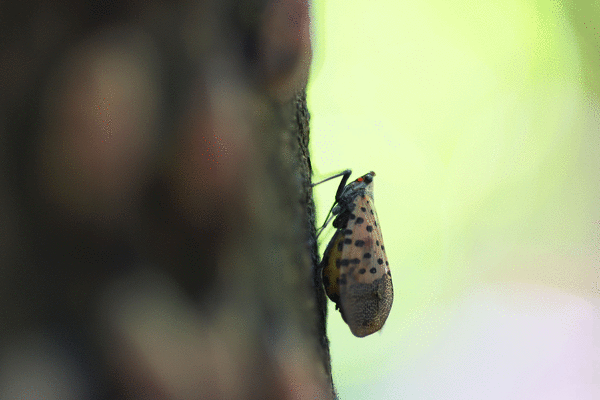
It’s that time of year again — spotted lanternflies have made a comeback across Maryland and most of the eastern U.S.
Spotted lanternflies typically hatch in late April and early May, meaning juveniles of the species are popping up around the state. The Maryland Department of Agriculture predicted in March that Baltimore City and central Maryland counties will be heavily infested with the pests.
The invasive insect has been present in nearly all of Maryland since 2018 and was previously thought to have caused ecosystem harm. But recent studies on the insect’s assimilation into its environment have shown that the lanternfly has caused no large-scale damage.
“This is mainly just a nuisance pest,” Emily Zobel, University of Maryland Extension’s agriculture and food systems agent for Dorchester County, said. “[The spotted lanternfly] is big, it’s kind flashy, it’s a little intimidating, but studies have shown that in residential gardens and landscapes, it doesn’t do any significant damage to otherwise healthy plants.”
Spotted lanternflies do, however, excrete a substance that can affect plants’ ability to grow. This substance might also become sticky and difficult to remove from outdoor furniture and cars, according to the Maryland Department of Agriculture.
Spotted lanternflies had no natural predators when they first arrived in the U.S. from Asia in 2014, but have since become a food source for some birds and predatory insects, Zobel said. Invasive species populations tend to decline after a few years in a new environment, she added.
Killing spotted lanternflies is a personal choice — there are pros and cons for both killing the insects and leaving them alone, she said. People should ensure that they are killing the correct insect in order to protect native bugs, she added.
“We don’t necessarily have a ‘go out and smash them all if you see them’ mentality,” Zobel said. “If they’re on your property and you don’t like it, you could still smash them.”
Removing spotted lanternflies’ host plants, such as the invasive tree of heaven, is one way to cut down on the insect’s population in a specific area. Zobel recommends that people stay away from home remedies and chemical mixtures, which can harm native plants and pollinators.
Spotted lanternflies are commonly found on grapevines and black walnut trees, and nymphs specifically are found on roses.
Juveniles are black with white spots and are smaller than the adult. Before reaching adulthood, spotted lanternflies enter a stage where they are primarily red with white and black spots. Adults have light brown front wings and red back wings, both with black spots.
_____
©2026 The Baltimore Sun. Visit at baltimoresun.com. Distributed by Tribune Content Agency, LLC.






Comments