Data centers don’t have to be a burden on local communities – and can even support them by generating power and repurposing waste heat
Published in Science & Technology News
Many consumers – and state policymakers and even utility companies – are worried about the possibility of large numbers of data centers raising electricity demand and power prices.
Those are real concerns, but our engineering research finds that if designed, constructed and operated carefully, data centers can actually help the communities that host them.
Locating power-generating capacity on-site, even using modified jet engines to drive steam turbines, is one emerging option to address data centers’ high power needs.
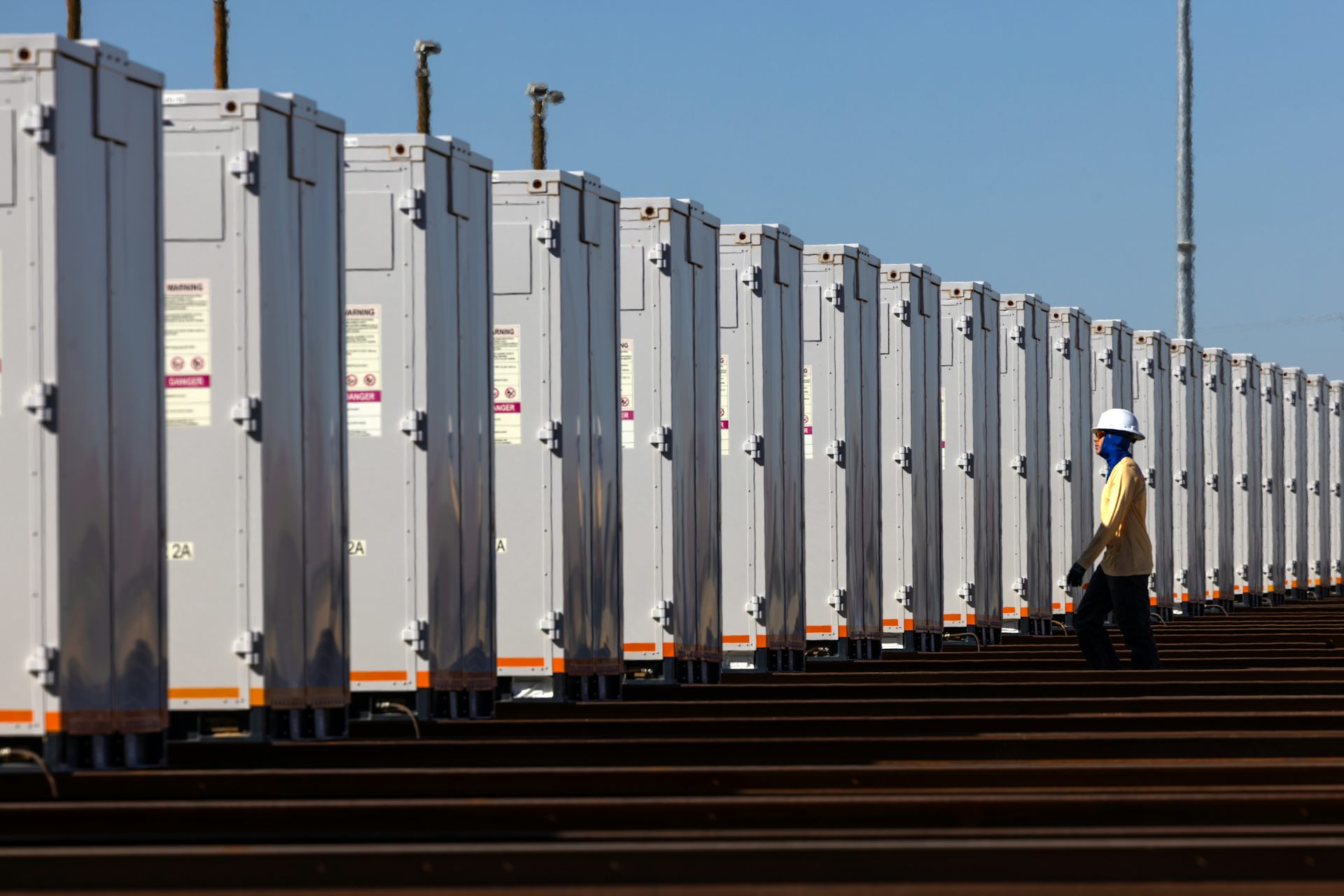
But there are other options, too. Data centers can install backup batteries that would kick in during an outage or could be used to avoid an outage when demand spikes. The batteries could not only provide power to the data center but also to the surrounding area in times of need.
Various types of battery designs and chemistries offer options for storing enough energy to keep a data center running from a few hours to a few days. This would be critical in supplying electricity during outages because of extreme weather events or excess demand on the grid during periods of peak usage.
Longer duration batteries are also in development. Plans for a new Google data center in Minnesota include solar panels and wind turbines with batteries that would become the world’s largest electricity storage system, with a power capacity of 300 megawatts. Google plans to install iron-air batteries, which are based on chemical reactions with iron to separate and store charge, that would store enough electrical energy to keep a data center running for as much as 100 hours.
Another long-duration battery design uses zinc and water as its key chemical ingredients. It needs relatively little cooling, so batteries can be stacked closely. Significant storage capacity could allow data center owners to flexibly decide when to use energy directly from the grid, when to run off the batteries, when to recharge the batteries, and even whether to sell power back to the grid to earn extra money.
Data centers produce large amounts of heat, which must be removed from the computer chips. A data center gives off enough heat to potentially keep nearby buildings warm.
Many cities around the world already have what are called “district heating systems,” in which a group of buildings are connected with a pipe network and receive their heat from a central heat source.
Data centers could serve as a heat source for these systems. Recent improvements in these systems, called a “thermal microgrid” or an “ambient loop,” don’t require steam or extremely hot water, but rather use cooler temperatures of water to transport heat between the buildings. Efficient electric heat pumps in each building use that water loop to adjust the building’s air temperature in both winter and summer, creating combined district heating and cooling systems.
In this scenario, data center heat becomes not wasted energy rejected into the air but a money- and energy-saving resource for the local community. For example, a 75 megawatt data center in the town of Mantsala, Finland, is supplying heat to approximately 2,500 homes in the community.
In our research, we suggest that combining data centers equipped with on-site power generation and battery energy storage and systems that use the waste heat could make the data center a benefit to the community rather than a drain on its resources.
Locating a data center with on-site battery energy storage in a neighborhood and, crucially, connecting them both thermally and electrically could create a small-scale energy community. In addition to providing heat, the data center could help meet the neighborhood’s electricity needs during power outages, storms or peak usage periods.
As a fourth dimension to achieving sustainability in data centers, an emerging approach involves drastically reducing the energy consumed for every unit of computation. That would mean exponential growth in computational tasks does not require a corresponding exponential growth in hardware or electricity usage.
Advances in computer chip designs are making data center processors significantly more efficient, able to do larger numbers of more complex calculations more quickly while using less electricity.
But however efficient the chips get, there is both need and opportunity to make them dramatically more so. A growing field called “unconventional computing” is poised to help.
This field, which includes computing approaches inspired by the architecture of the human brain in the emerging technology of neuromorphic AI, as well as engineering innovations such as chips that use their own waste heat, can exhibit thousands-, millions-, or even billionsfold increases in power efficiency. That could make data centers immensely more capable of the computing tasks needed for training AI systems.
Improvements in data center efficiency would reduce the demand for more computing chips and more electricity to run them, even while producing more output.
Researchers across academia, industry and government agencies are developing road maps to scaling these new pathways for energy-efficient computing and are planning for a future where new materials with fundamentally different properties improve efficiency even more.
Some of these advances may be months away, though others could be decades into the future. But we believe that taken together, the opportunities for power generation and storage, waste heat reuse and improved computational efficiency could make data centers beneficial for their communities, and society as a whole, in support of energy affordability and resilience.
This article is republished from The Conversation, a nonprofit, independent news organization bringing you facts and trustworthy analysis to help you make sense of our complex world. It was written by: Gregor Henze, University of Colorado Boulder and Sean Shaheen, University of Colorado Boulder
Read more:
Data centers need electricity fast, but utilities need years to build power plants – who should pay?
Data centers consume massive amounts of water – companies rarely tell the public exactly how much
How your electric bill may be paying for big data centers’ energy use
The authors do not work for, consult, own shares in or receive funding from any company or organization that would benefit from this article, and have disclosed no relevant affiliations beyond their academic appointment.







Comments