Don’t just plant trees, plant forests to restore biodiversity for the future
Published in Science & Technology News

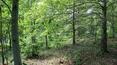
Around the world, people plan to plant more than 1 trillion trees this decade in an ambitious effort to slow climate change and reduce biodiversity loss. But if the past is prologue, many of those planted trees won’t survive. And if they do, they could end up as biological deserts that lack the richness and resilience of healthy forests.
It doesn’t have to be this way.
The United Nations declared 2021-2030 the Decade on Ecosystem Restoration to encourage efforts to repair degraded ecosystems. Tree planting has become a centerpiece of that effort, championed by initiatives such as the Bonn Challenge and the Trillion Trees Campaign.
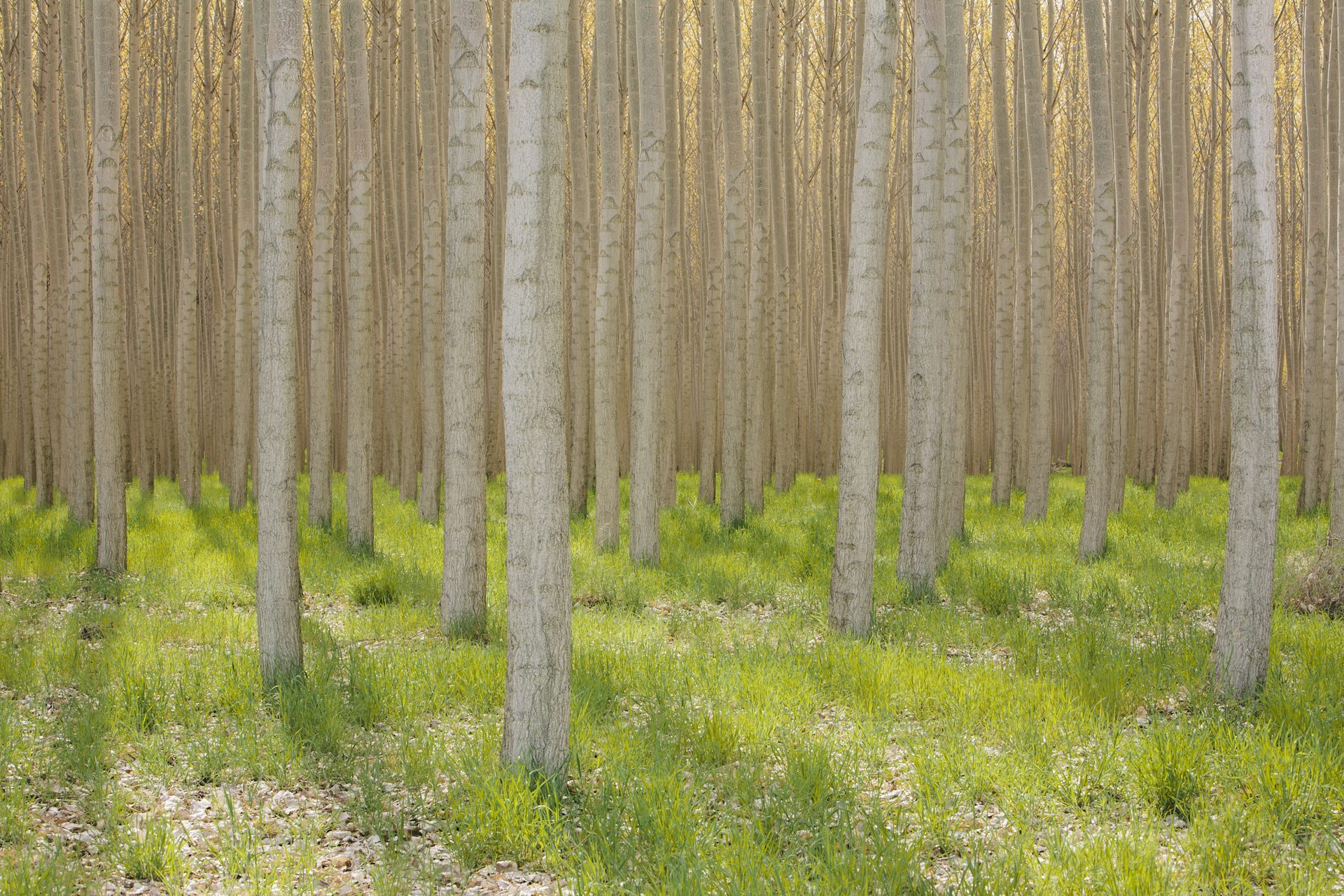
However, many tree-planting commitments have a critical flaw: They rely too heavily on monoculture plantations – vast areas planted with just a single tree species.
Monoculture plantations are generally one-way tickets to producing wood. But these high-yield plantations are high risk and can be surprisingly fragile. When drought, pests, or forest fires strike, entire monoculture plantations can fail at once. In one example, nearly 90% of 11 million saplings planted in Turkey died within three months due to drought and lack of maintenance.
Forests are more than just timber factories. They regulate water, store carbon, provide habitat for wildlife, cool the landscapes around them and even provide human health benefits.
Rather than gambling on a single species and hoping for the best, science now points to a smarter path that captures both ecological and economic benefits while minimizing risk: mixed-species plantings that mirror the biodiversity of a natural forest, ultimately creating forests that grow faster and are more resilient in the face of constant threats.
We are community and landscape ecologists at the Smithsonian Environmental Research Center. Since 2013, we and our colleagues have been rigorously testing this idea in a large, ecosystem-scale experiment called BiodiversiTREE. The verdict is striking: Trees in mixed forests don’t just survive – they outgrow their monoculture counterparts and support dramatically more biodiversity.
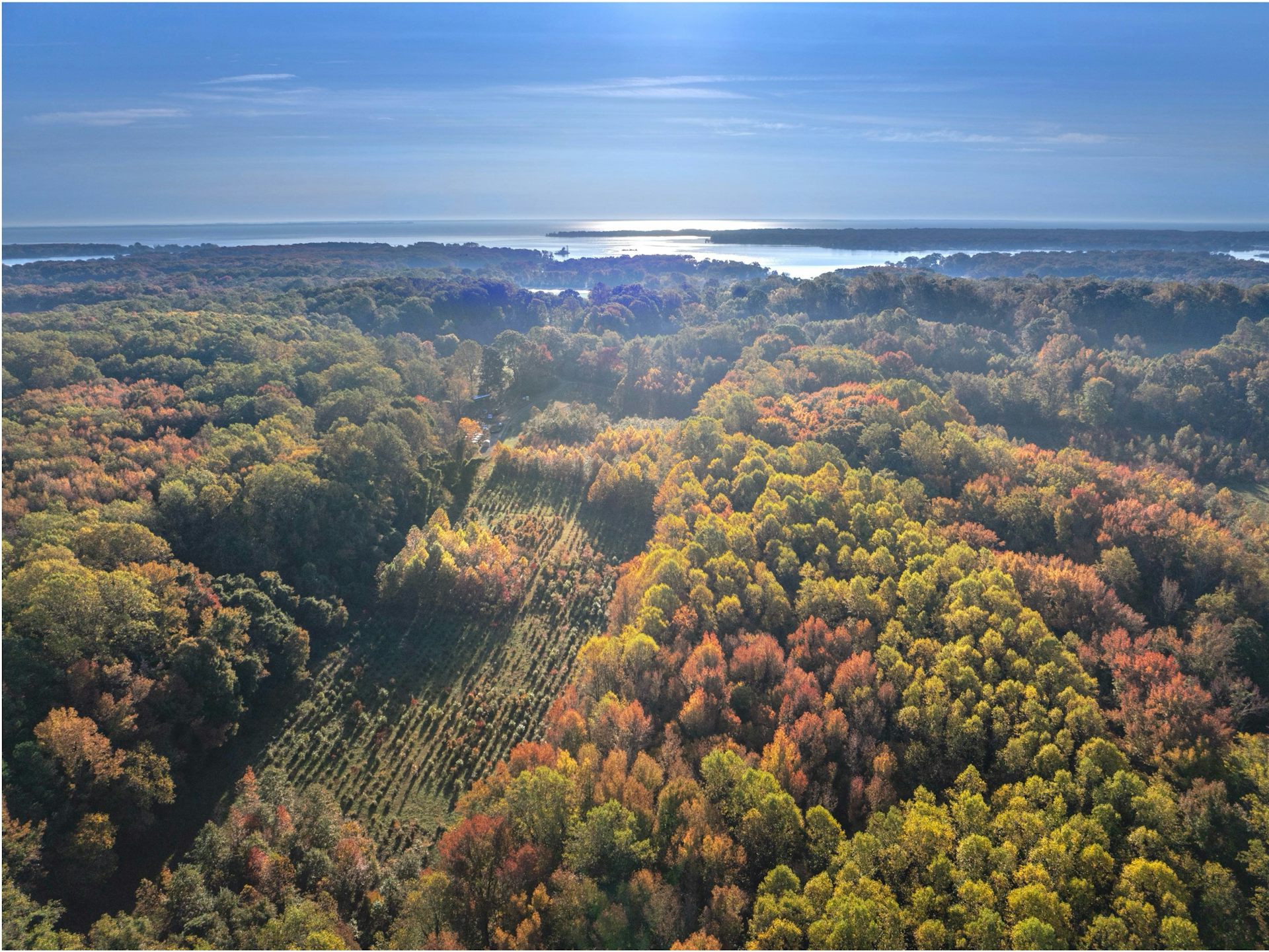
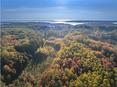
Thirteen years ago, we teamed up with volunteers to plant nearly 18,000 tree seedlings on 60 acres of fallow fields on the Smithsonian Environmental Research Center campus near the Chesapeake Bay.
We didn’t plant just a single species. We planted 16 different native species from all walks of tree-life. Some species were fast-growing timber species, some were mid-story species, and some were slow-growing species that might not reach full size for a century or more.
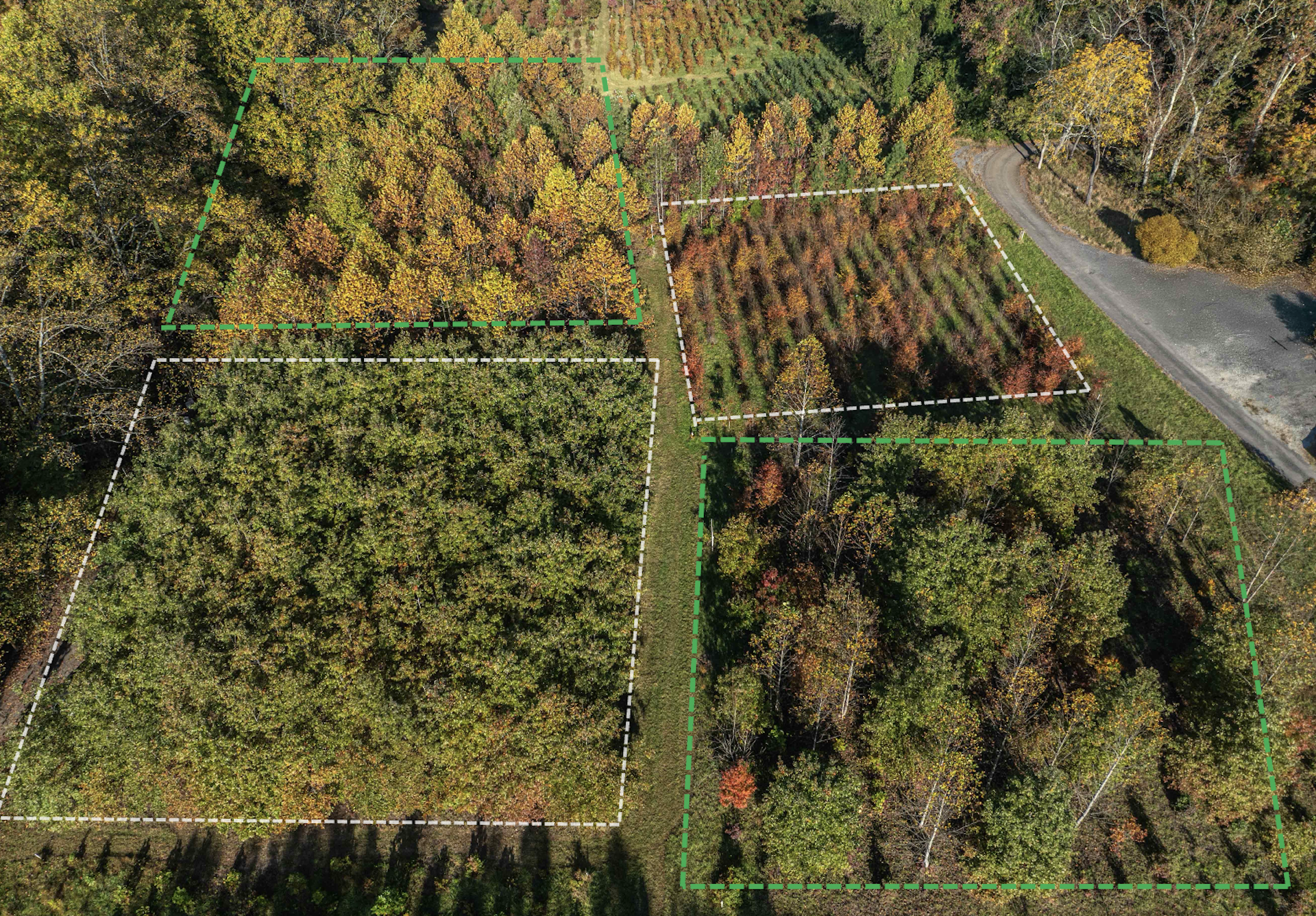
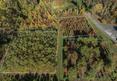
Some plots we planted with just a single species – homogenous rows of the same species over and over again. But others were planted with random allotments of four and 12 species, reflecting the middle and upper ends of tree diversity in similar-sized areas of our local forests.
We asked a simple question: What would happen if we tried to mirror nature and plant a mixture of species instead of a monoculture?
The differences over a decade later are striking.
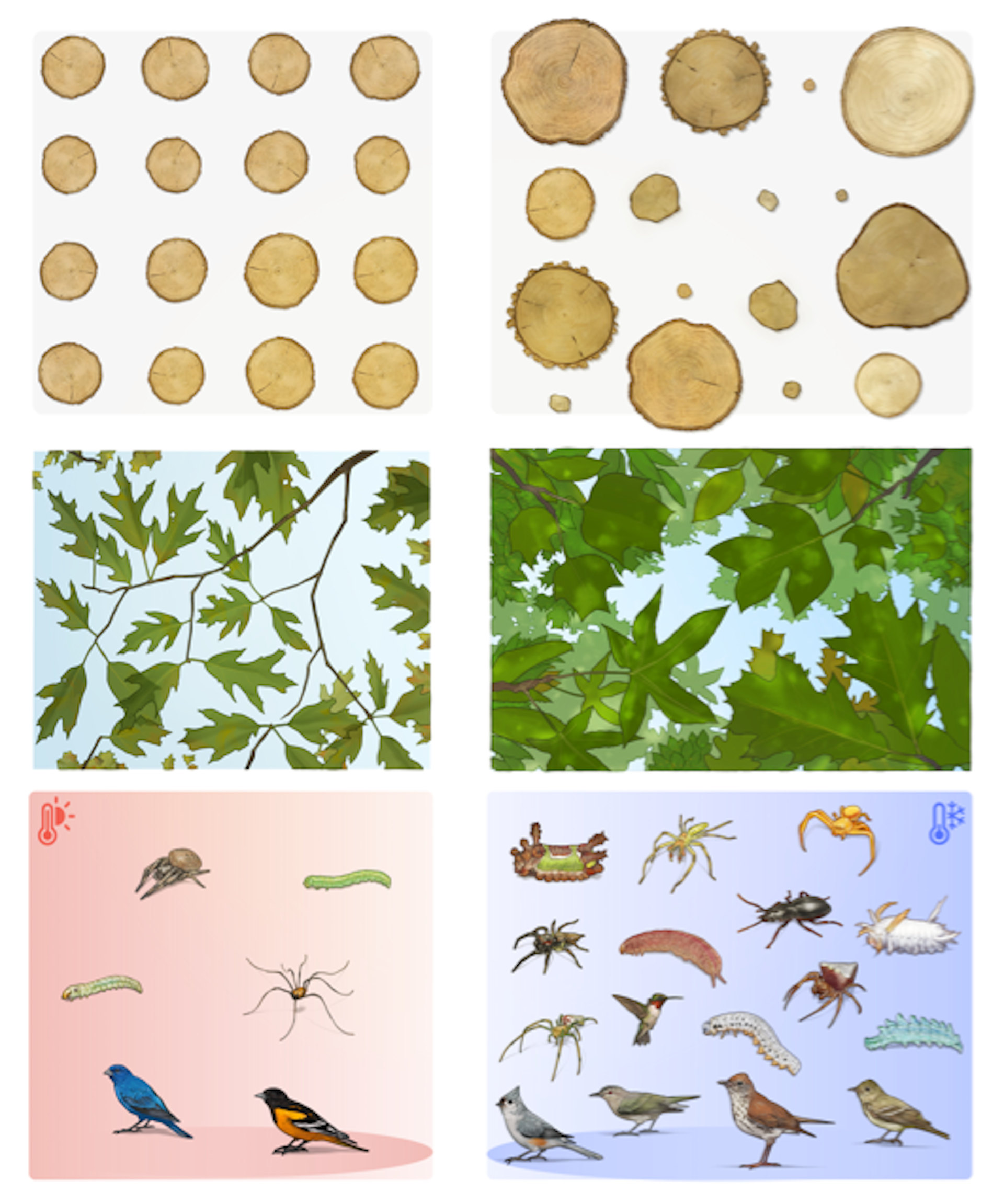
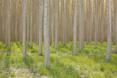
The monoculture plots – those that survived – resemble traditional plantation forestry that historically has dominated rural lands in the Southeast and Pacific Northwest in the U.S. They contain rows of tall, narrow trees with sparse canopies and little life below.
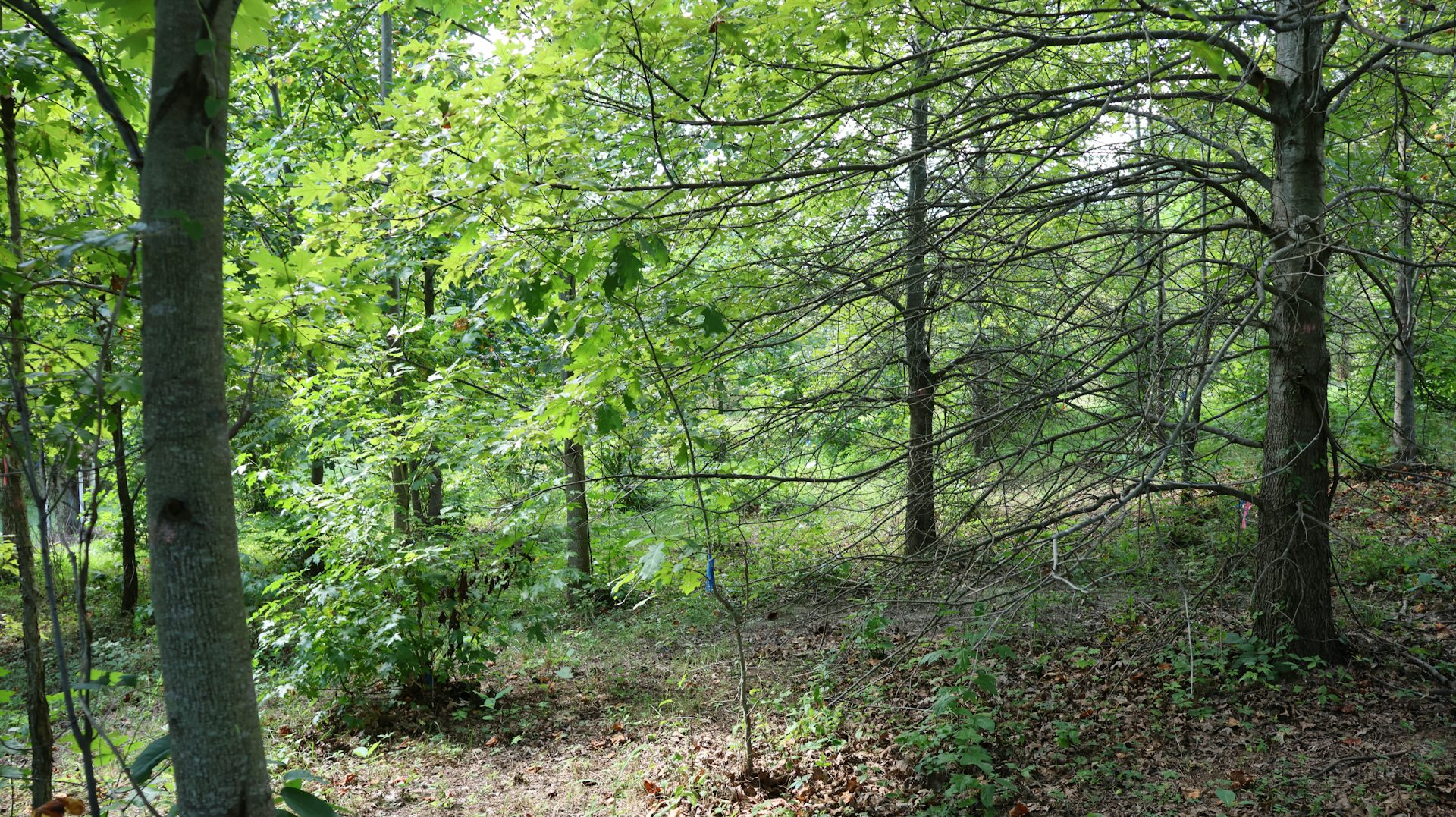
The mixed-species plots, by contrast, are layered, complex and dynamic, with foliage filling the canopy and a diversity of plants and animals thriving underneath.
These visual contrasts reflect real ecological gains. Trees grown in mixtures, including important timber species like poplar and red oak, are up to 80% larger than the same species when grown alone. Mixed plots supported fewer leaf pathogens, more abundant caterpillar communities that provide food for birds, and increased phytochemical diversity in their leaves. We hypothesize that these leaf chemicals, some of which deter animals from eating them, reduced browsing damage from hungry deer, ultimately leading to higher tree growth in the mixed plots.
Plots with several tree species also had much fuller, denser leaf canopies, leading to cooler, shadier conditions that help understory plants flourish and support up to 50% more insects, spiders and birds.
This pattern isn’t unique to our site. The BiodiversiTREE project is part of TreeDivNet, a global network of large-scale experiments spanning more than 1.2 million trees and hundreds of species. Across continents and climates, the results are consistent: Forests with a mix of species tend to grow larger, store more carbon and better withstand stress from drought, pests and disease.
Despite decades of evidence, mixed-species plantings remain relatively rare in practice. Most commercial forestry operations still rely on monocultures, and these plantations are counted toward international planting campaigns aimed at slowing climate change and reversing biodiversity loss.
The reasons are generally practical: Mixed plantings can be more complex to design, more expensive to establish and harder to manage. Crucially, until recently, there has been limited evidence that they can match or exceed the economic returns of conventional plantations.
A new experiment at the Smithsonian Environmental Research Center called “Functional Forests” aims to bridge some of the gaps between science and practice. We’re developing intentionally designed combinations of trees to test whether specific mixtures of species can contribute ecological benefits while also providing timber and other services that humans need to support a thriving, sustainable economy.
Each of the 20 tree species in the Functional Forests project was chosen to provide one or more benefits, including timber, wildlife habitat, food for people, resistance to deer and climate resilience. But no single species provides all of these benefits.
Some of the nearly 200 plots will contain a single species, while others include carefully selected combinations of five species assembled based on the functions they provide. Some plots are protected from deer browsing, while others are left exposed.
By comparing these approaches, we can test how different planting strategies perform across a range of goals, from timber production to food production and from biodiversity to climate resilience.
Landowners and communities have different priorities, whether that’s producing wood, supporting wildlife or creating forests that can withstand a changing climate. The idea behind Functional Forests is to design plantings that can deliver these multiple benefits all at once, rather than optimizing for just one, essentially leveraging the positive effects of biodiversity to achieve real-world goals.
The stakes are high. Restoration has become a major global investment, with hundreds of billions of dollars already being spent annually. Getting it wrong means wasted resources and missed opportunities to address some of the most pressing environmental challenges of our time.
If the world is going to plant a trillion trees, we believe it needs to do more than just put seedlings in the ground. It needs to rethink what a forest should be.
The goal isn’t just to grow trees. It’s to grow forests that last.
This article is republished from The Conversation, a nonprofit, independent news organization bringing you facts and trustworthy analysis to help you make sense of our complex world. It was written by: John Parker, Smithsonian Institution and Justin Nowakowski, Smithsonian Institution
Read more:
Wide variety of old‑growth ecosystems across the US makes their conservation a complex challenge
How fire, people and history shaped the South’s iconic longleaf pine forests
The West’s iconic forests are increasingly struggling to recover from wildfires – altering how fires burn could boost their chances
John Parker receives funding from the National Science Foundation and the United States Department of Agriculture. He is affiliated with TreeDivNet, a global network of tree diversity experiments.
Justin Nowakowski receives funding from the National Aeronautics and Space Administration, Department of Defense, and through Maryland Environmental Service.







Comments