
The Greener View: Pruning Climbing Roses for More Flowers
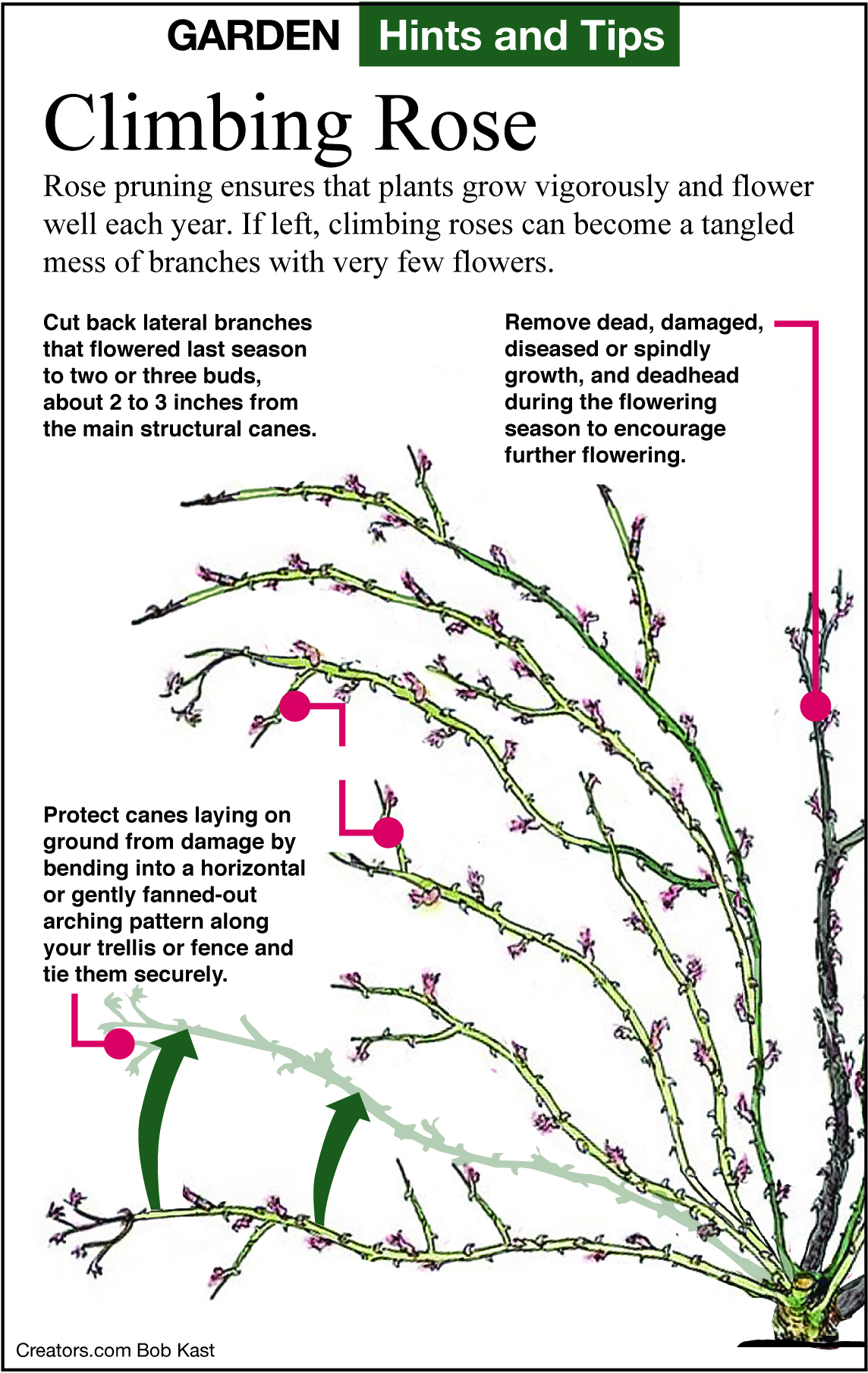
Pruning Climbing Roses for More Flowers
Q: I walked around the corner of my house to a side yard that isn't used much. There are two rose bushes that are planted next to the house with trellises. I was surprised to see 8-to-10-foot rose branches hanging down to my knees, way out over the lawn. I have a guy who mows the lawn, and he can cut the roses. I then remembered that this happened last year, and the landscape guy cut them way back. The roses didn't bloom this year except for one cluster of flowers at the top of a branch. How should I prune these roses so that they will flower next year? I am afraid that we messed up last year, and I don't want to do it again.
A: It sounds like you have climbing roses. Climbing roses are not vines. They are shrubs with very long branches. The long branches of a climbing rose (called main canes) produce short flowering branches called lateral branches in the second and following years. The laterals bloom in the spring, and then, if cut back to only 3 to 6 inches, the laterals may produce more flowers during the summer. The main canes can be long lived but can be removed after three or four years to make room for younger main canes that will produce more flowers.
The growing tip area of the main cane sends auxins back down the length of the stem that prevent other buds from blooming. If the main cane is trained onto a horizontal trellis, the auxins preventing flowers don't make it to the lateral branches, and they will bloom.
If the climbing rose only blooms once during a summer on the lateral branches, then prune the laterals back in the month or so after blooming. If the laterals bloom several times during the summer, prune the laterals back heavily during the dormant period.
What all of this means is that when the landscaper cut back the roses last fall, he cut the canes way back. Without canes, there were no laterals to bloom this summer. Now that the canes have come back and are long again, they need to be pulled back up the trellis. This will get them out of the way, protect them from damage, and shelter them from the cold by being near the house. Next year, the laterals should bloom.
Pruning is a scary topic for many people I talk to. It is part art, part science, and it is a part of preventative plant health care. Trees are pruned to promote their health, to improve their appearance and to make them safer. The future shape of trees and the safety of their branches can be determined by proper pruning that starts when the tree is young. Pruning shrubs at the proper time and using the proper techniques makes them healthier and more productive with flowers and fruit.
Every time we prune, we affect the "Root to Shoot balance." This is a horticultural balance that is important to plant health.
For information on how to prune just about every kind of plant, check out the pruning chapter in the "Greener View Gardening" book on Amazon, and check out the pruning playlist on the Greener View YouTube channel.
(SET IMAGE) jru091626adAP.jpg (END IMAGE)
========
Email questions to Jeff Rugg at info@greenerview.com. To find out more about Jeff Rugg and read features by other Creators Syndicate writers and cartoonists, visit the Creators Syndicate website at www.creators.com.
Copyright 2026 Jeff Rugg. Distributed By Creators.






Comments