
The Greener View: The Best Time To Move Your Plants Indoors for the Winter
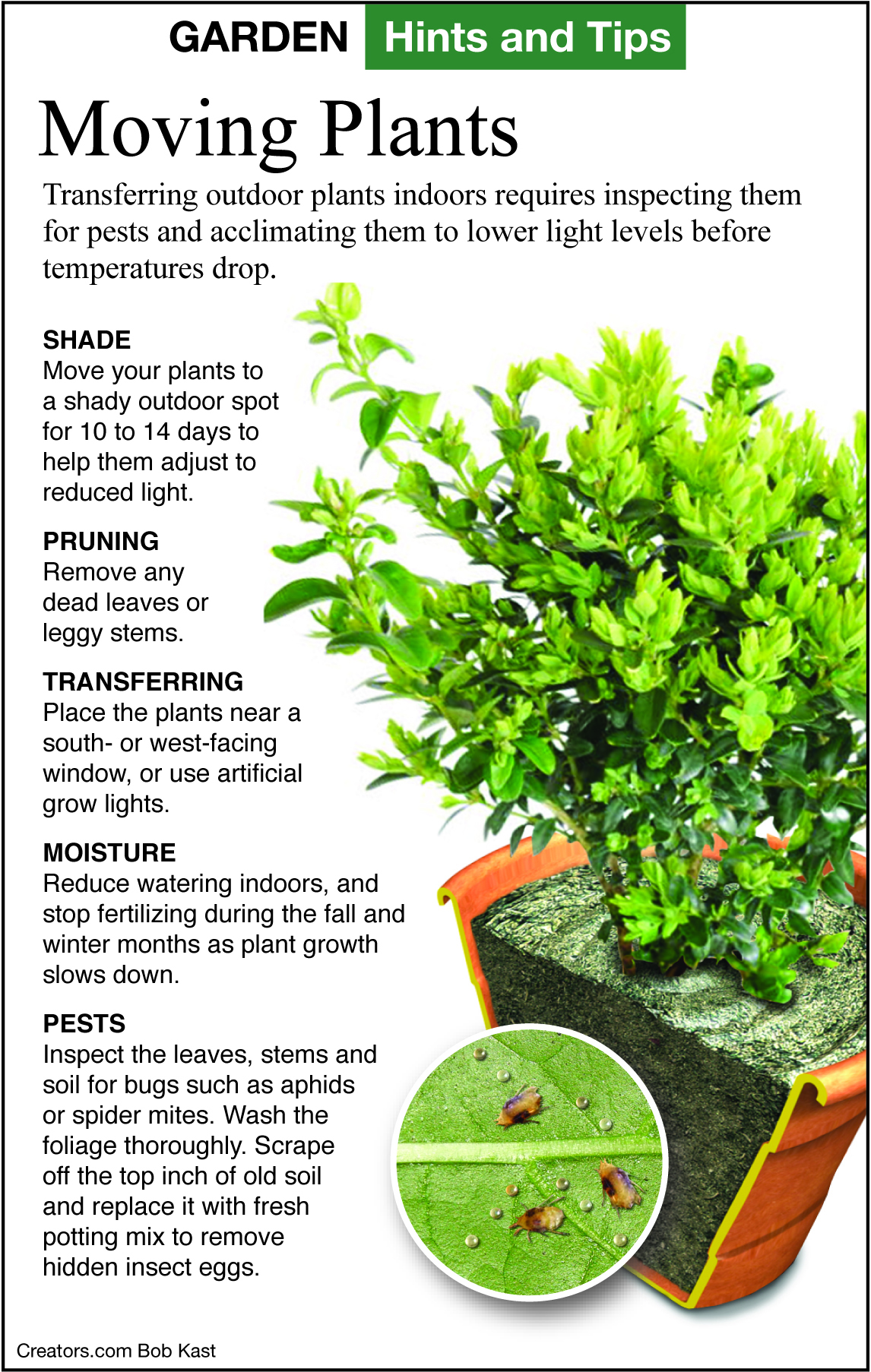
The Best Time To Move Your Plants Indoors for the Winter
Remember last fall, when you had to bring all your houseplants indoors on the night before a killing freeze? You were in a panic because you forgot to bring them in over the weekend before the frost. You were dragging all the heavy, dirty and bug-ridden pots indoors. You created a mess brought in all of the insects that were in the pots.
Start thinking about bringing in the houseplants a lot earlier than in a mad rush the day of the first frost. The best time to bring the plants indoors is when the temperatures indoors and out are about the same, both day and night. This is the time of year when you stop using the air conditioner and haven't yet turned on the furnace. If you wait until the nighttime temperatures are in the upper 30s and the daytime temperatures are in the 50s, the plant will be stressed. Many stressed plants drop leaves and then die.
If the plants are small, you can wash off the plant and pot under the hose. If you can pull the plant out of the pot, you can check for insects hiding just inside the bottom of the pot. Submerge the pot in a bucket of water for 15 minutes, and any hidden bugs will come out or drown. You can actually soak the whole plant in a bucket for 15 minutes if the plant is small and the bucket is big enough. A gentle but thorough wash under the hose or in the sink can greatly reduce insect populations.
If you find aphids, mites or scale insects on a plant, wipe the area with a cotton ball soaked in an insecticidal soap.
From a plant's perspective, what is the difference between the outdoor environment and the indoor environment? Outdoors, there are daily temperature swings, and the humidity is generally much higher. Tropical plants will be fine for the winter in the same temperatures that you prefer. You can raise the humidity if necessary.
The biggest environmental difference is the amount of light. Even a shady spot outdoors can have more light than a sunny window indoors. The right amount of light varies for each plant species, and it is important to try to get it right.
Plants grow smaller and thinner leaves outdoors. The number of cell layers and the location of chlorophyll are different. These leaves may not be able to gather enough light indoors. Indoor leaves are bigger and fewer, so when the plant is moved indoors, many leaves may fall off, and not as many may come back.
If a plant is slowly moved from bright sun to indoor shade, the leaves have time to adapt, and they may stay on the plant when it is brought indoors. Start now, several weeks ahead of when you will need to bring the plants indoors. Move the plants from sunny conditions into a shadier spot. In a week to 10 days, move the plants into a darker location, but still outdoors if the weather allows. Then, move the plants indoors into the sunniest or brightest room. After another week, the plants can go into the room you want them in for the winter.
It takes a month or more for the plant to acclimate its leaves from bright, sunny conditions to indoor room lighting conditions. In the spring, it takes the same time to go backward into the bright sun again. Leaves grown indoors over the winter will need to acclimate to the sunny conditions, or else they will get sunburned and drop off the plant. In spring or fall, the more gradual the environmental change, the healthier the plant will be, and the more likely it is that the plant will keep its leaves.
(SET IMAGE) jru092326adAP.jpg (END IMAGE)
========
Email questions to Jeff Rugg at info@greenerview.com. To find out more about Jeff Rugg and read features by other Creators Syndicate writers and cartoonists, visit the Creators Syndicate website at www.creators.com.
Copyright 2026 Jeff Rugg. Distributed By Creators.






Comments