On Gardening: Giant Lone Star is a heavenly hosta
Published in Gardening News
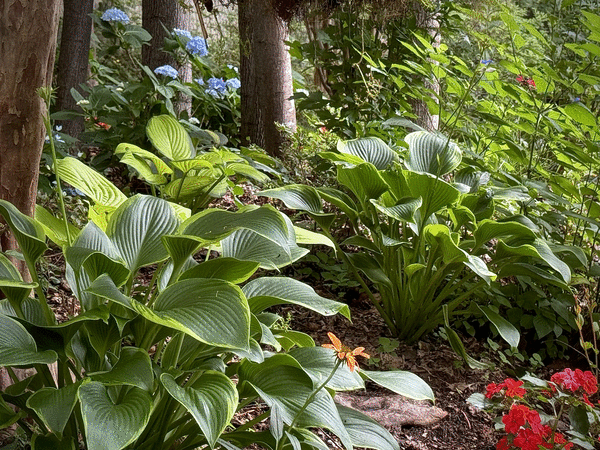
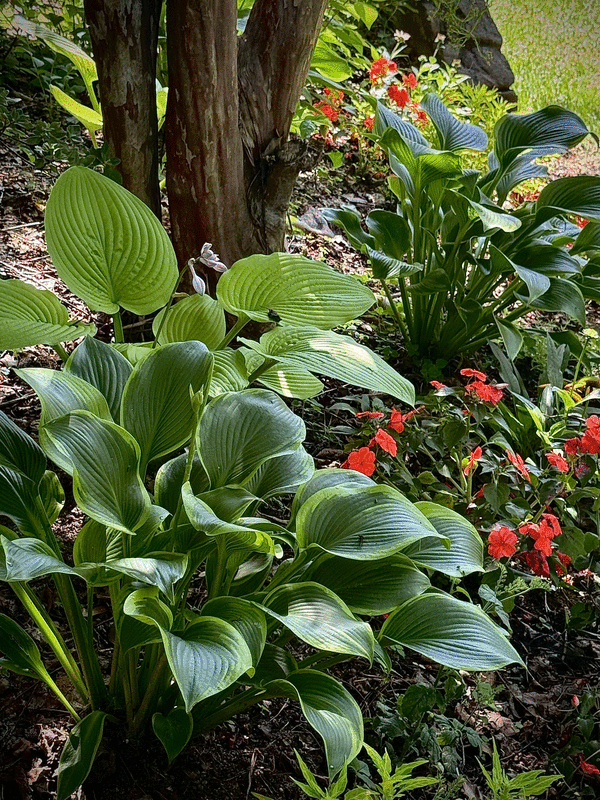

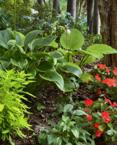
As a card-carrying member of the Sons of the Republic of Texas, I couldn’t wait to get my hands on the Shadowland Giant Lone Star hosta.
Shadowland Giant Lone Star has winner written all over it. It is large and has thick leaves. When 12 straight days of rain brought out a rainforest of slugs and other forest floor creatures, the bane of hosta growers everywhere, it didn’t load up with holes but simply got more beautiful.
I never knew my treasured site on a gentle hill was going to qualify to become the poster photo for the word "Shadowlands." As I stopped pruning and allowing the tree canopies to develop, sunlight disappeared down below. I was going to become a shade gardener.
Before I go into the Shadowland Giant Lone Star attributes and combinations, I feel I must apologize to the ardent hosta lovers. Back in my younger days of my horticultural career, I would join in a comedy club of sorts showing photos of gardens with an uncountable number of metal tags sticking out of the soil. We joked about it being a hosta cemetery and such. Of course in reality those tags were like a map telling the gardener: Beware of planting here, there is a dormant hosta.
It was also an invaluable way to know what variety is growing there. I’m just into this passion, 30-plus hostas deep. So, please accept my heartfelt apology, and let the fun begin. Also, tell me where you get your little metal tags.
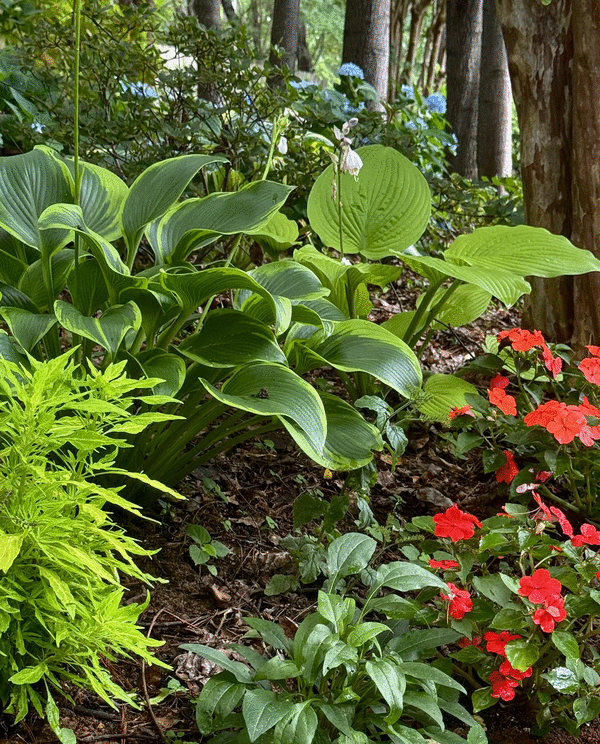
Shadowland Giant Lone Star hosta, the star of this column, is, as the tag suggests, a large variety. It may reach 28 inches tall with a phenomenal spread potential of 52 inches. The tag further states that the color is a medium green with a vivid gold margin. It’s that margin that opens the door for exciting color combinations.
I have paired mine with ColorBlaze Mini Me Chartreuse coleus and other Shadowland hostas like Coast to Coat and Echo the Sun, which have chartreuse-colored foliage.
In the foreground mixed with the Giant Lone Star hosta, I have planted Soprano impatiens. I’ve selected red, oranges and salmon colors, but truthfully, any color would work; if I can find them, I will add some violet shades to the mix.
No matter which way you look, you will also see various shades of blue in the background coming from the blooms of hydrangeas. Also in the mix are azaleas, in which case I am hoping for reblooming to sync with hydrangeas and hostas. Regardless, I am having the time of my life.
So, living in a Georgia forest where hydrangeas, azaleas and hostas live in harmony tells you my soil is doggone good. You may be living where soil is more challenging, with pH and fertility. You too can enjoy hostas, but perhaps your best option is with containers. A Texas A&M publication suggests you can grow a hosta in a container for 5 years before dividing. Be sure to have your container in the right amount of sunlight for your location. In the hot and steamy South, shade will be essential during much of the day.
Here is hoping you too will jump on the hosta bandwagon and the most fun you will ever have gardening. A good place to start is with Shadowland Giant Lone Star.
____
(Norman Winter, horticulturist, garden speaker and author of “Tough-as-Nails Flowers for the South” and “Captivating Combinations: Color and Style in the Garden.” Follow him on Facebook @NormanWinterTheGardenGuy.)
(NOTE TO EDITORS: Norman Winter receives complimentary plants to review from the companies he covers.)
©2026 Tribune Content Agency, LLC







Comments