US to tighten controls if chips reached China, Hassett says
Published in News & Features
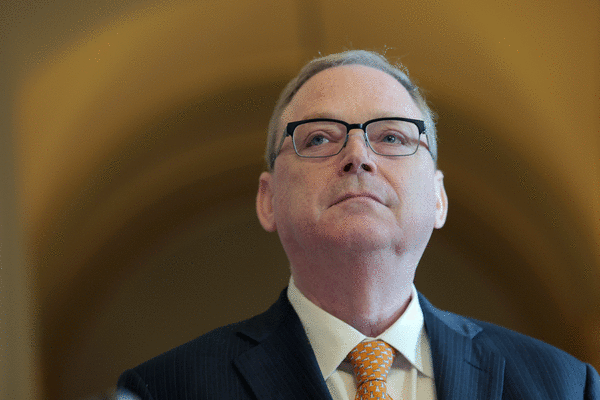
U.S. export controls on high-end semiconductors will be “tightened up” if it’s confirmed that some of the most advanced chips have landed in Chinese hands, one of President Donald Trump’s economic advisers said.
Kevin Hassett, who serves as director of Trump’s National Economic Council, told CNN’s "State of the Union" on Sunday that procedures would also be more rigorous for sales of the next generation of advanced chips.
Still, Hassett repeatedly minimized the overall fallout of the questions surrounding Nvidia Corp.’s Jensen Huang, saying that any chips that reached China will soon be outdated.
“To the extent that the greatest chips, the latest chips, did a few of them get over into bad hands — or through data centers, that they indirectly got them into bad hands — is something that, absolutely, that has to be tightened up if that’s true,” Hassett told CNN.
“Those chips are actually soon going to be outdated and reproduced with better chips that are going to have even closer scrutiny,” he said, adding that “if some previous generation chips were to end up in the wrong hands, that it’s a short-term closing of a big advantage the U.S. has.”
Hassett’s comments stopped short of confirming that some of the most advanced current-model chips reached China. Bloomberg News reported previously that a pair of Chinese firms installed Nvidia Corp.’s powerful Blackwell semiconductors in a Shanghai data center linked to Alice Huang, with whom the returned Nvidia chief had a relationship.
The remarks from the Trump aide are the latest in the explosive saga that saw the president personally orchestrate a push to restore Jensen Huang atop Nvidia, prioritizing his stewardship of the company over questions about his relationships or whether he knowingly or unknowingly facilitated China’s acquisition of advanced chips.
Representative Michael McCaul, a Republican from Texas and self-described “China hawk,” said Sunday that Trump’s pressure to reinstate Huang created a “national security risk.” He questioned whether the Federal Bureau of Investigation is investigating the diversion of chips to China as strongly as warranted.
Huang has “done enough damage to our national security selling tens of billions of dollars of advanced AI chips to a fake company controlled” by Alice Huang, an alleged Chinese spy, McCaul said Sunday on ABC’s "This Week." He said he expects the newly elected Democratic-controlled Congress that’s due to be seated in January to work to tighten export controls for China.
“There are China hawks, like myself, in the House and Senate, that we will come together on this,” said McCaul, a former Foreign Affairs Committee chairman who didn’t run for reelection and is retiring after this term. “And I think in the next Congress you’ll see strong, bipartisan support to fix this problem.”
Trump, speaking on Thanksgiving, said Huang is excited by his return and waved away questions about a national security risk. “Based on information and belief, I think he’s absolutely fine,” Trump said.
And, on Saturday, he continued his push to buoy the sector by saying the Securities and Exchange Commission will try to push to make firms use the term “super intelligence” rather than “artificial intelligence.”
Still, questions continue to swirl, with Jensen Huang due to testify this week as Democratic lawmakers demand more information from the administration and Nvidia.
“I’m a lot less interested in Jensen Huang than I am in Alice Huang, right? Because Alice Huang would have been the bridge from which information flowed from Jensen Huang,” Jim Himes, the top Democrat on the House Intelligence Committee, said on CNN’s "State of the Union."
But the administration has regularly downplayed the concerns, saying that Trump’s priority is keeping Nvidia atop the AI race. “I think that in the end the fact that Nvidia’s going to continue to make great chips and produce them almost completely for U.S. intelligence firms is a big, big competitive advantage and security advantage for the U.S.,” Hassett said Sunday.
Hassett said the Commerce Department referred the issue to the Justice Department a year and a half ago, crediting Secretary Howard Lutnick for doing so and downplaying the public jockeying between Lutnick and Treasury Secretary Scott Bessent, who has blamed Commerce for not acting quickly enough to triage concerns.
“It absolutely hasn’t been slow-walked, it was referred directly to the Justice Department the minute that it came up,” he said.
_____
©2026 Bloomberg L.P. Visit bloomberg.com. Distributed by Tribune Content Agency, LLC.





Comments