'No risk' to Minnesota as Army blows up bomb-making material in Iowa
Published in News & Features
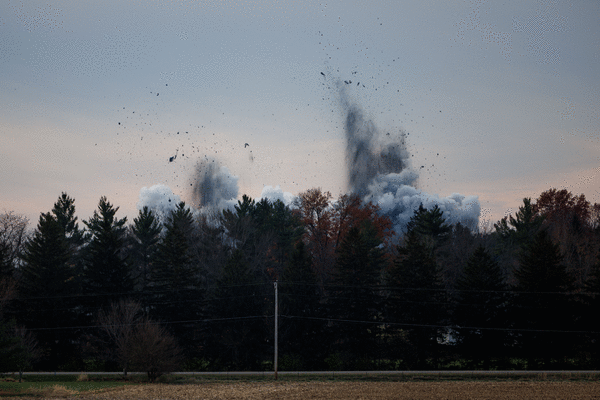
MINNEAPOLIS — As the U.S. Army detonated 5 tons of toxic bomb-making materials in southeast Iowa on Wednesday morning, officials say it won’t pose any risk to Minnesotans.
Winds over the blast site in Middletown, Iowa, will be from the east-southeast. “Despite this, atmospheric models show no risk to Minnesota from this event,” the Minnesota Pollution Control Agency said in a statement.
“We do not project the lead from the detonation remaining in the atmosphere for more than 100 miles in any direction, well short of the distance to the Minnesota border.”
The MPCA, the Minnesota Department of Health, the Minnesota Department of Agriculture, and the Minnesota Department of Public Safety will continue to monitor the situation and provide updates as needed, the agency said.
Middletown is about 270 miles southeast of the Twin Cities.
The Army carried out what it calls a “controlled, in-place” detonation of degraded crystallized lead azide found during a routine safety inspection in March. The Army said the blast was necessary because the azide becomes increasingly sensitive to friction, shock and cold weather, and could spontaneously explode.
The controversial blast, which drew protests, came after court action cleared the way for it one day before the Thanksgiving holiday.
Residents of Middletown and those within a 5-mile radius of the plant are to evacuate the area. Others outside the evacuation zone and downwind and face the potential exposure to toxic lead dust are to shelter in place and keep doors with windows closed, the Army said in an advisory Tuesday.
The Army also said people should keep children and pets inside, and farmers should cover feed and water for crops and move livestock indoors.
Drivers should avoid any unnecessary travel within the evacuation zone, the Army said.
Maps provided by the Army at 5 a.m. Wednesday show airborne material likely drifting into northeast Missouri and dust may be deposited on the ground.
“As much of a threat that lead is in public health, and it is a true threat, misinformation is as well. Be careful where you’re getting your sources of information,” said Sean Kaufman, principal deputy assistant secretary for preparedness and response at the U.S. Department of Health and Human Services. “I would strongly recommend that you’re listening to FEMA and the Army’s IAAAP website.”
©2026 The Minnesota Star Tribune. Visit at startribune.com. Distributed by Tribune Content Agency, LLC.






Comments