University of Minnesota closes cultural dorm communities amid federal scrutiny of race-based programs
Published in News & Features
MINNEAPOLIS — The University of Minnesota plans to shutter five freshman dorm communities geared toward cultural groups — a move that comes after higher education found itself in the middle of a national rollback of diversity, equity and inclusion efforts.
An email to residents earlier this month said the closure of five “Living Learning Communities” next year at its Twin Cities campus was “part of our transition toward an expanded, inclusive, first-year residential model set to launch in fall 2028.”
The Equal Protection Project, a conservative advocacy organization, called out four of the communities in a July civil rights complaint to the U.S. Department of Housing and Urban Development. It alleges that the university violated the Fair Housing Act by steering students toward or away from dorm housing based on race or ethnicity; the agency then opened an investigation.
Four of the dorm-room clusters are designed to serve ethnic groups, such as Hmong, Black and Latino students, though anyone can join. A fifth cluster, named after Martin Luther King Jr., is “devoted to scholars committed to equity and justice.”
Some students are criticizing the planned closure.
Mercedes Ramírez Fernández, vice president of the university’s Office for Equity and Diversity, acknowledged the communities’ importance and said that the closures “are disappointing to some.” She didn’t reply when asked by email whether the communities are being ended because of the federal discrimination allegations.
The university isn’t terminating hubs that cater to Chinese students, members of Native American tribes and “diverse engineers.” However, Ramírez Fernández said other communities will be evaluated in the future.
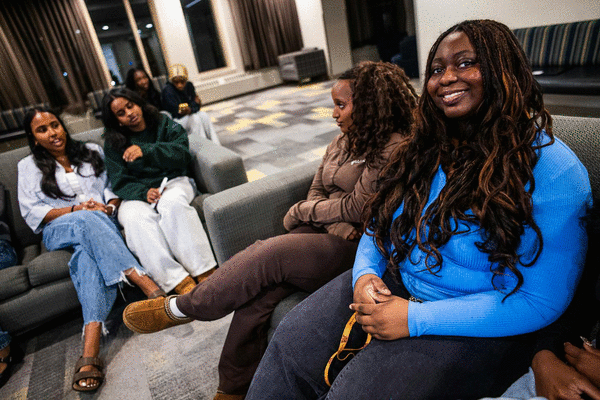
Students say the communities provide a crucial way for those with similar cultural backgrounds to connect at a massive university with more than 50,000 enrollees. The hubs, all located on the same floor, include Charlotte’s Home for Black women, Huntley House for Black men, Casa Sol for Latino students, Tsev Hmoob for Hmong students and the MLK Beloved Community.
Amelia M.L. Montes, a professor of Chicano and Latino Studies, said her department, which works with Casa Sol, learned about the closures through a meeting with Ramírez Fernández on the same day that students were told.
Montes said Ramírez Fernández mentioned a federal investigation.
“We implored her to wait a minute; let’s have a discussion about this,” Montes said. “Why are we listening (to) or following these edicts when they have ... no understanding of our university?”
After Trump took office again in January 2025, the Department of Education announced it was investigating the U on grounds of antisemitism after a complaint was filed the year before related to College of Liberal Arts’ faculty posting pro-Palestinian statements on a U website; the investigation’s status is unclear. In September, the Department of Education found that the U discriminated against white and Asian students by working with a nonprofit that helps Black and Latino students earn advanced degrees.
A university spokesperson added that the university “is cooperating fully with the HUD investigation and remains committed to being an inclusive and discrimination-free environment for all.”
Ramírez Fernández said Living Learning Communities are created through partnerships with U departments and colleges so students can live on campus with peers who share academic and personal interests. The university offers more than two dozen similar communities devoted to topics such as biology, sober living and Ojibwe culture.
The five cultural hubs, started between 2006 and 2019, are ending after a strategic review last year, she said. The closure “aligns our residential programs with the evolving public policy landscape surrounding admissions, scholarships, and housing focused historically by racial identity.”
In the university’s note to residents, leaders said other support will remain available next year, including cultural programs, affinity spaces, peer mentorship and dedicated advising. “We recognize and deeply honor (the communities’) legacy and impact,” it said.
Several university groups, including a fraternity and a Latina student organization, have written letters defending the spaces, urging leaders to reconsider.
Horace Huntley is an alumnus who was part of the African American Action Committee that took over Morrill Hall in 1969, successfully demanding an African American Studies department and more scholarships for Black students. Huntley House is named for him.
To Huntley, the closures are a “disgrace and abomination.”
“At the university, they are seemingly buckling under to (Trump’s) Project 2025 ... by ending the various communities that are nonwhite,” said Huntley, 83. “That’s basically what we were fighting for back in the ‘60s.”
Even today, Huntley said, it remains challenging to be Black in a predominantly white environment such as the university.
Students and faculty said the closure plans are confusing because the five communities being eliminated are open to anyone. They mentioned a Latina student who lives in Charlotte’s Home and an Asian student who lived in Casa Sol last year.
“On our floor, there’s still people who are white or just not necessarily part of our LLC, and they still have fun,” said Victoria Otunuga, a Black woman living at Charlotte’s Home. “It’s one of the most inclusive and fun ... spaces around the university.”
Residents say the housing groups are invaluable places to meet and bond with others like them.
Nadaline Barry, a Black freshman living in Charlotte’s Home, said members “just connect on a deeper level” than they would with someone who didn’t share the same struggles. They often tell stories about their childhoods and do each other’s hair and nails.
“It’s our community. I’ve really found my people,” she said.
Jessica Lopez, a Chicano and Latino Studies professor, has planned retreats and cultural activities for Casa Sol. Casa Sol is a “critical space” for first-generation college students and students from families wary of sending them to a huge university, she said.
Research shows that Native students and those of color, along with those who are working class or first-generation, often encounter many hurdles, including discrimination, while attending college, she said.
Faculty added that the communities keep students from dropping out and foster academic success.
Casa Sol “does not solve all problems, but it does provide a safe haven for students who really want to be at the university,” Lopez said.
_____
©2026 The Minnesota Star Tribune. Visit startribune.com. Distributed by Tribune Content Agency, LLC






Comments