AG Uthmeier says Doral leaving ICE pact likely violates Florida law. Some lawyers disagree
Published in News & Features
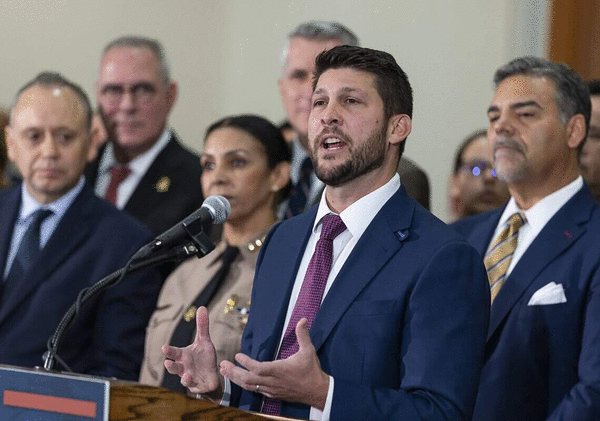
MIAMI — Doral could violate state law if it terminates its agreement with U.S. Immigration and Customs Enforcement without evidence justifying the decision, the Florida Attorney General’s Office warned in a legal opinion Wednesday.
The opinion, written in response to questions from Mayor Christi Fraga, says local governments are not automatically required to enter into agreements with ICE under the federal 287(g) program, which allows local police officers to perform certain immigration enforcement duties. But the attorney general’s office argues that withdrawing from an existing agreement “without sufficient justification” would likely violate Florida’s law banning so-called “sanctuary city” policies.
The opinion was signed by Greg Slemp, Florida’s deputy attorney general. It answers two questions Fraga submitted: whether local governments are legally required to enter into 287(g) agreements and whether they are prohibited from terminating existing agreements.
The attorney general’s response came after dozens of immigration advocates and residents urged elected officials at a Wednesday council meeting to end the city’s agreement, accusing them of abandoning immigrant families and using legal uncertainty as an excuse to avoid public debate.
The Doral City Council unanimously voted in April 2025 to authorize the police department to enter into a 287(g) agreement, following a recommendation from the city attorney, who advised that the city had little discretion under state law and could face legal repercussions for failing to act. Although city officials have told the Miami Herald that no officers have been trained through the program, the agreement has become a flash point in Doral, where immigration enforcement actions have fueled fear in the community.
The Attorney General’s Office said a city’s failure to sign an agreement does not, by itself, violate Florida law. It took a stronger position on cities that have already signed one, saying that terminating an existing agreement without sufficient justification likely violates the state’s prohibition. The opinion does not specify what circumstances would qualify as sufficient justification.
Doral received the letter a couple of hours before Florida Attorney General James Uthmeier posted it on X Thursday afternoon, the Herald has learned.
“As we told the Doral City Council yesterday, walking back from a 287(g) agreement would demonstrate forbidden sanctuary policies and a lack of best efforts to support federal immigration enforcement,” Uthmeier wrote. “Supporting our federal partners and protecting our sovereignty isn’t optional, it’s the law.”
Uthmeier’s post came amid growing debate over local police cooperation with ICE in Florida. On Wednesday evening, the Tallahassee City Commission voted to place its 287(g) agreement with ICE on a future meeting agenda for further discussion. The Tallahassee Police Department has one officer trained to cooperate with ICE under the agreement, according to WCTV.
Commissioner Jacqueline “Jack” Porter introduced the proposal, saying she was ready to see the agreement come to an end. The commission did not vote to terminate it.
Attorneys challenge the state’s interpretation
Anticipating the state’s legal position, Alana Greer, a Miami attorney and director of the Community Justice Project, a nonprofit legal organization, challenged the arguments used by Florida officials to pressure cities into signing immigration enforcement agreements during Wednesday’s Doral council meeting.
Greer, who said she has spent nearly a decade litigating issues involving local cooperation with ICE, argued that Doral has legal grounds to reconsider and potentially withdraw from its agreement.
“There is nothing in state law that is prohibiting the city from having an active discussion about the priorities of your residents when it comes to ICE collaboration and from making a plan that follows state law that allows you to exit this agreement,” she told council members.
Greer acknowledged the distinction between a city declining to enter a 287(g) agreement and one seeking to terminate an agreement it has already signed. But she said there are legal grounds for Doral to withdraw.
First, she argued that Florida’s sanctuary city law specifically prohibits local governments from adopting policies that prevent or restrict cooperation with federal immigration authorities, including local policies that prohibit entering into 287(g) agreements. She said nothing in Doral’s discussions has involved prohibiting those agreements.
Second, she addressed the law’s “best efforts” requirement, arguing that it does not mandate participation in a 287(g) agreement.
“Our attorney general and our state government would like you to think it does,” Greer said.
Jose Smith, a former city attorney for Miami Beach and North Miami Beach, criticized the attorney general’s opinion.
“The Attorney General Opinion (written by a deputy) is wrong on the facts and wrong on the law,” Smith told the Miami Herald in a text message.
Smith said Doral could continue cooperating in good faith with ICE while allowing residents and elected officials to discuss whether the agreement should be amended, revised or terminated. He questioned the opinion’s conclusion that ending an agreement would, by itself, demonstrate bad faith or an intent to establish a sanctuary city.
“Since no Doral police officer has yet been assigned to the task force, ICE would not be prejudiced by a discussion or termination,” Smith said.
He also said he doesn’t believe that terminating the agreement would, by itself, be sufficient cause for the governor to suspend elected officials in Doral, adding that it’s something that could be challenged in court.
Smith called the attorney general’s opinion “legal gymnastics to achieve a politically desired result.”
What comes next for Doral?
At Wednesday morning’s meeting, Doral Councilwoman Maureen Porras tried to bring up the ICE agreement for discussion. Her effort did not receive a second. Vice Mayor Rafael Pineyro instead moved to postpone the discussion until the city received the attorney general’s response. The council approved his motion 4 to 1, with Porras the only dissenting vote.
Porras told the Miami Herald on Thursday that she welcomed the attorney general’s response and said she now expected the issue to return to the council next month.
“I’m pleased that the AG’s response removes the procedural barrier to having this important discussion,” Porras said. “I look forward to discussing the matter in December and hearing the City Attorney’s recommendation in light of this opinion.”
Porras, who also works as a nonprofit immigration attorney, told the Herald she believes there is a legal way for Doral to rescind the agreement.
“I believe the city attorney can find a legal way for us to rescind it,” she said.
_____
©2026 Miami Herald. Visit miamiherald.com. Distributed by Tribune Content Agency, LLC.






Comments