Virus found in California for first time after 220 fish die at Nevada County lake
Published in News & Features
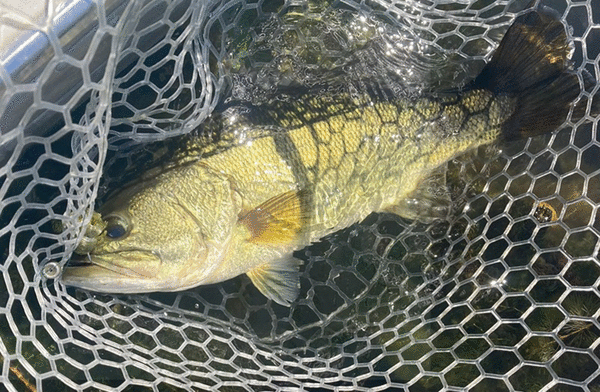
A virus linked to the deaths of about 220 fish at a Nevada County lake was detected in California for the first time, the state Department of Fish and Wildlife said.
“This is a sobering discovery given how widely distributed largemouth bass are in California, how popular they are as a sport fish and their economic importance to our rural communities,” said Jay Rowan, the agency's fisheries branch chief, in a Thursday news release.
About 220 fish, mostly largemouth bass but also some bluegill, died at Lake of the Pines in September, and tests confirmed the presence of largemouth bass virus, officials said.
The virus does not pose a health risk to humans or other warm-blooded animals, the agency said.
Officials had not determined how the virus reached the lake. The virus can be introduced “from contaminated equipment, infected baitfish, stocking infected largemouth bass and introducing other carrier species that are infected.”
The virus poses no health risks to people who eat infected fish or swim in or drink infected water, the agency said.
The agency urged residents to help prevent the virus from spreading by avoiding the transfer of fish between bodies of water and cleaning, draining and drying boats and fishing equipment after use.
Largemouth bass virus was first documented in Florida in the 1990s but had since spread throughout the United States, the agency said.
“It is extremely difficult to eradicate from a largemouth bass population once infected,” the agency said. Other fish, including spotted bass, bluegill and crappie, could carry and transmit the virus without showing symptoms.
There were no treatments or vaccines, and outbreaks could last days or weeks before resolving on their own. Larger bass were especially vulnerable, and populations could take years to recover.
“Infected largemouth bass can exhibit a wide range of disease signs such as skin sores or ulcers, darkened skin, distended body cavity, bulging eyes, redness, lethargy, erratic swimming behavior, surface swimming and difficulty submerging,” the agency said.
State wildlife officials were investigating whether the virus was present in other California lakes and urged people to report significant largemouth bass die-offs to their nearest Department of Fish and Wildlife regional office.
_____
©2026 The Sacramento Bee. Visit sacbee.com. Distributed by Tribune Content Agency, LLC.






Comments