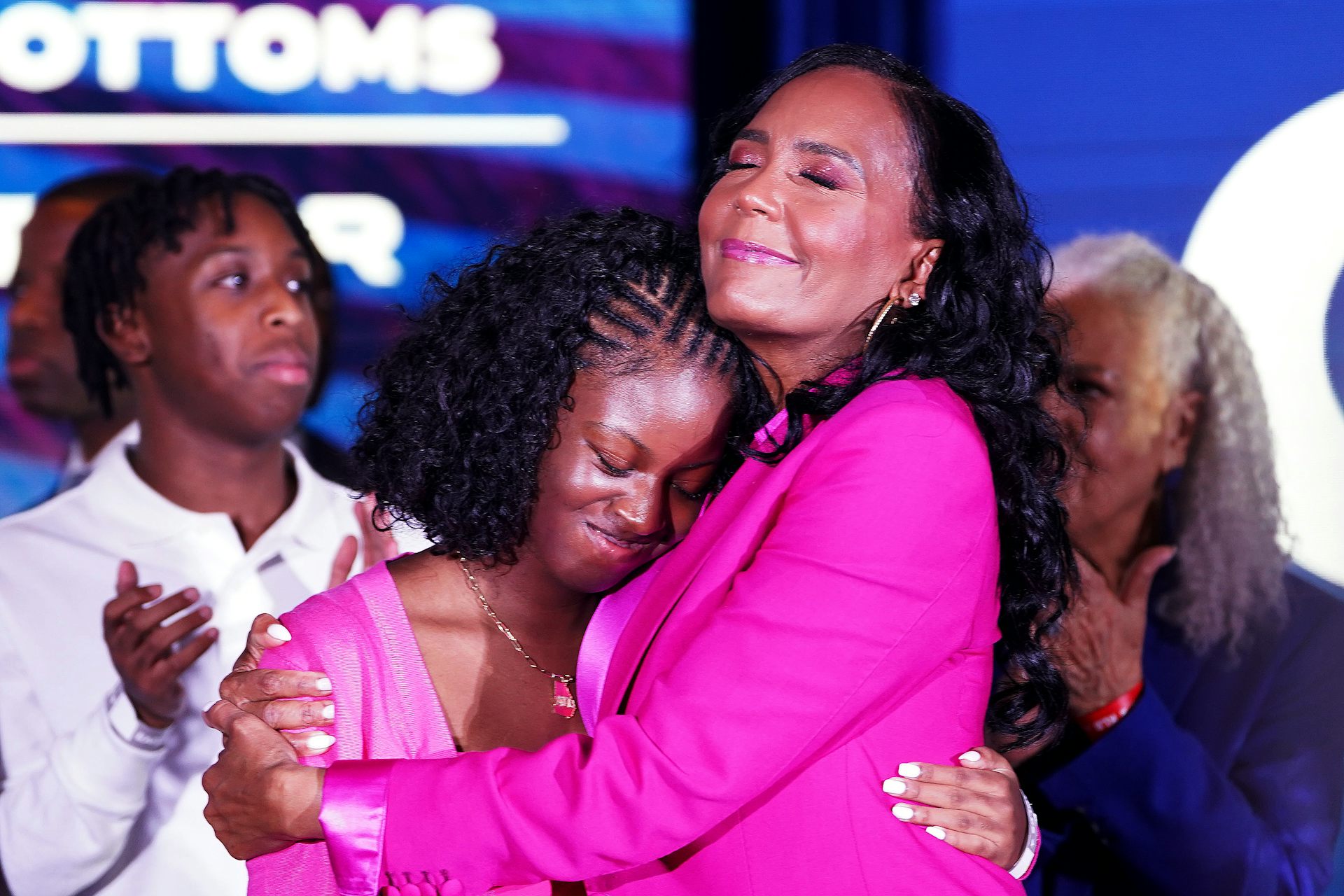
Georgia Gov.-elect Keisha Lance Bottoms stands on the shoulders of Stacey Abrams, Charlotta Bass and countless other Black women who dreamed
Published in News & Features


There are elections that change the political map. And then there are elections that make you wonder whether the land itself remembers.
Georgia remembers.
The auction blocks. The cotton fields. The lynching trees. The Black women who cleaned governors’ homes but could not dream of becoming governor themselves.
And now Keisha Lance Bottoms has been elected Georgia’s first Black woman governor. The first Black woman elected governor of any American state.
Bottoms has traced her ancestry back five generations to an enslaved person on a plantation near Crawfordville, Georgia.
An ancestor held in bondage on Georgia soil. A descendant elected to govern it.
The same earth. An entirely different claim to power. How many women had to believe in a future they would never live to see?
Bottoms’s victory represents the paradox of Black political advancement amid racial violence and the often-unrecognized labor of women who build futures they may never inhabit. Ultimately, Bottoms’ victory reflects both extraordinary progress and the unfinished work of American democracy.
I keep thinking about the little children.
Between 1979 and 1981, Atlanta was terrorized by the disappearances and murders of Black children and young adults. Mothers pleaded for answers. Families lived in a city where childhood itself had become dangerous.
The murders unfolded just years after Maynard Jackson’s historic 1973 election as Atlanta’s first Black mayor. His victory announced a new era of Black political power. Yet that power could not shield the city’s most vulnerable children. Suspicions of Ku Klux Klan involvement circulated, although the Klan’s responsibility was never established.
That distinction matters. So does the fear.
Bottoms was born in 1970. She was 9 when the murders began. She grew up in the same Atlanta where Black parents searched desperately for their missing children. She belonged to the generation whose futures were being stolen. And now she is preparing to lead the entire state.
What a terrible, beautiful, complicated thing.
Those murdered children were not symbols waiting to become useful to history. They were sons and daughters who deserved the ordinary miracle of growing older. They deserved a future.
Bottoms later occupied the mayor’s office that Jackson first opened to Black leadership. Now she is preparing to occupy the governor’s mansion. History has not erased its cruelty. But it has delivered an astonishing answer.
And this victory does not belong to Bottoms alone.
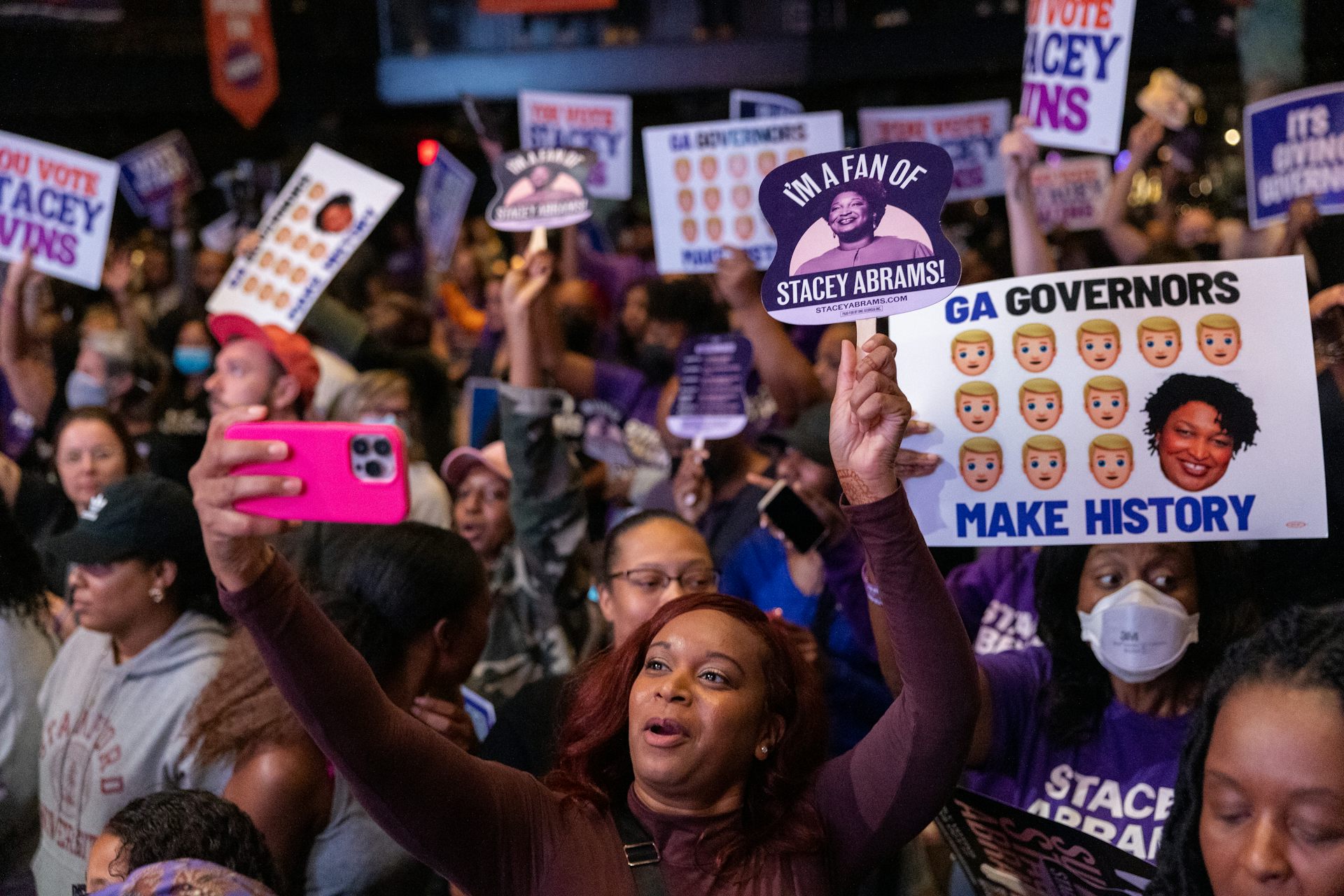
This victory belongs, in no small measure, to democracy advocate, legislator and lawyer Stacey Abrams. Perhaps those who recognize what Abrams made possible have sent her flowers.
Abrams ran for Georgia governor in 2018 and 2022. She lost both races. But through the New Georgia Project and Fair Fight, organizations focused on engaging voters and protecting voting rights, she helped build an electorate that could imagine Georgia differently. She registered voters, challenged barriers to participation, and refused to accept that the South’s political future was fixed.
And now another Black woman has won the office Abrams twice sought, in the third gubernatorial race in a row headed by a Black Democratic woman. There is something biblical about the path Abrams steadfastly cleared. I think of Moses, guiding his people toward the Promised Land but never entering it himself.
Abrams’ journey is not over. Nor should her accomplishments be measured by another woman’s victory. But I believe there is sacred work in preparing a future you may never personally enjoy. Some people plant trees. Some people sit in their shade. Stacey Abrams planted. Bottoms is standing beneath the branches.
And as a scholar of Black media history, I can reach even further back, to another woman who understood the audacity of claiming political power: Charlotta Bass.
In 1952, Bass became the first Black woman nominated for vice president of the United States, running on the Progressive Party ticket.
Before the Voting Rights Act in 1965, before the March on Washington in 1963, before Jackson was elected mayor in 1973 and before Abrams or Bottoms drew their first breaths, there was Bass.
A Black newspaper publisher who confronted segregation, police brutality and white supremacist violence in her four-decade ownership of The California Eagle, Bass understood that political power was about more than winning office. It was about who had the right to imagine themselves in one.
Bass ran when a Black woman entering the White House seemed almost unimaginable. Almost. But not to her. I imagine she would have loved this election. And I suspect she would have had pointed questions for Gov.-elect Bottoms.
What will you do for the poor? The disenfranchised? How will you protect the vote that brought you here?
History-making is not the same as justice-making, and representation matters. The true measure of Bottoms’ victory will be whether Georgians experience the more just state she promised to bring about.
For generations, Black women have been asked to save a democracy that would not save them. We have carried clipboards, protest signs and entire movements on our backs. We have been told to wait. To be patient. To be grateful.
And now a Black woman has been elected to govern Georgia.
The children have not returned. The past has not been undone. But something has shifted. Charlotta dreamed it. Stacey helped build it. Keisha has won it. And somewhere, another little Black girl is watching. She may not understand the history. She may only know that the governor-elect looks like her. For now, that is enough to begin a dream.
And history has taught us what can happen when a Black girl begins to dream.
This article is republished from The Conversation, a nonprofit, independent news organization bringing you facts and trustworthy analysis to help you make sense of our complex world. It was written by: Allissa V. Richardson, USC Annenberg School for Communication and Journalism
Read more:
The hidden story of two African‑American women looking out from the pages of a 19th‑century book
Why cellphone videos of Black people’s deaths should be considered sacred, like lynching photographs
In Georgia’s gubernatorial race, Stacey Abrams’ strategy may make victory easier for future black candidates in the South
Allissa V. Richardson does not work for, consult, own shares in or receive funding from any company or organization that would benefit from this article, and has disclosed no relevant affiliations beyond their academic appointment.







Comments