Mammograms can do more than detect breast cancer – they also offer important clues on heart health
Published in News & Features
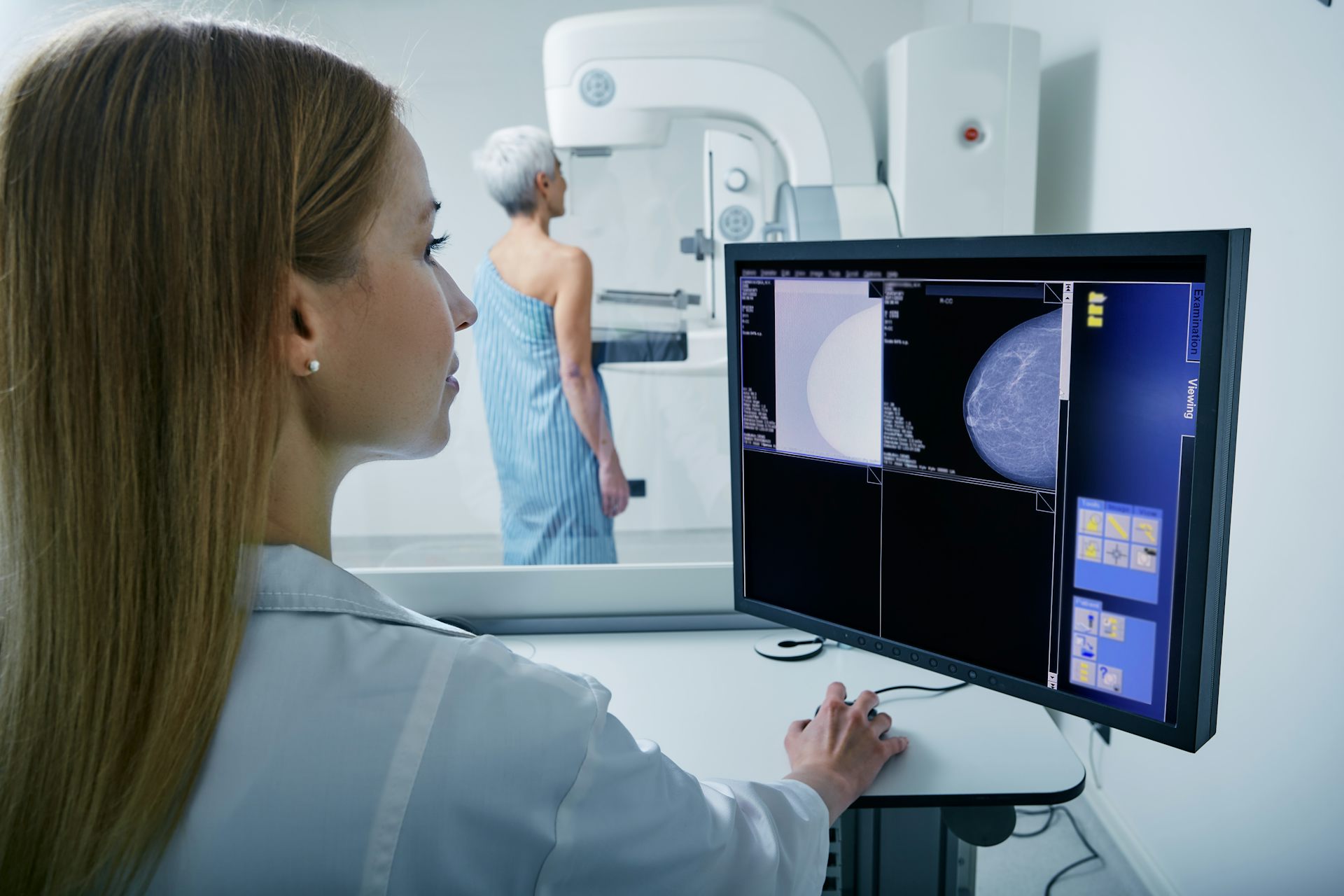


If you’re a woman over 40, you have no doubt heard your doctor tell you to get a mammogram as part of routine screening for breast cancer. But there’s another reason, too.
A mammogram can show no sign of breast cancer and still reveal something worth discussing with a doctor: calcium deposits in the medium-sized arteries that carry blood to the breast. These calcium deposits may offer a clue to a woman’s future heart health.
I’m a cardiologist who studies cardiovascular health around menopause. My colleagues and I have investigated how mammograms might help identify women who are at increased risk of heart disease and stroke. Artificial intelligence now makes these calcium deposits – called breast arterial calcification, or BAC – easier to measure.
In October 2026, Maryland became the first U.S. state to require mammography centers to notify patients in writing if these calcium deposits are found in their mammograms. Other states may institute similar rules soon. Research shows that these calcium deposits are a robust marker for cardiovascular risk, and I expect its adoption to grow.
Here’s what women need to know about calcium deposits in the breast – and what they should do if their mammogram shows they have them.
Breast arterial calcification is calcium buildup in the walls of medium-sized arteries that carry blood through the breast. On a mammogram image, the calcium deposits appear as parallel white lines tracing those vessels.
This finding is not a sign of breast cancer. And it differs from the fatty and calcified plaque that can narrow arteries supplying the heart muscle. In the case of breast arterial calcification, the calcium lies mainly in the artery’s muscular wall, where it is associated with blood vessel stiffening.
Finding breast arterial calcification on a mammogram does not, by itself, establish that a woman has heart disease or a blocked heart artery. But research has now clearly shown that this marker signals that a person’s risk of these outcomes is elevated.
It’s important to remember, however, that its absence does not rule out cardiovascular disease or an increased risk of heart attack or stroke.
Doctors have known about breast arterial calcification for decades, with studies in the 1980s linking it to diabetes and advanced kidney disease. Early findings about its relationship with heart disease were mixed, and many studies were small and relied on radiologists’ visual review of mammograms.
In 2022, my colleagues and I published the results of a 10-year study in which radiologists reviewed mammograms of more than 1,000 women to identify these calcium deposits. Women who had them had about three times the odds of developing coronary heart disease and five times the odds of having a stroke compared with women who didn’t, even after taking age into account.
To confirm that breast arterial calcification in mammograms predicts cardiovascular risk, we assessed 45 published studies involving more than 68,000 women, in a type of study called a meta-analysis. This work, published in 2026, found that women who had these calcium deposits in their breast arteries on a mammogram had roughly twice the risk of stroke, heart failure and death from any cause, and nearly three times the risk of dying from heart disease, compared with women who did not.
The studies we analyzed differed considerably in design and quality, so these averages cannot precisely predict an individual woman’s cardiovascular risk. Also, while these findings establish an association between breast arterial calcification and cardiovascular disease, they do not show that calcium in the breast arteries causes those health outcomes.
Radiologists can see breast artery calcium on a routine mammogram. But there’s no common standard for grading and reporting how much calcification is present. AI tools which are being used more commonly by doctors can measure how much is there using the same images, with no extra radiation.
These calcium deposits become more common with age, so my colleagues and I used AI to assess data from more than 100,000 women in nine countries in order to map how calcium builds up in breast arteries by age. We developed and tested a metric that, when added to standard tools, improved doctors’ ability to accurately predict a woman’s risk of cardiovascular disease.
Maryland became the first state to require a notice about breast arterial calcification in screening results. The goal is to give women who have it a reason to talk with their doctor about heart health.
The bill’s sponsor modeled the law on a 2023 regulation on breast density notices, which required mammography centers to inform patients and their doctors about their breast density and its link to cancer detection. The breast density rule was first implemented in Connecticut and then adopted by many other states, before becoming a nationwide requirement.
An Australian trial called TIM-TAM will test whether using breast arterial calcification to guide care improves measures of heart health. Researchers still need to find out whether treating women based on the presence of breast arterial calcification prevents heart attacks or strokes. But research already shows that the marker has a link to cardiovascular disease, and I expect it to follow a similar pattern of adoption as reporting breast density.
Until other states adjust their requirements, look for “breast arterial calcification” or “vascular calcifications” in the radiologist’s report. Mammography centers’ reporting practices vary, so some reports may omit BAC even when it’s visible. Some imaging centers offer an optional AI review for breast arterial calcification as an out-of-pocket add-on to a screening mammogram.
On its own, the presence of breast arterial calcification on a mammogram does not determine whether someone needs a heart test or a new prescription. But in my view, this marker can provide a useful nudge to get an updated assessment of cardiovascular health.
Your doctor may suggest a blood pressure measurement and blood tests for cholesterol and kidney function. An estimate called eGFR describes how well the kidneys filter blood.
Your doctor can use these results alongside age, smoking, diabetes and other information in the American Heart Association’s PREVENT calculator. It estimates the chance of developing cardiovascular disease over the next 10 years for adults ages 30 to 79 who are not already diagnosed with cardiovascular disease.
You can then discuss with your doctor which steps could make the biggest difference for your heart health depending on your risk. That might mean finding ways to move more, choosing foods that are good for your heart or getting help to quit smoking if you smoke. Depending on your overall risk, your doctor may also suggest taking a statin to lower your cholesterol or starting or adjusting blood pressure medicine. These treatments can help lower your chances of a heart attack or stroke.
A routine breast screening visit can thus become an opportunity to help women understand their cardiovascular risk and take steps to lower it.
This article is republished from The Conversation, a nonprofit, independent news organization bringing you facts and trustworthy analysis to help you make sense of our complex world. It was written by: Matthew Nudy, Penn State
Read more:
Women are at a higher risk of dying from heart disease − in part because doctors don’t take major sex and gender differences into account
I treat menopause and its symptoms, and hormone replacement therapy can help – here’s the science behind the FDA’s decision to remove warnings
Hormone therapy may cut cardiovascular risk in younger menopausal women
Matthew Nudy is supported by the National Center for Advancing Translational Sciences, Grant KL2 TR002015 and Grant UL1 TR002014.







Comments